

Non-Religious Partner Marrying a Catholic in the Philippines: Practical and Spiritual Guidance
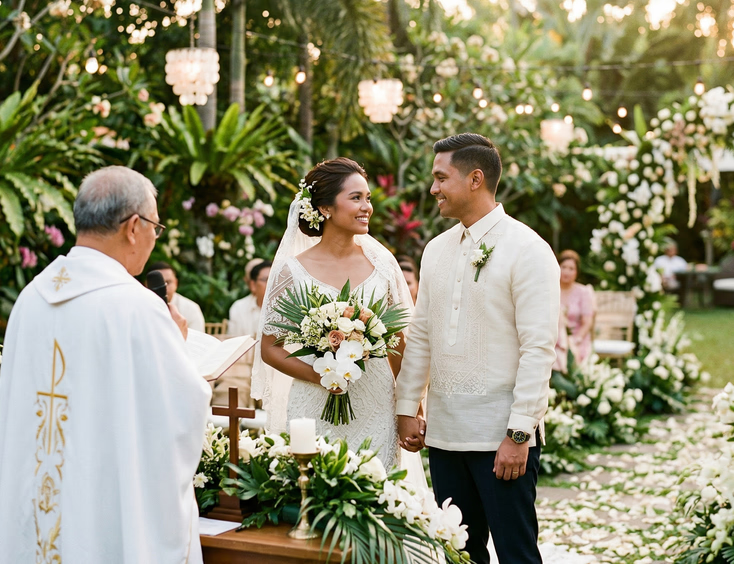
A non-religious person marrying a Catholic in the Philippines navigates a process that the Catholic Church has a defined framework for and that Filipino families have strong feelings about. The feelings and the framework operate independently of each other, and understanding both clearly makes the difference between a planning process that exhausts you and one that moves forward with purpose.
What Non-Religious Means in This Context
Non-religious covers a range of positions. Some people were raised in a faith and have since disengaged from it. Some identify as agnostic. Some identify as atheist. Some simply do not practice any religion and do not hold strong views either way. The Catholic Church treats these positions differently depending on one specific factor: whether or not you were baptized.
If you were baptized, in any Christian denomination, the Catholic Church classifies your marriage as a mixed religion marriage. The dispensation process is lighter. The Catholic partner applies for a dispensation from mixed religion, and the canonical requirements are less restrictive.
If you were never baptized, the Church classifies your marriage as a disparity of cult union. This is the category that applies to Muslims, most Buddhists, and anyone who has never received the sacrament of baptism in any tradition. The Catholic partner must apply for a dispensation from disparity of cult. The requirements are more involved, and the pastoral conversation with the priest will be more direct.
Knowing your baptismal status before your first conversation with the parish priest saves time and prevents the process from stalling at a question that should have been answered in the first meeting.
The Catholic Church's Position on This Marriage
Disparity of Cult: What It Means for You
The term disparity of cult sounds severe. In practice, it means the Church recognizes a fundamental difference in the religious status of the two partners and requires a specific dispensation before the marriage can proceed with canonical recognition.
The dispensation is not a punishment or a reluctant permission. It is the Church's formal acknowledgment that the marriage can take place despite the difference in the partners' relationship to the sacraments. Parishes in the Philippines handle disparity of cult cases regularly, particularly in Metro Manila and other urban centers where non-religious Filipinos and foreign nationals are more common.
The Dispensation Application
The Catholic partner's parish priest processes the dispensation application and forwards it to the diocese. The application requires a canonical interview with both partners, documentation of the Catholic partner's baptism and confirmation, and completion of the Pre-Cana or Marriage Preparation Seminar.
The non-religious partner does not need to be baptized, confirmed, or affiliated with any faith to participate in this process. You attend the canonical interview as yourself. The priest will ask about your beliefs, your understanding of marriage, and your position on the Catholic partner's faith practice. Answer honestly. A canonical interview is not an audition for a faith you do not hold.
What the Catholic Partner Promises
The Catholic partner makes two promises as part of the dispensation process. They promise to remain in the Catholic faith after the marriage. They promise to do everything within their power to raise children Catholic.
You, as the non-religious partner, do not sign these promises. You must be told about them and confirm you are aware of their content. The priest will confirm this during the canonical interview. If you have a different agreement with your partner about raising children, that disagreement needs to be resolved between the two of you before the interview, not discovered during it.
The Dispensation From Canonical Form
If your wedding will not take place in a Catholic church with a Catholic priest officiating, the Catholic partner needs a separate dispensation from canonical form. This covers civil ceremonies, garden weddings, hotel ballrooms, and any venue outside a church building.
Many non-religious and Catholic couples choose a venue that carries no religious association for either partner. A dispensation from canonical form makes this possible while keeping the Catholic Church's recognition of the marriage intact. Apply for both dispensations at the same time by informing the parish priest of your venue and officiant plans at the first meeting.
Processing timelines across Philippine dioceses run from two to four months. Begin the application at least six months before the wedding date.
Civil Marriage as Your Legal Foundation
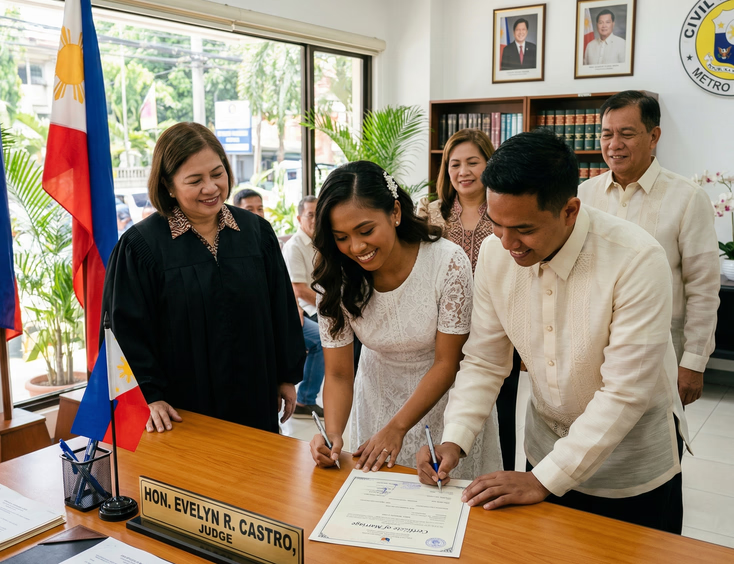
A civil wedding before a judge or mayor is legally binding under the Family Code of the Philippines and carries no religious requirements for either partner. For a non-religious and Catholic couple, the civil ceremony often serves as the practical legal foundation with a separate Catholic blessing or ceremony layered on for the Catholic partner's family and faith community.
The civil marriage license application requires both partners to appear at the Local Civil Registrar of the city or municipality where either of you has lived for at least six months. Both partners submit PSA birth certificates, a Certificate of No Marriage Record from the PSA, community tax certificates, and proof of attendance at the Family Planning and Responsible Parenthood seminar.
The seminar is required for all civil marriage license applicants regardless of religious affiliation or the absence of it. It covers family planning, responsible parenthood, and related topics. Attendance is mandatory. The Local Civil Registrar will not release the marriage license without the certificate of attendance.
The Canonical Interview: What to Expect as a Non-Religious Person
The canonical interview is the most direct encounter between your non-religious position and the Catholic Church's requirements. Priests in the Philippines handle this with varying levels of pastoral warmth. Some are straightforward and practical. Some lead with theology. Knowing what the interview covers helps you prepare.
The priest will ask about your understanding of marriage, your position on your partner's faith, whether you have any prior marriages or legal impediments, and your plans for religious practice and child-rearing after the wedding. These questions follow a canonical script, but the conversation can go in different directions depending on the priest.
You are not required to profess a faith you do not hold. The Church's canonical process does not demand your conversion. It demands honesty from both partners about who they are and what they intend. A non-religious person who answers honestly, confirms awareness of the Catholic partner's promises, and demonstrates respect for the Catholic partner's faith practice gives the priest what the process requires.
If the priest pushes toward conversion as a condition of the dispensation, that is not a canonical requirement. Conversion cannot be made a condition for a disparity of cult dispensation. If this happens, speak with the parish priest's supervisor or contact the diocesan tribunal directly.
Conversion: Your Choice, Not a Requirement
Some non-religious partners choose to explore Catholicism during the pre-marriage process. The exposure to RCIA, the Rite of Christian Initiation for Adults, and the Pre-Cana program genuinely shifts some people's relationship to faith. That shift is personal and should not be manufactured for the sake of smoothing the canonical process.
A non-religious person who converts to Catholicism sincerely changes the nature of the marriage from a disparity of cult union to a marriage between two Catholics. The dispensation process becomes simpler. Family dynamics often shift as well.
A non-religious person who converts without conviction to satisfy the Catholic family or to simplify the paperwork creates a different set of problems. The conversion shows up in the canonical documents. The lack of conviction shows up in daily life. Neither the Church nor your partner benefits from a conversion that is not real.
Make this decision for yourself, on your own timeline, for your own reasons. No one in the planning process, not the priest, not the in-laws, not the wedding coordinator, has the authority to make it for you.
Designing a Ceremony That Works for Both Partners
Defining What the Ceremony Means to Each of You
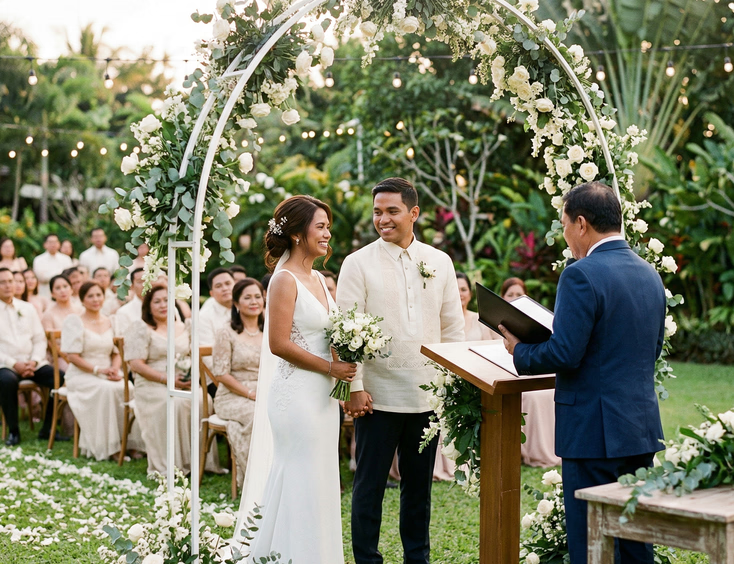
A non-religious partner and a Catholic partner will approach the ceremony with different frameworks. The Catholic partner may want the sacramental elements of the Rite of Marriage to be present and intact. You, as the non-religious partner, may care most about the ceremony feeling honest and personally meaningful rather than like a performance of a faith you do not practice.
These two positions are compatible. A Catholic ceremony can be deeply meaningful to a non-religious person who respects their partner's faith without sharing it. The key is designing the ceremony with both partners' intentions made explicit before any decisions are locked in.
Decide together which elements of the Catholic ceremony are non-negotiable for the Catholic partner and which elements can be adapted or supplemented for the non-religious partner. Then build the program from that shared foundation.
A Catholic Ceremony With Personal Vows
The Catholic Rite of Marriage includes a standard form for the exchange of vows. Many couples in the Philippines supplement the standard form with personal vows spoken after the canonical vows are exchanged. This gives the non-religious partner a space to speak in their own voice about what the marriage means to them without replacing the canonical elements the Catholic Church requires.
Personal vows in this format are not liturgical. They are a direct statement from one person to another, witnessed by everyone present. A non-religious partner who writes their own vows with care and delivers them with sincerity often produces the most remembered moment of the ceremony.
Confirm with the priest that personal vows are permitted after the canonical exchange. Most priests in the Philippines allow this. Some prefer to review the text beforehand.
A Civil Ceremony as the Primary Event
If both partners prefer a ceremony that does not center on Catholic liturgy, the civil ceremony before a judge serves as the primary event. The Catholic blessing, if the Catholic partner wants one, takes place separately, at the parish or at a private gathering with the Catholic family.
A civil solemnizing officer in the Philippines can craft a ceremony that reflects the couple's relationship, values, and personal story without defaulting to generic language. Find an officiant with experience in civil ceremonies for couples with different or no religious affiliations. Browse wedding officiants in our directory to find civil officiants across Metro Manila, Cebu, and other regions who have worked with non-religious and interfaith couples.
Including or Excluding Catholic Rituals
The arras, veil, and cord are the three distinctive rituals of a Filipino Catholic wedding ceremony. They are part of the Catholic Rite of Marriage and carry cultural weight that extends beyond their liturgical meaning.
A non-religious partner who participates in these rituals does so as an expression of shared life and cultural respect, not as a declaration of Catholic faith. No profession of belief is required to receive the arras, the veil, or the cord. Many non-religious partners find these rituals meaningful precisely because they are physical, symbolic acts rather than verbal affirmations of doctrine.
If you prefer not to include these rituals, discuss this with your partner and the priest. Some couples substitute personal rituals that carry equivalent symbolic weight for them both.
Filipino Family Dynamics When One Partner Is Non-Religious
What the Catholic Family Is Actually Afraid Of
A Filipino Catholic family's resistance to a non-religious partner rarely comes from personal dislike. It comes from a specific fear: that their child will drift from the faith, that the grandchildren will not be baptized, and that the family's shared religious identity will fragment.
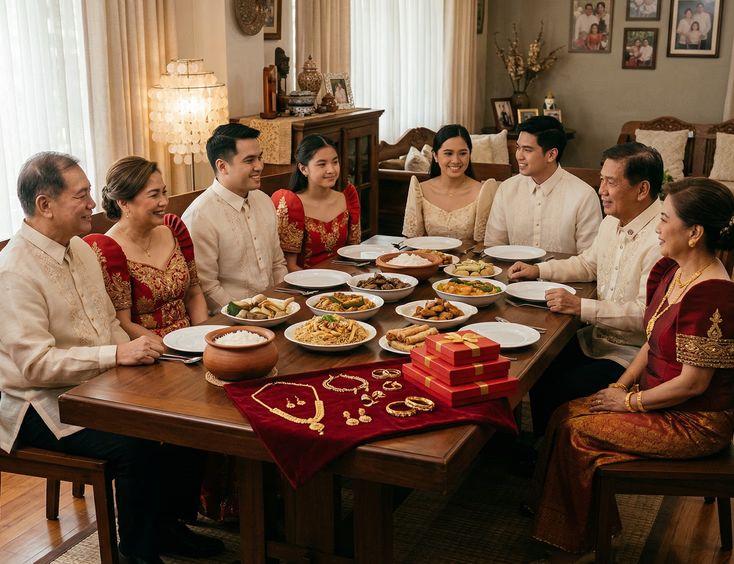
Filipino Catholic family life organizes around religious practice. The Sunday Mass, the annual pabasa during Holy Week, the simbang gabi in December, the fiesta of the parish patron saint, the novenas at home, these are not just religious activities. They are the rhythm of the family's shared life. A non-religious partner entering that family is an unknown quantity in a system that runs on a known pattern.
Address this fear with specific information. Tell your partner's family what you have agreed about Mass attendance, children's baptism, and participation in family religious gatherings. Do not offer vague reassurances about respecting their faith. Offer concrete commitments you and your partner have actually made.
Respeto and Pakikisama in Practice
Two Filipino values shape every interaction with the Catholic family during the planning process. Respeto means showing deference to elders and to the family's established ways. Pakikisama means going along with the group for the sake of harmony.
As a non-religious person, you will be watched for signs of respeto in how you engage with the family's faith practices. You do not need to pray the rosary privately. You do need to bow your head respectfully when the family prays before meals. You do not need to go to confession. You do need to behave with reverence inside a church. These are not demands to perform a faith you do not hold. They are basic cultural respect for a community that practices its faith openly.
Pakikisama, extended too far, becomes a trap for a non-religious person who agrees to religious commitments at the planning stage and then does not keep them after the wedding. Be clear about what you will genuinely do, not what you think the family wants to hear.
How to Have the Conversation With the Catholic Family
Meet the Catholic family for this conversation before the dispensation application is submitted. Do not let them find out about your non-religious position from the priest or from a relative. Tell them yourself, directly, with your partner present.
Keep the conversation short and factual. You are not asking for their theological approval of your worldview. You are informing them of who you are, what you and their child have decided about your shared life, and what role you intend to play in the family's religious life going forward.
Expect a period of adjustment. Some Catholic families come around within weeks. Others take months. A family that was resistant during the engagement often becomes warmer after seeing you participate consistently and respectfully in family gatherings and religious occasions.
When the Family Objects to the Marriage
A Catholic family that formally objects to the marriage, refuses to attend the ceremony, or pressures the Catholic partner to end the relationship is a serious situation that no planning guide resolves cleanly.
Give the family time before the wedding to raise their concerns. Do not announce the engagement and present the wedding date simultaneously. Families who feel the decision was made without them process the news harder than families who had time to ask questions and be heard.
If a family member refuses to attend, keep the door open. Do not issue ultimatums. Weddings that happen over a family's strong objection often lead to reconciliation within a year or two, particularly after the couple demonstrates a stable, committed household. Ultimatums foreclose that path.
Your partner carries most of the weight in managing their family's objections. Support your partner in that process but recognize that the family conversations belong to your partner. A non-religious person who argues theology with a Catholic lola is not helping.
Raising Children: The Hardest Conversation
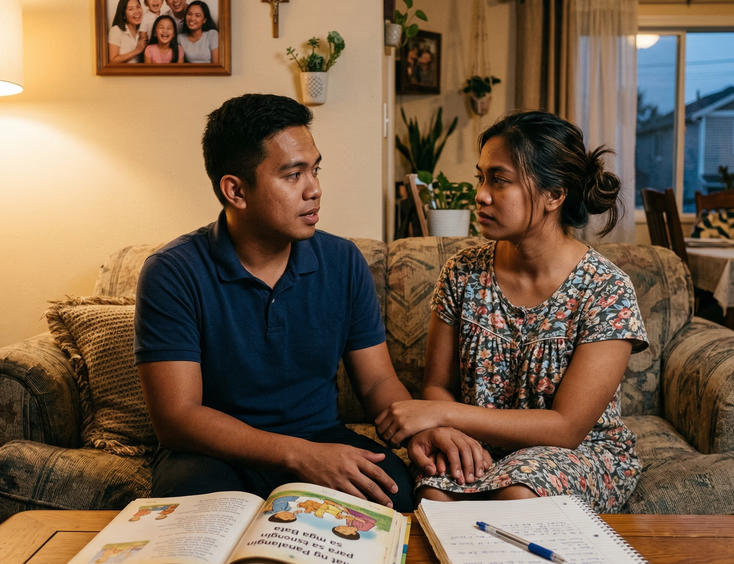
The Catholic partner promises to raise children Catholic as part of the dispensation process. This promise is made to the Church before the wedding. Whether or not it is made to you depends on how honestly you and your partner have discussed it.
Non-religious parents in the Philippines who co-parent with a Catholic partner navigate this in different ways. Some are comfortable with children being raised Catholic and see it as the Catholic partner's domain. Some want children exposed to both a religious upbringing and a secular framework and allowed to develop their own positions as they mature. Some hold strong secular convictions and resist Catholic formation for their children.
The Catholic Church's dispensation process requires the Catholic partner to promise to raise children Catholic. That promise is to the Church. What the two of you decide together in your household is your shared responsibility.
Be honest with each other about this before any promises are made to anyone. A Catholic partner who makes the canonical promise without discussing it with you is creating a conflict that will surface the moment the first child is born. A non-religious partner who agrees to Catholic child-rearing during the planning stage and then resists it afterward is creating the same conflict from the other direction.
The couples who handle this well reach a genuine shared position and hold it with consistency. They do not tell the priest one thing and each other another.
For the Non-Religious Partner: A Practical Summary
You are not required to convert. You are not required to practice a faith you do not hold. You are required to be honest, to show respect for your partner's faith and family, and to follow through on the specific commitments you make during the planning process.
The canonical interview, the Pre-Cana seminar, the family conversations, and the ceremony itself are all manageable when you approach them knowing what they require. The harder work is the ongoing negotiation of shared life in a Filipino Catholic household where your non-religious position is always visible.
Your partner chose you knowing your position on faith. The family and the Church are adjusting to that choice. The planning process is the first extended test of how well the three parties, you, your partner, and the Catholic family, can function together. Approach it with patience and clarity and it sets the tone for everything that follows.
Finding the Right Officiant
An officiant for a non-religious and Catholic couple needs to hold the couple's full reality in the ceremony without flattening it. A civil officiant who has worked with non-religious partners and Catholic families understands how to design a ceremony that is honest, dignified, and meaningful without requiring either partner to perform a faith commitment they do not hold.
Browse wedding officiants in our directory to find civil officiants, Catholic priests, and solemnizing officers with experience in disparity of cult and non-religious interfaith ceremonies across Metro Manila, Cebu, Davao, and other regions. Ask them directly how many ceremonies they have performed for non-religious and Catholic couples and how they approach that dynamic in the ceremony design.
Related Guides for Interfaith Couples
The Catholic Church's dispensation framework applies across all interfaith pairings, but the specifics shift significantly depending on the non-Catholic partner's background and the religious combination involved.
For couples where one partner is Muslim, two separate legal systems and two distinct religious frameworks are involved alongside the Catholic dispensation process. Read Catholic and Muslim weddings in the Philippines for the full breakdown of the Nikah, the dispensation from disparity of cult, and the ceremony design considerations.
Born Again Christian partners bring a distinct pastoral culture and denominational variation that differs from both mainline Protestant and non-religious contexts. Read Catholic and Born Again Christian weddings in the Philippines for how those dynamics play out in the dispensation process and ceremony planning.
Protestant partners from mainline denominations operate within their own denominational structures and ecumenical histories. Read Catholic and Protestant weddings in the Philippines for the specific requirements and ceremony options that apply to that pairing.
For the full legal and canonical framework governing interfaith marriages in the Philippines, read the complete guide to interfaith marriage in the Philippines.
Still Searching for a Right Match?
Find Your Perfect Wedding Supplier Today!
Discover trusted wedding suppliers across the Philippines in our complete directory. Compare services and connect with the ones that fit your dream celebration.
Browse Wedding SuppliersFeatured Posts
Regional Wedding Customs Every Filipino Couple Should Know
23 mins readThe Complete Guide to Filipino Wedding Invitations: From Traditional Customs to Modern Trends
12 mins readThe Complete Filipino Couple's Guide to Wedding Rings & Bands in the Philippines: Traditions, Styles, Budgets & Where to Buy
22 mins read