


Debut Mobile Bar and Food Cart Ideas Your Guests Will Love
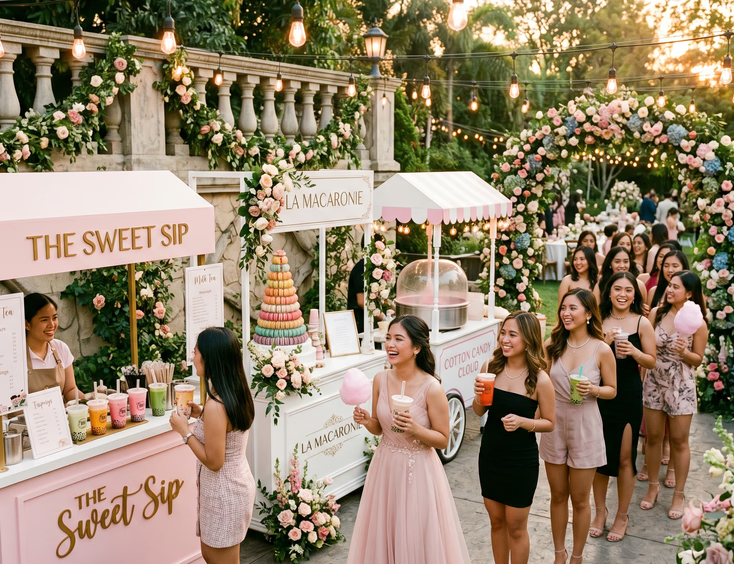
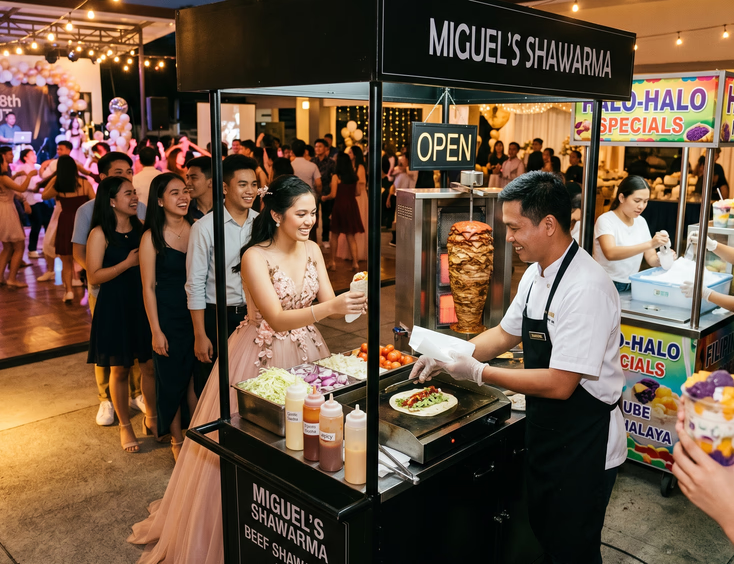
The dinner spread feeds your guests. The mobile bar and food carts make them stay. After the program ends and the dance floor opens, the cart with the longest queue becomes its own mini-event. Guests post stories from the shawarma station, the milk tea bar becomes a meeting point for the barkada, and the cotton candy machine turns into a photo op.
Mobile bars and food carts aren't just dessert add-ons. Used well, they extend your debut by hours, give guests something to do between dance sets, and turn the second half of your celebration into a memorable experience instead of a slow fade.
This guide walks you through cart options, mobile bar choices, sizing, placement, and how to pick suppliers who deliver on the night.
Decide What Job Each Cart Does
Before booking anything, decide what role each cart plays at your debut. The role shapes the cart count, the placement, and the budget.
The three main roles:
Snack fill-ins between segments Carts that bridge the gap between dinner and the dance set. Light, easy-to-eat snacks that don't compete with dinner. Cotton candy, popcorn, ice cream, lumpia, turon.
Dessert program centerpieces Carts that anchor a styled dessert area. Photographed extensively, often coordinated with the cake table. Macaron towers, donut walls, candy buffets, churro stations.
Late-night savory stations Heavier carts that kick in during the dance set, when guests want something more substantial after burning calories on the floor. Shawarma, taco bars, mami stations, Korean street food.
A balanced debut usually has one of each. A snack cart for the early hours, a styled dessert cart near the cake, and one savory station for late-night cravings.
Match the Carts to Your Theme
Mobile bars and food carts reinforce the theme. The wrong cart at the right debut clashes immediately.
Fairytale or grand themes Macaron towers, donut walls, mini parfait jars, candy buffets in pastel palettes, gourmet coffee bars with intricate latte art. The styling matters as much as the food.
Garden or romantic themes Lemonade carts, fresh juice bars, mini scone stations, tea sets, herbal infusion bars. Lighter carts that fit outdoor or garden settings.
Korean-inspired themes Korean street food carts (tteokbokki, fishcake skewers, hotteok, twigim), bingsu stations, milk tea bars with K-pop themed cups, Korean corn dog carts.
Minimalist themes A single statement cart done well. A premium espresso bar, a curated wine and cheese station, or a single signature cocktail bar.
Modern or party-focused themes Mobile cocktail bars, neon-lit dessert carts, food truck-style setups, late-night taco bars, shawarma carts.
Traditional Filipino themes Lumpia carts, halo-halo stations, kakanin spreads, pancit Malabon carts, kwek-kwek and isaw stations for a hometown feel.
For wider theme direction, browse our roundup of trending debut theme ideas.
Mobile Bar Options
Mobile bars run beyond just alcohol. The category covers any beverage station with a dedicated server.
Coffee bar A trained barista pulls espresso shots, steams milk, and makes lattes, americanos, cappuccinos, and flat whites on demand. Some bars include flavored syrups (vanilla, caramel, hazelnut) and seasonal specials. Popular for daytime debuts and family-friendly events.
Milk tea bar Classic Filipino guest favorite. Black tea or oolong base with milk, brown sugar, taro, matcha, or fruit flavors. Includes pearls, jellies, and pudding toppings. Universally loved across age groups.
Cocktail bar A licensed bartender serves classic cocktails or signature drinks. Common choices include mojitos, margaritas, gin and tonics, and curated debut signature cocktails (often named after the debutante). Confirm your venue's alcohol policy first. Some venues prohibit outside alcohol service.
Mocktail bar Alcohol-free version of the cocktail bar. Same bartender setup, same garnishes, same Instagram appeal, no liquor. Works for debuts with younger crowds, dry venues, or families that prefer no alcohol.
Smoothie or fresh juice bar Fresh fruit blended on-site. Mango, strawberry, dragon fruit, calamansi, watermelon. Light, healthy, and refreshing for warm-weather debuts.
Wine or champagne bar A sommelier or bar attendant serves curated wines or sparkling drinks. Works for grand and formal debuts where the older guest base appreciates wine service. Pairs well with cheese boards or charcuterie stations.
Hot chocolate or tea bar Cool-weather staple for Tagaytay debuts or evening garden events. Premium hot chocolate with marshmallows, whipped cream, and flavored syrups, or a curated tea selection with milk, honey, and lemon.
Food Cart Options
Food carts cover sweet and savory categories. The best debuts mix both.
Sweet carts:
- Cotton candy cart (visually striking, great for photos, kid-favorite)
- Popcorn cart (caramel, cheese, butter flavors; classic snack appeal)
- Ice cream cart (sorbetes for Filipino flavor, gelato for premium feel, ice cream sandwich bars for fun)
- Donut wall (instagrammable, easy grab-and-go)
- Macaron tower (premium aesthetic, French-inspired)
- Candy buffet (kid-friendly, take-home favors)
- Churro cart (with chocolate dipping sauce, Spanish-Filipino crossover appeal)
- Crepe cart (savory and sweet options, made-to-order)
- Halo-halo station (Filipino classic, summer debut favorite)
- Bingsu station (Korean shaved ice with toppings, fits K-themed debuts)
- Waffle bar (with toppings like Nutella, fresh fruit, whipped cream, ice cream)
Savory carts:
- Shawarma cart (filling, popular, easy to queue)
- Taco bar (build-your-own with multiple proteins and toppings)
- Korean street food cart (tteokbokki, twigim, fishcake skewers)
- Pancit Malabon or palabok station (Filipino late-night favorite)
- Lumpia and turon cart (classic Filipino pairing, snack-sized)
- Mami and siopao cart (cool-weather event favorite)
- Sliders or mini burger station (kid and adult appeal)
- Pizza station (made-to-order, fits casual themes)
- Sushi or maki cart (premium, fits modern themes)
- Kwek-kwek and isaw cart (street food authenticity for traditional themes)
- Pares or batchoy station (filling Filipino comfort food)
For the bigger food picture, see our debut catering guide.
Plan the Sizing and Cart Count
Each cart serves a limited number of guests within a set window. Underbooking creates long lines and disappointed guests. Overbooking wastes money on idle carts.
Standard cart capacity:
- One food cart handles 80 to 120 guests over a 2-hour window
- One mobile bar handles 60 to 100 guests over a 2-hour window
- Higher-volume carts (shawarma, ice cream) lean toward the upper end
- Lower-volume carts (cocktails, espresso) lean toward the lower end
Sizing by guest count:
- Under 100 guests → 1 to 2 carts total
- 100 to 200 guests → 2 to 3 carts
- 200 to 300 guests → 3 to 4 carts
- 300 plus guests → 4 to 5 carts, possibly with extended rental hours
If a cart needs to serve more than its standard capacity, book extended hours (most suppliers offer 3-hour or 4-hour rentals at higher rates).
Set the Budget
Mobile bar and food cart pricing varies by type, brand, and service level.
Expect:
- P8,000 to P15,000 — basic carts with limited service hours (cotton candy, popcorn, simple ice cream)
- P15,000 to P25,000 — standard mobile bars and food carts (milk tea, shawarma, halo-halo, donuts)
- P25,000 to P40,000 — premium carts with branded styling, custom flavors, or higher-end ingredients (gourmet coffee, cocktail bar, churro station with custom dips)
- P40,000 plus — luxury and curated bars (premium wine and cheese, custom cocktail program with branded glassware, full Korean street food station)
For 3 carts plus a mobile bar, budget P60,000 to P120,000 depending on tier.
Add costs for:
- Custom branding (logo decals, signage, themed cups)
- Extended service hours (per hour fee)
- Setup and teardown beyond standard inclusions
- Power requirements (some carts need dedicated outlets or generators)
For the full budget context, see our debut cost breakdown.
Coordinate Placement With the Venue
Mobile carts need specific venue conditions to work:
- Power access — most carts need at least one dedicated outlet
- Floor space — carts range from 1.5m to 3m in width, plus queue space
- Ventilation — savory carts produce smoke or oil mist; outdoor or well-ventilated placement preferred
- Accessibility — carts should be reachable without blocking dance floor traffic or exits
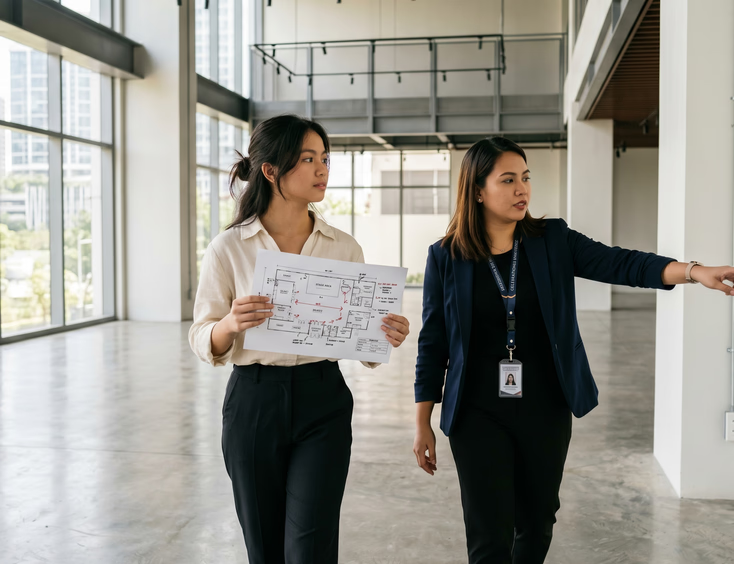
Walk the venue with your stylist and identify the best cart placements during the ocular. The cake table, the photo booth, the bar, and the food carts should form a natural flow that guests circulate through without crossing the dance floor.
For ocular checklists, see our guide on how to choose the right debut venue.
Check Venue Restrictions
Some venues restrict outside food carts or impose corkage fees. Confirm with your venue:
- Are outside food carts allowed?
- Is alcohol service from outside vendors permitted?
- Is there corkage per cart, per bottle, or per service?
- Are there power supply limits?
- Are there fire safety restrictions on open flames or hot oil?
Hotel and ballroom venues often have stricter rules than events places or garden venues. Some hotels require all food and beverage to come from their in-house catering, which kills the mobile bar and food cart option entirely.
Schedule the Cart Rollout
The cart rollout times affect when guests notice them and how much they consume.
Cocktail hour carts (start of event) Light snacks and beverages as guests arrive. Coffee, mocktails, cotton candy, light canapés.
Mid-program carts (after dinner, before dance set) Sweet stations and dessert carts. Donut wall, ice cream, macarons, halo-halo.
Dance set carts (after program ends) Heavier savory stations. Shawarma, tacos, pancit Malabon, mami station.
Coordinate the rollout with your host so they announce each cart as it opens. A cart no one knows about becomes underutilized.
Coordinate With Your Other Suppliers
Mobile bars and food carts don't operate alone. They coordinate with:
- Your caterer — to avoid menu overlap (don't book a pancit Malabon cart if pancit is already in the buffet)
- Your stylist — for cart styling, themed signage, and integration with overall decor
- Your venue coordinator — for placement, power access, and ingress timing
- Your host or emcee — for cue-ins announcing each cart opening
- Your photographer — for shot lists capturing the cart aesthetic and guest interactions
For how all your suppliers fit together, see our guide to essential debut suppliers to book early.
Walk Through the Contract
Before signing, confirm:
- Event date, venue, and call time
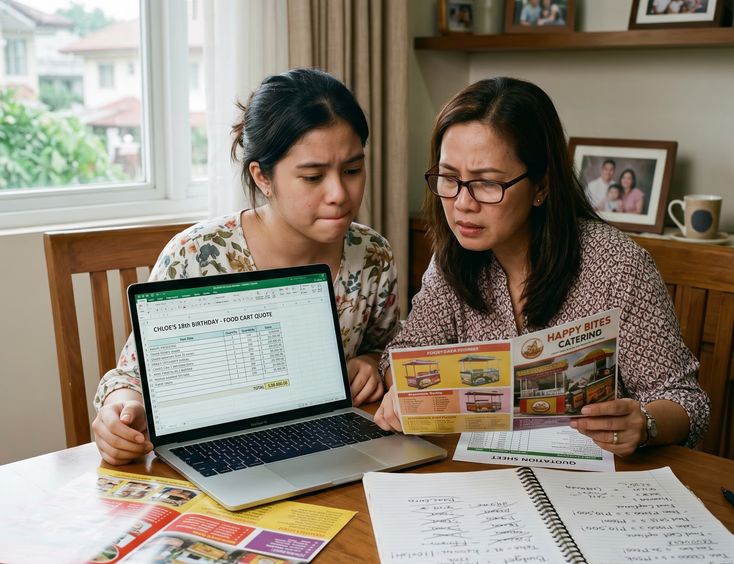
- Specific cart type and inclusions (flavors, toppings, cup size, customization)
- Number of servings or service hours
- Branding and styling specifications
- Power and space requirements
- Setup, service, and teardown windows
- Total cost and payment schedule (typical: 50% reservation, balance on event day)
- Cancellation and rescheduling policy
- Backup plan if equipment fails on event day
Lock the menu and styling in writing. "We'll customize on the day" is not a service spec.
Red Flags to Skip
Walk away from a supplier who:
- Won't show real event photos, only studio shots of the cart
- Can't specify how many servings the rental covers
- Has no backup plan for equipment failure
- Refuses to detail flavors, toppings, or customization options
- Quotes prices wildly below market without explaining the difference
- Has consistent recent reviews mentioning late arrivals, running out of supplies, or cold or stale product
- Doesn't ask about your venue, theme, or program flow during initial inquiry
- Pushes you to pay the full amount upfront
How a supplier communicates during booking predicts how they'll perform on the day.
Your Pre-Booking Checklist
Before you sign anything, confirm:
- Cart types match your theme and crowd
- Cart count fits your guest size with capacity buffer
- Menu and styling are documented in writing
- Power, space, and venue restrictions are confirmed
- Rollout schedule is coordinated with the program flow
- Supplier coordination with venue, stylist, host, and photographer is planned
- Total cost fits your budget
- Contract terms, inclusions, and cancellation policy are reviewed
Mobile bars and food carts turn your debut from a sit-down event into an experience. Pick suppliers who treat their cart as part of your celebration, not a delivery drop.
For how mobile bars and food carts fit into the bigger debut planning picture, return to our pillar guide on planning an unforgettable Filipino debut celebration.
Still Searching for a Right Match?
Find Your Perfect Wedding Supplier Today!
Discover trusted wedding suppliers across the Philippines in our complete directory. Compare services and connect with the ones that fit your dream celebration.
Browse Wedding SuppliersFeatured Blog Posts


Filipino Wedding Entourage - Roles, Order of March, and Modern Etiquette
6 mins readCivil Weddings in the Philippines - Requirements, Costs, and Step-by-Step Process
9 mins readCivil Wedding Requirements in the Philippines - Complete Checklist
6 mins readCost of Wedding in the Philippines - 5 Essential Things You Need to Know
7 mins readPrincipal Sponsors (Ninong/Ninang) - How Many, How to Ask, What They Really Do
4 mins readVeil, Cord, Candle & Coins - Roles, Options, and When They Happen
4 mins readEntourage for a Traditional Pinoy Wedding - Complete Roles and Guide
6 mins readComplete List of Civil Wedding Requirements in the Philippines
8 mins readHow to Choose Wedding Ninongs and Ninangs - Ask Yourself These 3 Important Questions
5 mins read