


Debut Catering Guide: Menu Ideas and Service Styles
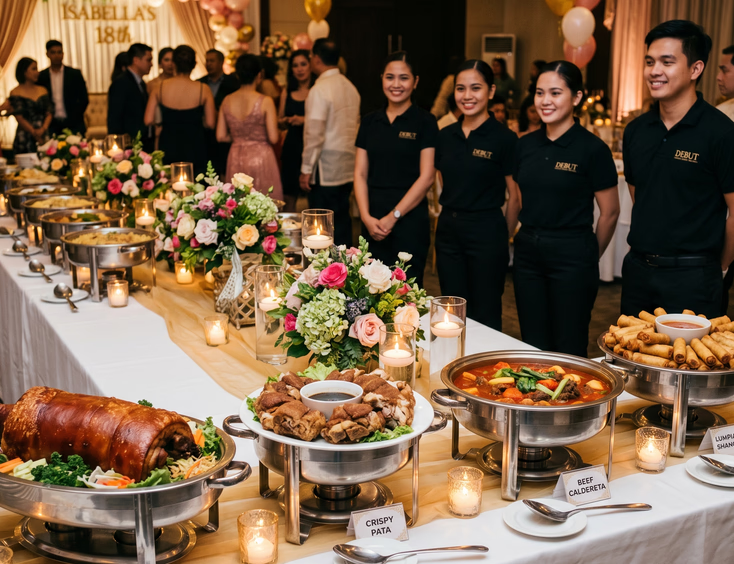
Guests forget the venue's chandelier. They forget which song played during the cotillion. They remember the food.
Bad catering ruins a beautiful debut. Cold lechon, dry chicken, a buffet line that snakes through the venue while the program waits, a dessert station that runs out before half the guests reach it. Good catering disappears into the background and lets the celebration breathe.
This guide walks you through menu choices, service styles, portioning, and the questions to ask before signing with a caterer.
Start With Your Service Style
Service style affects your venue layout, your program flow, your guest experience, and your budget. Lock this before you pick dishes.
The four main styles for Filipino debuts:
Plated dinner Guests sit at assigned tables. Servers bring courses one at a time. The most formal option. Works for grand ballroom debuts, hotel venues, and events with structured programs. Costs more because of the server-to-guest ratio (usually 1 server per 10 to 15 guests).
Buffet Guests line up at food stations and serve themselves. Less formal but lets guests choose portions and try more dishes. Needs space for queueing and can slow down the program if you have more than 100 guests on a single buffet line. Splitting into two parallel lines fixes this.
Family style Large platters arrive at each table. Guests pass and serve themselves. Warm and casual, popular for intimate debuts and garden settings. Needs larger tables to fit the platters alongside place settings.
Cocktail reception Passed canapés and food stations with no seated dinner. Works for shorter debuts (3 to 4 hours) or pre-program cocktail hours before a plated dinner. Not common as a standalone debut format but useful for hybrid setups.
For intimate debuts under 80 guests, family style and plated work well. For 100 to 200 guests, plated or split buffet lines. For 200 plus, split buffets or stationed reception setups handle the volume.
If you're still deciding on guest count, see our comparison of intimate debut vs grand debut.
Build the Menu Around Filipino Favorites
Filipino debuts run on Filipino food. Guests expect it. Skip the trendy fusion menu unless your theme calls for it specifically.
A solid Filipino debut menu includes:
Appetizers
- Lumpiang shanghai
- Lumpiang ubod
- Cheese sticks
- Spring rolls
- Beef skewers
- Cocktail empanadas
Soup
- Cream of corn or cream of mushroom
- Sopas
- Bulalo (for cooler venues or evening events)
- Pumpkin soup
Main courses (pick 4 to 6 for a full menu)
- Lechon belly or whole roasted lechon
- Crispy pata
- Beef caldereta or beef mechado
- Chicken galantina or chicken cordon bleu
- Lengua estofado
- Baked salmon or fish fillet in cream sauce
- Pork barbecue
- Lasagna or baked macaroni (for younger guests)
Sides
- Steamed rice
- Java rice or yang chow rice
- Buttered vegetables
- Pasta (carbonara, pesto, or marinara)
Dessert
- Leche flan
- Buko pandan
- Mango graham
- Fruit salad
- Cassava cake
Beverages
- Iced tea
- Soft drinks
- Bottled water
- Fresh juices
- Coffee station for older guests
For a 150-pax debut, aim for 6 to 8 mains, 2 to 3 sides, 3 to 4 desserts, and unlimited drinks. Fewer dishes feel sparse. More creates waste and pushes up the per-head cost.
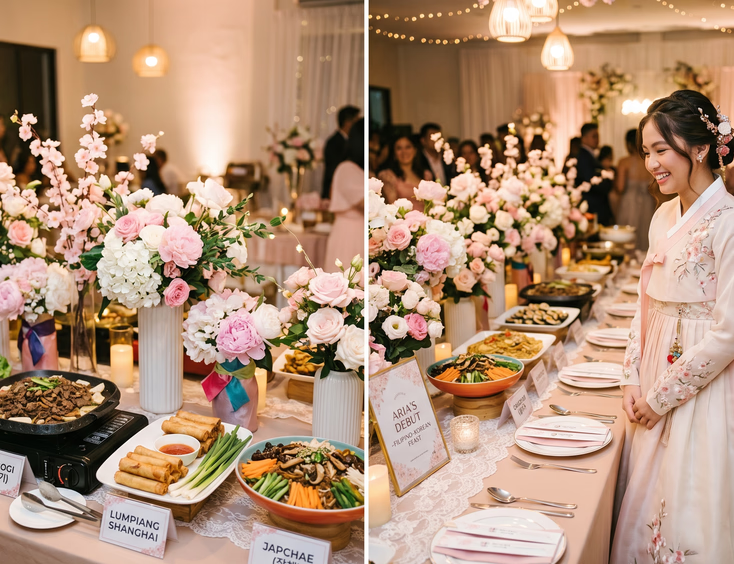
Match the Menu to Your Theme
The menu reinforces the theme without overpowering it.
- Fairytale or grand themes → European-leaning menu with beef wellington, salmon, pasta, French desserts
- Garden or romantic themes → lighter fare, fresh salads, fish dishes, fruit-forward desserts
- Korean-inspired debuts → Korean BBQ stations, bulgogi, japchae, kimchi sides, bingsu dessert bar
- Minimalist themes → tighter menu, three to four perfectly executed dishes instead of a sprawling spread
- Traditional Filipino themes → full Filipino fiesta menu, lechon centerpiece, kakanin dessert spread
If your theme isn't locked yet, browse our roundup of trending debut theme ideas.
Plan Portioning Per Guest
Underordering ruins a debut faster than almost any other mistake. Filipino guests bring appetites and the family code of "bring extra home" runs strong.
Standard portioning per guest:
- 200 to 250 grams of protein across all main courses combined
- 1 to 1.5 cups of rice (steamed or flavored)
- 2 to 3 appetizer pieces during cocktail hour
- 1 to 2 dessert servings
- 4 to 6 servings of beverages across the event
Add 10% buffer above your guaranteed guest count. If 150 confirmed, cater for 165. Last-minute additions, larger appetites, and second helpings absorb the buffer.
For lechon specifically, a 25-kilo lechon serves roughly 50 to 60 guests when it shares the menu with 4 to 5 other mains. As the sole main attraction, the same lechon serves only 30 to 35.
Account for Dietary Restrictions
Ask your caterer how they handle dietary needs. A modern debut menu accommodates:
- Vegetarian options — at least one vegetable-based main and one meat-free side
- Halal requirements — separate preparation if Muslim guests attend
- Allergies — common ones include shellfish, peanuts, dairy, gluten
- Kid-friendly options — chicken nuggets, mini burgers, mac and cheese for guests under 12
Add a line to your invitation RSVP asking for dietary restrictions. Forward the consolidated list to your caterer two weeks before the event.
Decide on Food Cart and Mobile Bar Add-Ons
Food carts and mobile bars sit between the main meal and the program's tail end. Guests grab snacks during dancing or hang around the bar between segments.
Popular add-ons:
Food carts
- Cotton candy or popcorn for whimsical themes
- Ice cream cart for outdoor or summer debuts
- Shawarma or kebab station
- Taco bar
- Pancit Malabon or palabok station
- Lumpia and turon cart
- Mami and siopao for cool-weather events
- Korean street food cart for K-themed debuts
Mobile bars
- Coffee bar with barista (Americano, latte, frappé)
- Tea bar with milk tea variations
- Cocktail bar (check venue's alcohol policy first)
- Mocktail bar for younger guests
- Smoothie or fresh juice bar
Each food cart serves roughly 80 to 120 guests over a 2-hour window. For 200-plus guest debuts, book two carts or extend the rental hours.
For a fuller breakdown of options that guests love, see our guide on debut mobile bar and food cart ideas.
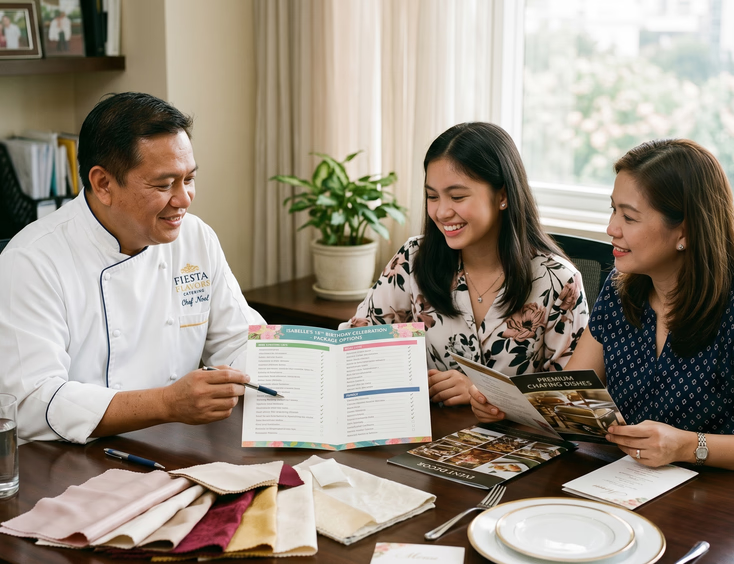
Ask About Service Inclusions
Two caterers at the same per-head rate can deliver very different value. Get the inclusion list in writing.
Standard inclusions to confirm:
- Tables and chairs (and what style)
- Table linens, napkins, skirting
- Plates, glasses, utensils (specify if china or disposable)
- Buffet table setup with skirting
- Chafing dishes and serving equipment
- Number of servers per guest count
- Headwaiter or service captain
- Setup and teardown hours
- Free-flowing water and basic beverages
- Coffee and tea station
Common exclusions that surprise first-time bookers:
- Specialty linen colors or premium fabrics
- Chiavari chairs (vs. standard banquet chairs)
- Charger plates
- Champagne or wine service
- Bartender for alcoholic drinks
- Overtime rates (per hour, per server)
- Corkage if you bring your own cake, dessert, or alcohol
Ask for a sample inclusions list and a sample exclusions list side by side.
Schedule a Food Tasting
Reputable caterers offer food tasting for serious inquiries. Some include it free. Others charge a tasting fee that gets credited toward the booking.
Bring your parents and one or two decision-makers. Don't bring a group of ten. Caterers prepare tasting portions for a specific number of people.
During the tasting, evaluate:
- Flavor and seasoning — is the adobo too salty, the kaldereta too bland, the dessert too sweet
- Texture and temperature — is the lechon skin crispy, the fish properly cooked, the soup served hot
- Presentation — does the plating match the price point
- Variety — do the dishes complement each other or repeat the same flavor profile
- Portioning — does the tasting portion match what guests will actually receive
Take photos. Take notes. The tasting happens months before the event. Memory fades.
Test the Service, Not Just the Food
Great food with bad service ruins a debut. A caterer with seven-star food and four-star service still creates problems.
Ask:
- What's the server-to-guest ratio (target 1:10 for plated, 1:15 for buffet)?
- Are servers in uniform? What style?
- How does the captain coordinate with your event host and program flow?
- What's the protocol if a guest spills something, needs a refill, or has a complaint?
- How are special meals (vegetarian, halal, allergy-restricted) tracked and delivered?
If possible, watch the caterer work an actual event. Some caterers welcome ocular visits during their bookings. Others share videos or photos from recent events.
Coordinate With Your Other Suppliers
Your caterer doesn't operate in isolation. They coordinate with:
- The venue — for kitchen access, ingress hours, electrical load, cleanup protocol
- Your stylist — for table arrangements, centerpiece height, place setting layout
- The host or emcee — for cue-ins on food service timing during the program
- The cake supplier — if the cake is delivered to the venue and stored before cutting
- The photographer — for shot lists involving the food spread, place settings, dessert table
Loop your caterer into the supplier chat group two months before the event. The handoffs go smoother when everyone's introduced early.
For a fuller view of how suppliers coordinate, see our guide to essential debut suppliers to book early.
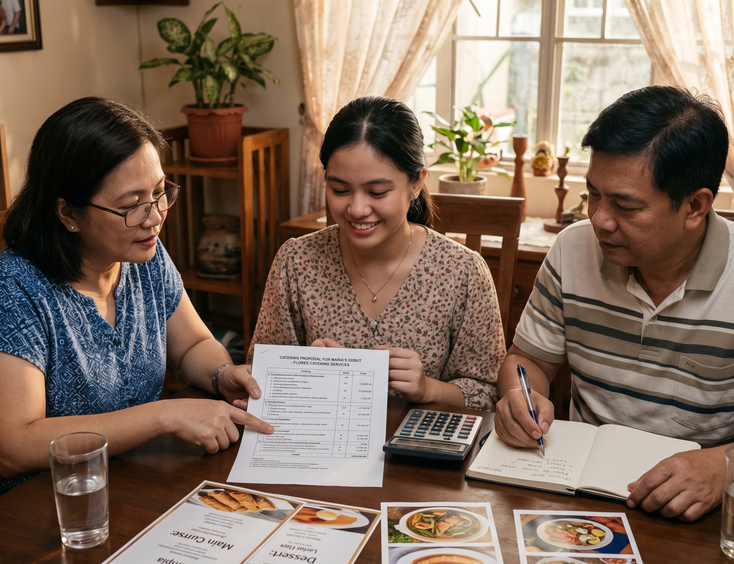
Set the Budget
Catering takes 25% to 40% of a debut budget, the single largest cost category for most debutantes. Expect per-head rates of:
- P800 to P1,200 for basic packages (3 to 4 mains, standard service, basic inclusions)
- P1,200 to P1,800 for mid-tier packages (5 to 6 mains, better linens, fuller service)
- P1,800 to P3,000 for premium packages (6 to 8 mains, premium ingredients, full service, china and crystal)
- P3,000 plus for hotel catering or top-tier private caterers with imported ingredients and curated menus
A 150-guest debut at P1,500 per head runs P225,000 for the catering alone. Add food carts (P15,000 to P30,000 each), a mobile bar (P20,000 to P40,000), and corkage fees, and the total climbs to P280,000 to P325,000 for the full food and beverage program.
For the complete budget context, see our debut cost breakdown and our guide on planning a debut on a budget.
Walk Through the Contract
Before signing, confirm:
- Date, venue, ingress time, and event hours
- Final menu with dish names and descriptions
- Guaranteed guest count and adjustment window (most caterers allow ±10% up to 7 days before)
- Per-head rate and total package cost
- Payment schedule (typical: 30-50% reservation, 30% midway, balance on event date)
- Inclusions and exclusions listed in writing
- Overtime rates and corkage policies
- Cancellation and rescheduling policy
- Insurance and food safety certifications
Get the final menu in writing. "We'll finalize the menu later" is not a contract clause. Lock the dishes during the tasting and include them as an appendix to the contract.
Red Flags to Skip
Walk away from a caterer who:
- Refuses to do a tasting before booking
- Won't provide a written inclusions list
- Has no insurance or food safety certifications
- Can't name specific recent events as references
- Pressures you to pay the full amount upfront
- Has consistent recent reviews mentioning late food delivery, cold dishes, or running out of portions
- Doesn't ask about your venue, theme, or program flow during initial inquiry
- Quotes a rate dramatically below market without explaining what's excluded
A caterer who undercharges by 40% usually cuts corners on portion sizes, ingredient quality, or service staff.
Your Pre-Booking Checklist
Before you sign anything, confirm:
- Service style matches your venue, guest count, and program flow
- Menu balances Filipino favorites with theme-appropriate touches
- Portioning is calculated with at least 10% buffer above guest count
- Dietary restrictions and special meals are addressed
- Food cart and mobile bar add-ons (if any) are scheduled
- Server-to-guest ratio matches your service style
- All inclusions and exclusions are in writing
- Food tasting is scheduled before final booking
- Coordination with venue, stylist, host, and photographer is planned
- Total cost fits your catering budget
- Contract terms, deposits, and cancellation policy are reviewed
Food carries the night. Guests forgive a delayed program. They forgive a stiff host. They don't forgive cold lechon and a buffet line that ran out of rice.
Pick a caterer who treats your debut like their own event, not a transaction.
For how catering fits into the bigger picture of your celebration, return to our pillar guide on planning an unforgettable Filipino debut celebration.
Still Searching for a Right Match?
Find Your Perfect Wedding Supplier Today!
Discover trusted wedding suppliers across the Philippines in our complete directory. Compare services and connect with the ones that fit your dream celebration.
Browse Wedding SuppliersFeatured Blog Posts

Filipino Wedding Entourage - Roles, Order of March, and Modern Etiquette
6 mins readCivil Weddings in the Philippines - Requirements, Costs, and Step-by-Step Process
9 mins readCivil Wedding Requirements in the Philippines - Complete Checklist
6 mins readCost of Wedding in the Philippines - 5 Essential Things You Need to Know
7 mins readPrincipal Sponsors (Ninong/Ninang) - How Many, How to Ask, What They Really Do
4 mins readVeil, Cord, Candle & Coins - Roles, Options, and When They Happen
4 mins readEntourage for a Traditional Pinoy Wedding - Complete Roles and Guide
6 mins readComplete List of Civil Wedding Requirements in the Philippines
8 mins readHow to Choose Wedding Ninongs and Ninangs - Ask Yourself These 3 Important Questions
5 mins read