

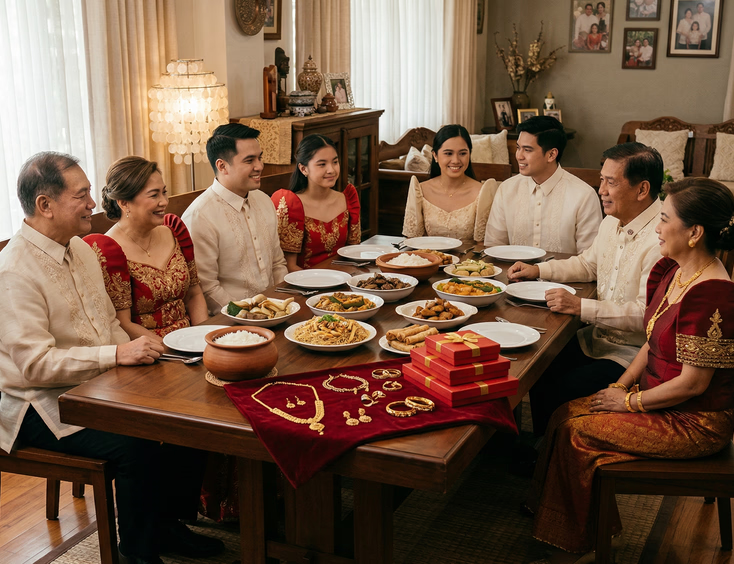
Catholic and Protestant Wedding in the Philippines: What the Church Allows and What Couples Choose
A Catholic and Protestant couple in the Philippines enters a planning process shaped by two distinct but historically connected Christian traditions. Both partners are baptized. Both recognize scripture. Both have a theology of marriage as a sacred covenant. The differences sit in church authority, sacramental theology, worship culture, and the specific rules each institution applies to interfaith unions. Working through those differences requires understanding what each church actually permits, not what families assume.
The Protestant Landscape in the Philippines
Protestantism in the Philippines covers a wide range of denominations. The United Church of Christ in the Philippines is the largest Protestant body in the country, formed from the merger of several mainline denominations. The Methodist Church, the Presbyterian Church, the Convention of Philippine Baptist Churches, the Episcopal Church in the Philippines, and the Lutheran Church in the Philippines all maintain active congregations across Luzon, Visayas, and Mindanao.
These denominations vary in their theological orientation, their liturgical formality, and their openness to interfaith ceremonies with Catholic clergy. A United Church of Christ minister in Metro Manila may approach a joint ceremony with a Catholic priest differently than a conservative Baptist pastor in a provincial town. The denomination matters. The individual pastor matters even more.
The Catholic Church, by contrast, applies the same canonical framework to every mixed religion marriage regardless of which Protestant denomination the non-Catholic partner belongs to. Both partners being baptized Christians places this marriage in the mixed religion category under Canon Law, which is the more workable of the two interfaith categories the Church uses.
For the full legal and canonical framework governing interfaith marriages in the Philippines, read the complete guide to interfaith marriage in the Philippines.
What the Catholic Church Requires
Mixed Religion, Not Disparity of Cult
Canon Law distinguishes between two types of interfaith marriages. A marriage between a Catholic and a baptized non-Catholic is a mixed religion marriage. A marriage between a Catholic and an unbaptized person is a disparity of cult marriage. A Catholic marrying a Protestant falls into the first category.
This distinction matters because the mixed religion dispensation process is less restrictive than the disparity of cult process. The Catholic Church recognizes the Protestant partner's baptism as valid. The theological distance between the partners is smaller in the Church's framework, and the pastoral requirements reflect that.
The Dispensation From Mixed Religion
The Catholic partner applies for a dispensation from mixed religion through the parish priest, who forwards the application to the diocese. The dispensation is not a formality, but it is granted in the majority of cases where the couple meets the canonical requirements and completes the pre-marriage process honestly.
The Catholic partner must promise to remain in the Catholic faith and to do everything within their power to raise children Catholic. The Protestant partner must be informed of this promise. The Protestant partner does not sign it, but the canonical interview will confirm they are aware of its content and have not been kept in the dark.
The dispensation process runs through the diocese, not just the parish. Processing takes two to four months in most Philippine dioceses. Start the application at least six months before the wedding date.
Dispensation From Canonical Form
If the wedding will not take place in a Catholic church with a Catholic priest officiating, the Catholic partner needs a second dispensation, the dispensation from canonical form. This covers ceremonies held in Protestant church buildings, hotel ballrooms, garden venues, and any other setting outside a Catholic church.
Apply for both dispensations simultaneously. Tell the parish priest from the first meeting that the ceremony will be held outside a Catholic church, or that a Protestant minister will co-officiate. This information shapes both applications and should be on the table from the start.
Pre-Cana and the Canonical Interview
Both partners attend the canonical interview with the parish priest. Both partners must complete the Pre-Cana or Marriage Preparation Seminar required by the diocese. The specific format varies. The Archdiocese of Manila, the Archdiocese of Cebu, and provincial dioceses each run their own programs with different session formats and schedules.
Confirm the full list of pre-marriage requirements with the parish early. Some dioceses require attendance at multiple sessions over several weekends. Others offer intensive formats. Build this into the timeline before confirming the wedding date.
What the Protestant Church Requires
Denominational Variation Is the Rule
No single standard governs how Protestant denominations in the Philippines approach marriages involving a Catholic partner. Each denomination sets its own policies, and individual pastors often have discretion within those policies.
The United Church of Christ in the Philippines has a history of ecumenical engagement with the Catholic Church. UCCP ministers have co-officiated at ceremonies with Catholic priests in a number of documented cases. Methodist and Presbyterian ministers tend toward similar openness, particularly in urban congregations with educated memberships familiar with interfaith dialogue.
Baptist and more conservative evangelical Protestant congregations are more variable. Some pastors in these traditions hold strong theological objections to participating in a ceremony that includes Catholic liturgical elements. Others focus on the couple's genuine faith commitment and are willing to work within an interfaith ceremony structure.
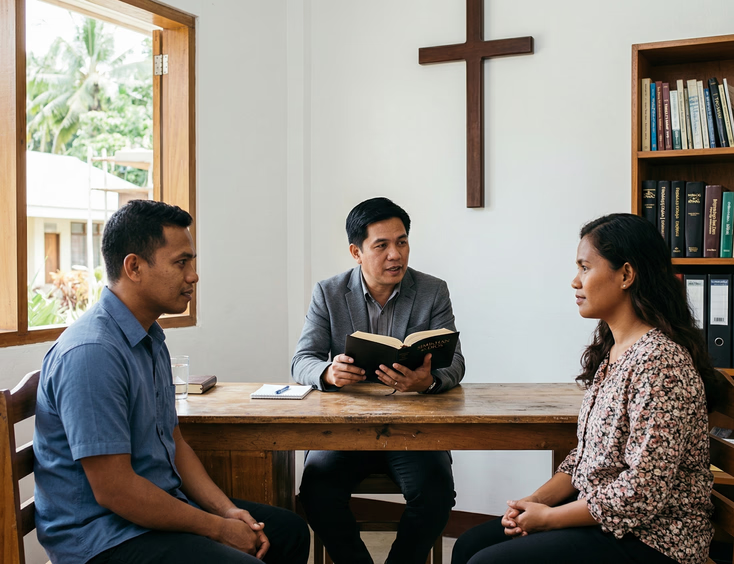
The Protestant partner needs to speak with their pastor before any ceremony planning begins. Ask the pastor directly whether they will co-officiate with a Catholic priest, whether they will officiate a ceremony in a non-Protestant venue, and what the church's pre-marriage requirements are for members.
Pre-Marital Requirements at the Protestant Church
Most Protestant denominations in the Philippines require members to complete a pre-marital counseling or preparation program before the church recognizes or participates in the wedding. The structure varies by denomination and congregation.
UCCP congregations typically have a pre-marital counseling process run by the minister or a designated church counselor. Methodist churches may require attendance at a church-organized couples' seminar. Baptist congregations often require several sessions of pastoral counseling.
If both the Catholic Pre-Cana program and the Protestant church's pre-marital requirement run concurrently, the couple may be completing two separate programs on overlapping schedules. Map out both timelines side by side before confirming the wedding date.
When the Pastor Will Not Co-Officiate
A Protestant pastor who declines to share the ceremony with a Catholic priest is not blocking the marriage. They are drawing a line about their own participation based on their theology. Accept that line and work with what the pastor offers.
Many pastors who decline to co-officiate will attend the ceremony as a guest and offer a blessing privately or at the reception. Some will officiate a separate celebration for the Protestant community. Some will conduct a pre-wedding prayer service for the couple and the Protestant family.
These alternatives carry real meaning. A pastor's blessing at the reception, offered in the presence of the Protestant family, acknowledges the community's investment in the couple's life together without requiring the pastor to officiate alongside a priest.
Civil Marriage and Legal Requirements
Under the Family Code of the Philippines, both partners must secure a marriage license from the Local Civil Registrar where either partner has resided for at least six months. A Catholic priest and a Protestant minister registered with the Office of the Civil Registrar General both qualify as solemnizing officers under Philippine law.
If two officiants co-officiate the ceremony, confirm which one is designated as the primary solemnizing officer responsible for filing the marriage certificate with the Local Civil Registrar within 15 days of the ceremony. This is an administrative detail that creates legal complications if left unresolved before the wedding day.
Some Catholic-Protestant couples choose a civil ceremony before a judge as the legal foundation and hold the religious ceremony separately. This removes the pressure of synchronizing two church processes against a single wedding date and gives both communities a ceremony that fits their tradition without requiring either institution to accommodate the other.
Designing the Ceremony
A Joint Ceremony Structure That Works
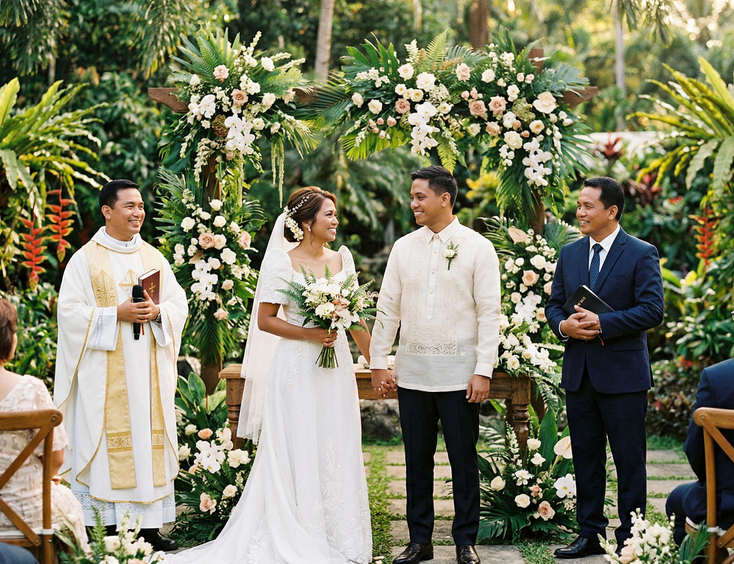
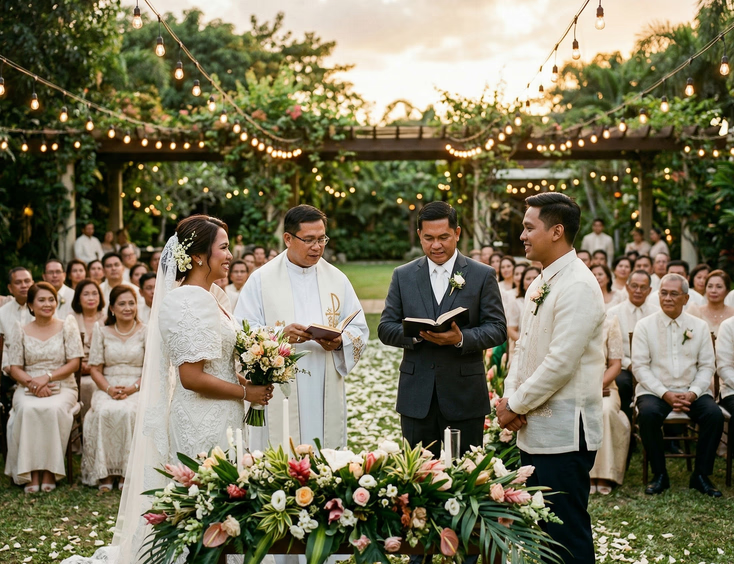
A joint ceremony co-officiated by a Catholic priest and a Protestant minister requires a program built with input from both officiants. Neither tradition should appear as decoration for the other.
A workable structure begins with a processional and an opening prayer offered jointly or by one officiant. The Catholic priest presides over the Rite of Marriage, including the exchange of vows, the exchange of rings, and the blessing of the couple. The Protestant minister delivers the homily or message, drawing from scripture both traditions share. The Catholic rituals, the arras, the veil, and the cord, follow with the priest presiding. The Protestant minister leads the closing prayer or benediction. Both officiants sign the marriage certificate.
Build the program in a document and share it with both officiants at least three weeks before the rehearsal. A priest and a minister who have reviewed the full program, flagged any elements they are uncomfortable with, and confirmed the sequence of events arrive at the rehearsal prepared rather than improvising.
A Catholic Ceremony With Protestant Participation
If the Protestant minister is not available or willing to co-officiate, the Catholic ceremony proceeds in full with the dispensation in place. The minister is invited to offer a scripture reading, a spoken blessing, or a prayer at a designated point in the program.
This keeps the Catholic Mass or Rite of Marriage structurally intact and gives the Protestant community a visible, meaningful presence in the ceremony. The minister does not need to co-officiate to participate with dignity. A well-placed reading from the Protestant tradition, acknowledged in the ceremony program, communicates respect without requiring either officiant to step outside their theological comfort.
A Protestant Ceremony With Civil Documentation
The Catholic partner's dispensation from canonical form allows the primary ceremony to take place in a Protestant church or a neutral venue with the Protestant minister officiating. The marriage is legally valid because the minister is a registered solemnizing officer.
The Catholic priest may attend as a guest, offer a blessing at the reception, or participate in the ceremony at whatever level the individual priest finds appropriate. The dispensation ensures the Catholic Church recognizes the marriage as valid.
Two Celebrations, One Marriage
A civil ceremony establishes the legal marriage. The Catholic community celebrates with a Catholic blessing, a Mass, or a parish ceremony. The Protestant community celebrates with a church service, a prayer gathering, or a congregation blessing. The couple attends both.
This format suits couples whose officiants cannot agree on a shared ceremony format and whose families have strong preferences that cannot be easily blended into a single event. It requires more logistical coordination but removes the pressure of designing one ceremony that satisfies two distinct theological communities simultaneously.
The Filipino Catholic Wedding Rituals in an Interfaith Context
The arras, veil, and cord are the three distinctive rituals of the Filipino Catholic wedding ceremony. They carry roots in Spanish colonial tradition and Filipino cultural practice.
The arras is a set of 13 gold coins presented by the groom to the bride, symbolizing the shared resources of the household. The priest blesses the coins before the exchange. The veil, placed over the bride's head and the groom's shoulder by secondary sponsors, represents unity. The cord, draped in a figure eight over both partners by a second pair of secondary sponsors, symbolizes the bond between them.
These rituals are part of the Catholic Rite of Marriage in the Philippines. In a joint ceremony, the Protestant partner participates in them as a cultural and personal expression of commitment, not as a declaration of Catholic doctrine. No profession of Catholic faith is required from the Protestant partner to receive the arras, the veil, or the cord.
Include a brief description of each ritual in the ceremony program. Protestant guests who have never attended a Filipino Catholic wedding will appreciate the context. Catholic guests who have never attended a service where a Protestant minister speaks will benefit from knowing what to expect as well.
Managing Both Families
Where Catholic Family Resistance Comes From
Filipino Catholic families are not opposing your partner as a person when they express concern about a Protestant marriage. They are protecting their understanding of continuity. A family that has marked every baptism, first communion, confirmation, and marriage with Catholic sacraments views an interfaith wedding as a break in that pattern.
Specific concerns tend to focus on grandchildren's baptism, the Catholic partner's continued Mass attendance, and whether the new household will observe Catholic traditions like the pabasa, the simbang gabi, and the Santo Nino devotion.
Respond to these concerns with specific answers. Tell your Catholic family what you and your partner have agreed about Mass attendance and the children's religious formation. Families who receive concrete information process their concerns faster than families who receive warmth and no substance.
Where Protestant Family Resistance Comes From
Protestant families in the Philippines who resist this pairing often express concern about Catholic theological positions they find problematic. The authority of the Pope, the role of the Virgin Mary in Catholic devotion, the veneration of saints, and the use of religious images are genuine theological disagreements between the two traditions, not invented obstacles.
A Protestant family worried that their child will drift from their faith community or abandon regular church attendance needs to see that the couple has addressed this together. Show them that both partners' faith commitments are taken seriously in the household, not just the Catholic partner's.
Seating, Introductions, and the Ceremony Program
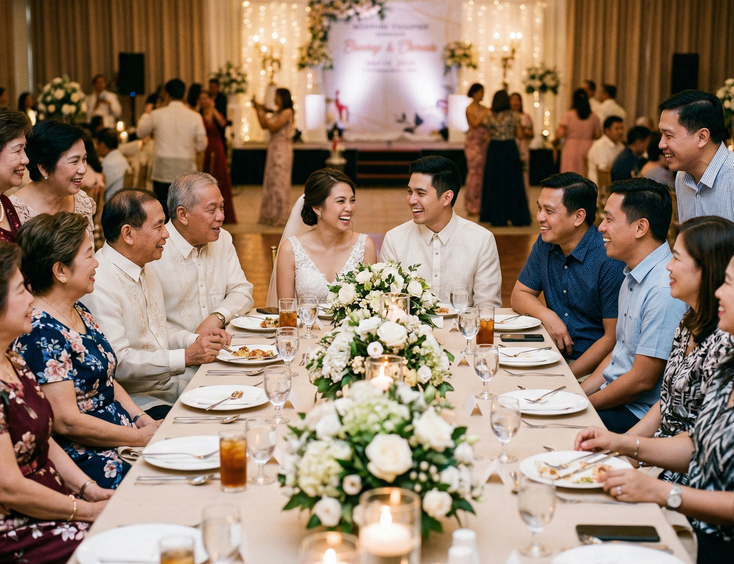
Seat both families in a way that creates genuine mixing rather than two distinct camps on either side of the aisle. A single blended seating arrangement communicates what the ceremony itself is expressing.
Brief family members from both sides before the wedding day about unfamiliar elements. A Protestant grandmother attending her first Filipino Catholic ceremony may not know when to sit, stand, or kneel. A Catholic uncle attending a Protestant service may be unfamiliar with responsive readings or contemporary worship music.
The ceremony program does most of this work if it is written clearly and includes enough context for guests from both traditions to follow along with understanding.
Raising Children in a Catholic and Protestant Household
The Catholic dispensation process requires the Catholic partner to promise to raise children in the Catholic faith. Many Protestant families hold equivalent expectations. Both expectations are sincere. Both are in tension.
Couples who handle this well do so by making a specific, shared decision before the wedding and holding to it with consistency. Some decide the children receive Catholic sacraments, attend Mass with the Catholic parent, and attend Protestant services with the Protestant parent on an agreed schedule. Some decide on one tradition for formal religious formation and the other for extended family observances. Some expose children to both traditions and let the children develop their own faith identity as they mature.
The framework matters less than the honesty used to build it. A couple who avoids the conversation before the wedding because it is uncomfortable will spend years negotiating it in the presence of children who absorb that tension.
Finding the Right Officiant
Your officiant, or your pair of officiants, shapes the entire ceremony. A priest who has co-officiated with Protestant ministers before brings a different ease to that collaboration than one encountering it for the first time. A Protestant minister who has participated in interfaith ceremonies understands the practical dynamics of sharing the ceremony with another tradition's clergy.
Ask both officiants directly how many Catholic-Protestant joint ceremonies they have performed and how they handle points of theological difference within the ceremony. Browse wedding officiants in our directory to find priests, Protestant ministers, and civil officiants across Metro Manila, Cebu, Davao, and other regions with documented interfaith ceremony experience.
Confirm your officiants before locking in the venue. The ceremony format you design depends on what both officiants agree to, and a venue secured before that conversation creates complications that cost more to fix than to prevent.
Related Guides for Interfaith Couples
The Catholic Church's dispensation process applies across all interfaith pairings, but the specifics shift depending on the non-Catholic partner's religious background.
For couples navigating a Catholic and Muslim pairing, two separate legal systems and two fully distinct religious frameworks are involved. Read Catholic and Muslim weddings in the Philippines for the full breakdown of the Nikah, the dispensation from disparity of cult, and designing a ceremony that honors both traditions.
Born Again Christians in the Philippines operate outside the mainline Protestant denominations and come with their own pastoral culture and pre-marriage requirements. Read Catholic and Born Again Christian weddings in the Philippines for how those dynamics differ from the Protestant context.
If your partner has no religious affiliation, the dispensation falls under disparity of cult and the family dynamics carry a different weight. Read non-religious partners marrying a Catholic in the Philippines for practical guidance on navigating both the Church requirements and the family conversations that come with that pairing.
Still Searching for a Right Match?
Find Your Perfect Wedding Supplier Today!
Discover trusted wedding suppliers across the Philippines in our complete directory. Compare services and connect with the ones that fit your dream celebration.
Browse Wedding SuppliersFeatured Posts
Regional Wedding Customs Every Filipino Couple Should Know
23 mins readThe Complete Guide to Filipino Wedding Invitations: From Traditional Customs to Modern Trends
12 mins readThe Complete Filipino Couple's Guide to Wedding Rings & Bands in the Philippines: Traditions, Styles, Budgets & Where to Buy
22 mins read