

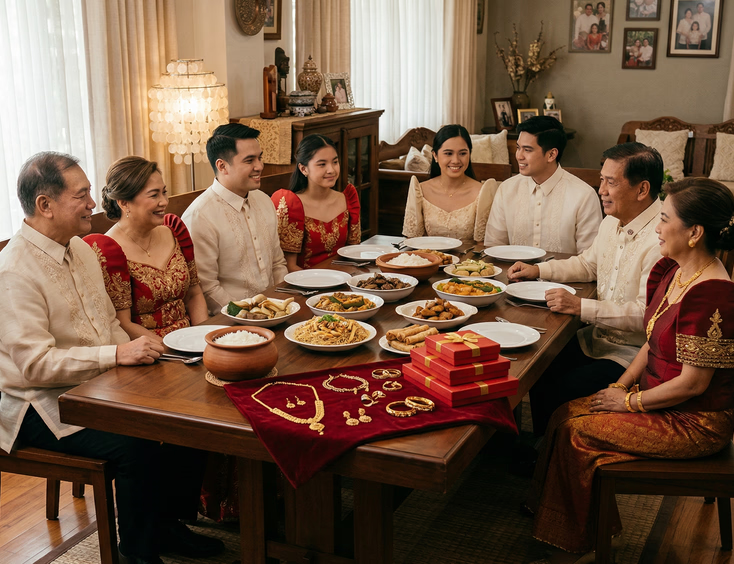
Catholic and Muslim Wedding in the Philippines: How to Blend Two Faiths With Respect and Love
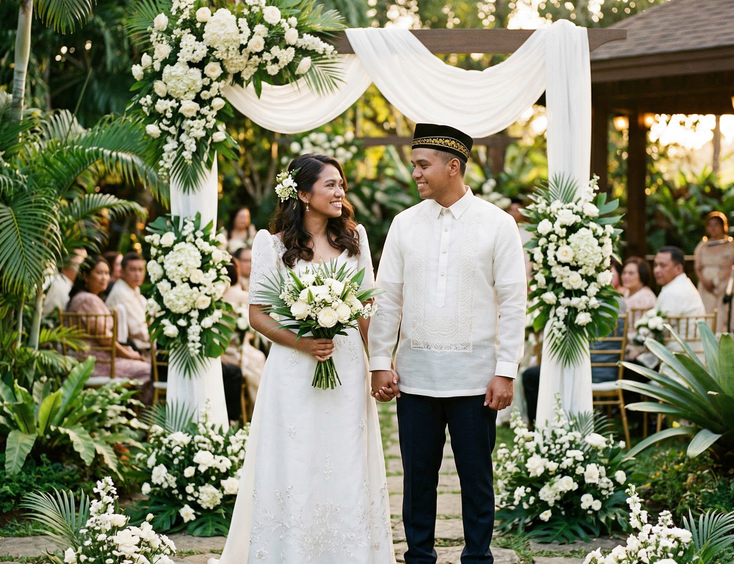
A Catholic and Muslim couple planning a wedding in the Philippines faces more moving parts than almost any other interfaith pairing. Two legal systems, two sets of religious requirements, and two families with deep convictions about how marriage should look all land on the same planning timeline. Couples who handle this well do so because they understand each system clearly and decide early what they want the day to mean.
Why This Pairing Is Uniquely Complex
Most interfaith couples in the Philippines deal with one religious institution's requirements. A Catholic marrying a Born Again Christian navigates the Catholic Church's dispensation process. A Catholic marrying a Protestant works through similar channels. This pairing brings in a second fully developed legal and religious framework: the Code of Muslim Personal Laws, Presidential Decree 1083, which governs Muslim marriages in the Philippines independently of the Family Code.
The Catholic Church and Islamic law each have their own rules about who can marry whom, under what conditions, and what the marriage ceremony must include. Neither system automatically recognizes the other. This means a Catholic-Muslim couple needs to satisfy both systems, one system, or choose a civil marriage that satisfies neither religiously but satisfies both legally.
Understanding what each system actually requires, not what families assume it requires, is where the planning starts.
For a broader overview of legal requirements and interfaith marriage structures in the Philippines, read the complete guide to interfaith marriage in the Philippines.
What Islamic Law Says About This Marriage
The Muslim Man Marrying a Catholic Woman
Under classical Islamic jurisprudence and the Code of Muslim Personal Laws, a Muslim man may marry a Kitabiyya, a woman from the People of the Book. Christians and Jews fall into this category. A Filipino Catholic woman qualifies.
The Nikah, the Islamic marriage contract, can proceed with the Catholic woman without requiring her conversion. She does not need to become Muslim. She does not need to make any declaration of faith. She does, however, need to understand what the Nikah requires from her side of the arrangement and agree to it.
The Muslim Woman Marrying a Catholic Man
Islamic law does not permit a Muslim woman to marry a non-Muslim man. This is not a cultural preference. It is a doctrinal position across all major schools of Islamic jurisprudence and is reflected in the Code of Muslim Personal Laws.
A Muslim woman in the Philippines who wishes to marry a Catholic man has two options. Her partner converts to Islam sincerely and formally before the Nikah, or the couple marries civilly without a Nikah and accepts that the Muslim woman's family and community may not recognize the marriage as religiously valid.
The conversion path requires genuine commitment, not paperwork. The documentation matters, but an imam performing the Nikah will assess whether the conversion is sincere. Families on the Muslim side will assess it too. A rushed conversion done purely to satisfy the Nikah requirement often creates more conflict than it resolves.
What the Nikah Requires
For the Nikah to be valid under Philippine Muslim personal law and Islamic practice, four elements must be present.
The first is the ijab and qabul, the offer and acceptance exchanged between the groom and the bride's wali. The second is the wali, the bride's male guardian, who gives her in marriage. If the bride's father is deceased or unavailable, the wali passes to the next closest male relative in the order established by Islamic law. The third is the mahr, a mandatory gift from the groom to the bride. The mahr is the bride's right, not a symbolic gesture, and the amount is agreed upon before the ceremony. The fourth is two Muslim male witnesses.
The Nikah is registered with the Shari'a court and the Local Civil Registrar, making it legally binding under Philippine law.
What the Catholic Church Says About This Marriage
The Disparity of Cult Classification
A Muslim is unbaptized. Under Canon Law, a marriage between a Catholic and an unbaptized person falls under the disparity of cult category. This is distinct from a mixed religion marriage, which involves two baptized Christians from different denominations.
The disparity of cult designation means the Catholic partner needs a dispensation from the local bishop before the Church will recognize the marriage. Without this dispensation, the Catholic who marries a Muslim is not considered validly married by the Church, regardless of civil legal status.
How to Apply for the Dispensation
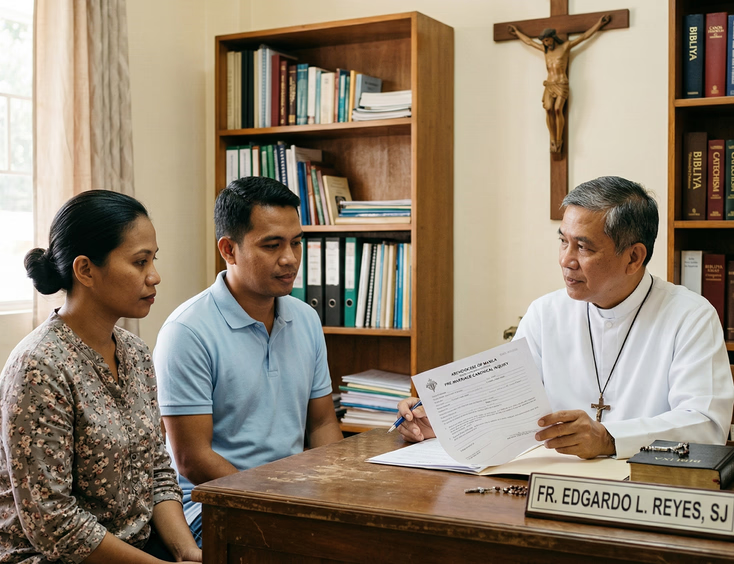
The dispensation application is filed through the Catholic partner's parish priest. The process includes a canonical interview with both partners, completion of the Pre-Cana or Marriage Preparation Seminar, and submission of the required documents to the diocese.
The Catholic partner must promise to remain in the Catholic faith and to do everything in their power to raise children Catholic. The Muslim partner must be informed of this promise. The Muslim partner does not sign the promise, but the priest must confirm they are aware of it.
Processing timelines vary by diocese. In Metro Manila, the Archdiocese typically takes two to four months. In provincial dioceses, timelines differ. Start this process at least six months before the wedding date, preferably earlier.
The Dispensation From Canonical Form
If the wedding will not take place in a Catholic church or will not be officiated by a Catholic priest, the Catholic partner also needs a dispensation from canonical form. This covers civil weddings, Nikah ceremonies where the Catholic partner participates, and any venue outside a church building.
Both dispensations, disparity of cult and canonical form, can be applied for simultaneously. The parish priest handles the paperwork. Couples who attempt to navigate this without a cooperative parish priest spend significantly more time and energy on the process.
The Civil Wedding Option and Why Most Couples Choose It
A civil wedding before a judge or mayor satisfies Philippine family law requirements for both partners without triggering the religious requirements of either institution.
The civil marriage license application requires both partners to appear at the Local Civil Registrar of the city or municipality where either of them has resided for at least six months. The standard requirements apply: PSA birth certificates, CENOMAR, community tax certificates, and completion of the Family Planning and Responsible Parenthood seminar.
The civil ceremony itself is brief. Most couples use it to establish the legal marriage and then hold religious ceremonies separately, on the same day or on different occasions.
This structure gives the couple a clean legal foundation without putting either religious institution in the position of officiating a ceremony the other institution does not recognize. It also protects both partners legally, regardless of what happens at the religious level.
Designing a Ceremony That Honors Both Faiths
Two Separate Ceremonies
The most straightforward structure for a Catholic-Muslim couple is two distinct ceremonies. A Nikah performed by an imam, registered with the Shari'a court and the civil registrar, serves as the Islamic marriage. A Catholic blessing or ceremony, with the dispensation in place, serves the Catholic partner's faith.
These ceremonies do not have to happen on the same day. Some couples hold the Nikah in the morning and the Catholic blessing in the afternoon. Some hold the Nikah one weekend and a Catholic celebration the following month. Others hold the civil wedding first and then the Nikah and Catholic ceremony at a reception celebration.
The sequencing depends on what both families need and what feels right to the couple.
A Single Blended Ceremony
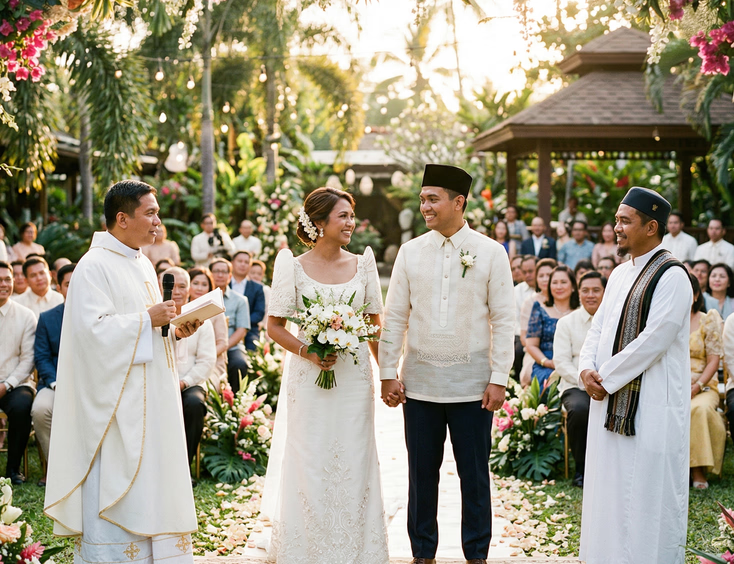
A single ceremony that incorporates elements from both traditions requires more coordination but can be deeply meaningful when done with care.
The structure varies by couple, but a workable format includes an opening by a civil officiant who frames the ceremony as a celebration of two faiths, the Nikah conducted by an imam with the wali, the mahr, and the witnesses in place, a Catholic blessing offered by a priest or a lay Catholic minister if the priest is not available, the exchange of vows in a form both partners find meaningful, and a closing that acknowledges both communities present.
This format requires an imam and a Catholic priest who both agree to participate in a shared space. Not every imam and not every priest will agree. Finding officiants with interfaith ceremony experience is the first practical step. Browse wedding officiants in our directory to find officiants with experience in Catholic-Muslim ceremonies across Metro Manila, Mindanao, and other regions.
Elements From Each Tradition
The Nikah elements that carry the most visible weight in the ceremony are the recitation of the Fatiha by the imam, the exchange of the ijab and qabul, and the mahr presentation.
Catholic elements that work in a shared ceremony include the arras, the 13 gold coins symbolizing shared resources, the veil and cord rituals, and a scripture reading. These elements do not require the Muslim partner to make any declaration of faith. They are rituals the Catholic partner brings from their tradition, and the Muslim partner witnesses them without participating in a way that conflicts with Islamic belief.
Brief guests through the ceremony program. A single line explaining what the mahr represents, or what the arras symbolizes, gives guests from both communities context.
The Ceremony Program
Write every element of the ceremony in order before finalizing anything. Assign responsibility for each element to a specific person. Confirm with the imam and the priest independently that they are comfortable with the sequence and the presence of the other religious leader.
Print bilingual programs if the families speak different primary languages. Muslim families from Mindanao may include speakers of Maranao, Tausug, or Maguindanaon. Catholic families from Luzon may be primarily Tagalog or Ilocano. A ceremony program that all guests can follow makes the event feel inclusive rather than fragmented.
Muslim Wedding Traditions in the Philippines You Should Know
Mindanaoan Muslim Wedding Customs
Muslim wedding traditions in the Philippines vary significantly by ethnolinguistic group. The Maranao, Tausug, Maguindanaon, Iranun, and Yakan communities each have distinct customs around the wedding celebration.
Among the Maranao, the pakawin ceremony involves the formal presentation of the bride to the groom's family. The wedding may include the kulintang ensemble playing traditional music throughout the celebration. The bride often wears a malong in elaborate woven fabric with the okir motif.
Among the Tausug, the kanduli, a communal feast, is central to the wedding celebration. The ceremony may include the hadji, a formal religious leader, and the exchange of betel nut among elders as a sign of hospitality.
These traditions carry deep cultural weight. A Catholic partner entering a Muslim family does not need to perform these rituals themselves, but showing genuine curiosity and respect for them matters enormously to the Muslim family.
The Walima
The walima is the Islamic wedding feast. It is a sunnah, a recommended practice, not an obligation, but most Muslim families in the Philippines hold one. The walima is the public announcement of the marriage within the Muslim community.
Halal food is non-negotiable at the walima. The Catholic partner's family members attending may eat from the same spread. A halal-certified caterer handles the preparation and service.
If the reception combines the walima with a broader wedding celebration for guests from both communities, work with your caterer on a menu that respects halal requirements across the board. Do not set up a separate pork station at a walima. That is a significant breach of respect.
Dress for Both Ceremonies
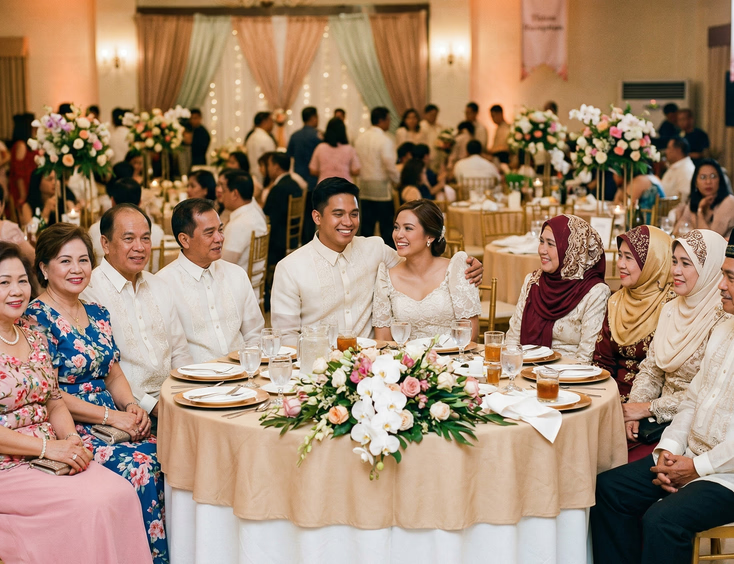
The bride's dress in a Nikah ceremony or walima typically involves modest coverage. Head covering is common in conservative Muslim communities, though practice varies. Some Filipino Muslim brides wear a hijab for the Nikah and change into a different outfit for a separate celebration.
If the Catholic partner is the bride and the Muslim partner is the groom, discuss with the groom's family what they expect for the Nikah ceremony. A Catholic bride who covers her hair for the Nikah as a mark of respect communicates genuine consideration. It is a gesture, not a religious obligation on her part.
Managing the Two Families
What Catholic Families Fear
Filipino Catholic families opposed to this pairing tend to express concern about three things: the religious upbringing of future children, the Catholic partner's continued practice of their faith, and social perception within their community.
These concerns are legitimate. Address them directly rather than dismissing them as prejudice. Tell your Catholic family what your plan is for practicing your faith after the wedding. Tell them what you and your partner have decided about how you will raise children. Give them concrete information rather than reassurances.
A Catholic family that sees their child is not abandoning their faith and has thought seriously about the future is far easier to bring along than one that feels excluded from the process.
What Muslim Families Fear
Muslim families, particularly in conservative communities, may oppose the marriage on the grounds of faith compatibility, social standing within the community, or the expectation that the Catholic partner is not serious about understanding Islam.
The Muslim partner should bring the Catholic partner into family gatherings before the wedding. Showing the Catholic partner's willingness to learn, to eat halal food, to greet elders appropriately, and to engage with the family's customs goes further than any formal assurance.
If the Muslim family's primary concern is the children's religious upbringing, the couple needs to discuss this clearly with both families and present a unified position. Families accept a clear, shared position more readily than two partners who seem to be telling each family what they want to hear.
When Families Disagree With the Marriage
Some families will not come around before the wedding. A Catholic family that cuts contact or a Muslim family that refuses to attend the ceremony creates grief that no planning guide can prepare you for.
Give families time to process. Announce your engagement early. Do not present the wedding as a fait accompli with six weeks' notice. Families who feel they had time to raise their concerns and were heard, even if the decision did not change, adjust faster than families who were blindsided.
If a family member refuses to attend, do not issue ultimatums. Keep the door open. Weddings that happen over a family's objection often lead to reconciliation within a year or two, particularly after children arrive. Ultimatums close that door permanently.
Practical Planning Checklist for Catholic-Muslim Couples
Legal
- Apply for the marriage license at the Local Civil Registrar
- Confirm whether you are marrying under the Family Code, the Code of Muslim Personal Laws, or both
- Register the Nikah with the Shari'a court if applicable
- File the civil marriage certificate with the Local Civil Registrar
Catholic Church
- Begin the canonical interview process with the parish priest
- Submit the dispensation from disparity of cult application to the diocese
- Submit the dispensation from canonical form application if the ceremony is outside a church
- Complete the Pre-Cana or Marriage Preparation Seminar
Nikah
- Confirm the imam and their registration as a solemnizing officer
- Confirm the wali and the witnesses
- Agree on the mahr amount and form
- Register the Nikah with the Shari'a court
Ceremony
- Confirm both the imam and the priest agree to co-officiate or to participate in sequence
- Design the ceremony program with input from both officiants
- Brief all suppliers on the dual-faith structure of the ceremony
Reception
- Confirm halal-certified catering
- Design a menu that works across both communities
- Communicate dress code expectations clearly in the invitation
Other Interfaith Pairings Worth Reading
If you are researching interfaith wedding options in the Philippines more broadly, the same legal and cultural principles apply across different faith combinations with different specifics.
Couples where one partner is a Born Again Christian face a different set of denominational considerations. Read Catholic and Born Again Christian weddings in the Philippines for a full breakdown.
Protestant partners bring their own denominational rules and pastoral flexibility to the process. Read Catholic and Protestant weddings in the Philippines for the specifics.
If your partner has no religious affiliation, the dispensation process and family dynamics take a different shape entirely. Read non-religious partners marrying a Catholic in the Philippines for practical guidance.
Finding the Right Officiant
The officiant, or officiants, you choose determine more about the ceremony's tone than any other single decision. An imam who has performed Nikah ceremonies for interfaith couples brings a different level of ease to the ceremony than one who has not. A priest who has co-officiated with Muslim clergy understands the logistical and pastoral questions that arise.
Browse wedding officiants in our directory and look specifically for officiants who list interfaith or Catholic-Muslim ceremony experience. Ask them directly how many Catholic-Muslim weddings they have handled and what their approach is to the other faith leader's presence in the ceremony.
A well-matched pair of officiants does not just perform two ceremonies in sequence. They help the couple and the families feel that both traditions were honored with equal seriousness.
Still Searching for a Right Match?
Find Your Perfect Wedding Supplier Today!
Discover trusted wedding suppliers across the Philippines in our complete directory. Compare services and connect with the ones that fit your dream celebration.
Browse Wedding SuppliersFeatured Posts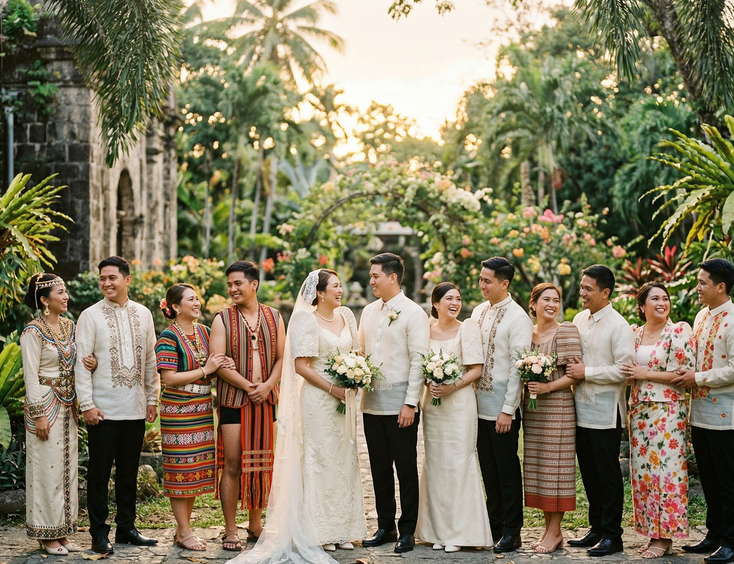
Regional Wedding Customs Every Filipino Couple Should Know
23 mins readThe Complete Guide to Filipino Wedding Invitations: From Traditional Customs to Modern Trends
12 mins readThe Complete Filipino Couple's Guide to Wedding Rings & Bands in the Philippines: Traditions, Styles, Budgets & Where to Buy
22 mins read