


Why Every Filipino Wedding Needs a Roving Photo Booth Instead of a Fixed One
You booked a photo booth for your Filipino wedding reception. The backdrop looks great. The props are ready. Then 150 guests show up, and a line snakes past three tables. Titas check their phones. Lolo sits back down. Half the barkada skips the booth because the queue is too long.
A fixed photo booth creates a single point of contact for your entire guest list. In a four-to-five-hour Filipino reception packed with traditions, speeches, and games, that bottleneck turns your entertainment station into a waiting area.
A roving photo booth removes the line. The photographer walks to your guests, shoots wherever the action is, and prints on the spot. This guide breaks down how a roving setup works, why it fits Filipino wedding receptions better than a fixed booth, and how to get the most out of it on your wedding day.
What a Roving Photo Booth Is and How It Works
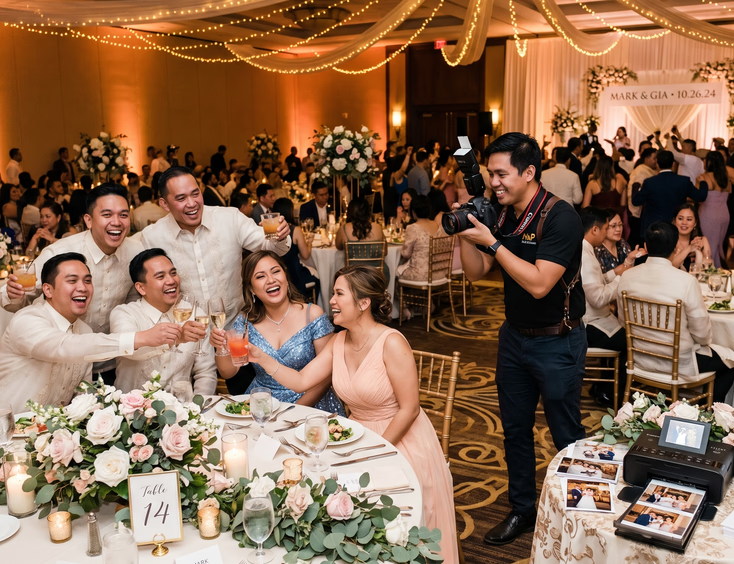
A roving photo booth, called a "Photoman" by Filipino suppliers, is a roving photographer who captures candid moments of guests and prints personalized photos on-site. The photographer carries a professional DSLR camera and works with a base station printer set up at a nearby table.
The operator roams around the venue, approaches tables and groups, snaps photos, and sends the images to the printer wirelessly. Guests receive a 4R print with a custom layout template matching your wedding theme within minutes of being photographed.
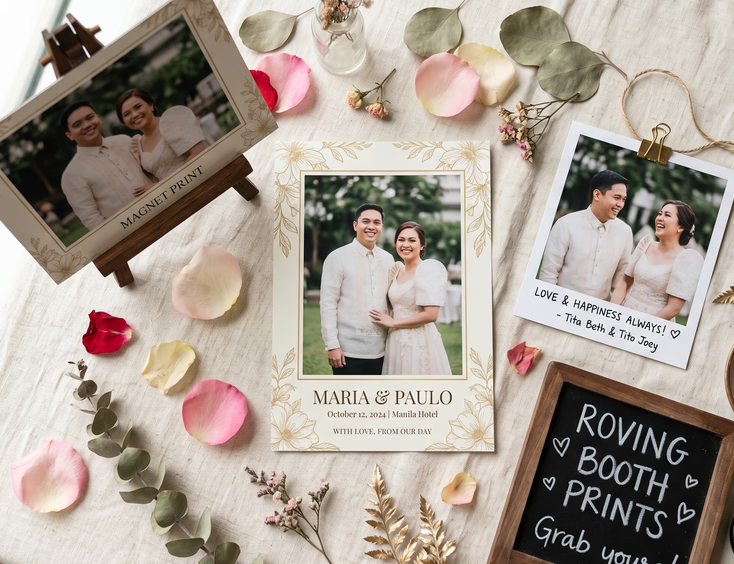
Some suppliers also offer magnetic prints, polaroid-style outputs, and digital galleries uploaded to a cloud drive or Facebook album after the event. The roving photographer doubles as both a souvenir station and supplemental event coverage.
The Fixed Booth Bottleneck at Filipino Receptions
Filipino wedding receptions pack multiple elements into a single ballroom or function hall: a presidential table, 10 to 20 round guest tables, a buffet line, a stage, a dance floor, a cake table, and the dessert or candy buffet. Adding a fixed photo booth with a backdrop, props table, stanchions, and queue space eats into an already crowded floor plan.
A fixed booth also competes with the program. When the emcee calls for the money dance or the bouquet toss, guests near the booth face a choice: stay in line or join the activity. Many stay in line because they waited 10 minutes to get there. They miss the program moment. The couple misses their faces in the crowd.
Venue coordinators at smaller Metro Manila hotels and function halls have flagged this issue. Some spaces cannot accommodate a fixed photo booth at full table count. A roving setup skips the backdrop, props, and queue infrastructure, freeing floor space for your guests.
Why Roving Works Better for Filipino Wedding Guest Dynamics
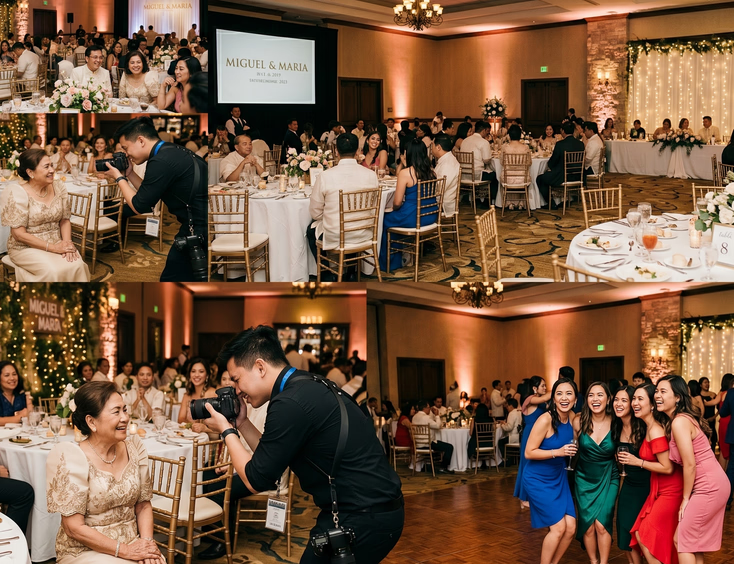
Filipino weddings bring together multiple generations and social circles. Your guest list includes lolas who sit at their table for most of the night, titos who station themselves near the bar, barkada groups who cluster on the dance floor, and ninang tables that prefer a dignified photo without silly props.
A fixed booth asks all of these groups to come to one spot. A roving photographer meets each group where they are. The photographer approaches a table of lolas mid-laugh and captures that moment without asking them to stand, walk across the ballroom, and pose in front of a backdrop.
Guests who are shy or introverted benefit too. A roving photographer can approach them at their seat, take a quick shot, and move on. They get a souvenir without the pressure of standing in a spotlight.
For larger guest lists of 150 or more, a single fixed booth struggles to serve the full crowd in three to four hours. A roving photographer covers ground faster because each session takes 30 to 60 seconds per group with no queue time between sessions.
What the Output Looks Like
Roving booth suppliers in the Philippines print in 4R format (4x6 inches) on satin or glossy photo paper. The prints include a custom layout template designed around your wedding theme: your names, wedding date, a monogram, and a decorative border that matches your invitation suite.
Some suppliers offer upgrades:
- Magnetic prints that guests stick on their fridge at home
- Polaroid-style prints with a white border and handwritten message space
- Mini gouache portrait add-ons where a separate artist sketches guests based on the roving photographer's shots
Digital copies go to a cloud drive or online gallery after the event. Your photographer uploads all images with the custom layout, so guests can download and share.
The print quality from a dedicated base station printer using satin paper holds up well compared to a fixed booth's thermal printer. Both produce fade-proof prints, but the roving setup's 4R size gives guests a larger keepsake than the standard 2x6 photo strip.
Pricing in the Philippine Market
Roving photo booth (Photoman) packages start lower than fixed booth packages. A two-hour roving package with unlimited shots, 4R prints, a custom layout, and digital copies starts around ₱6,000 to ₱7,500. Three-hour packages run ₱7,500 to ₱9,000.
Add-ons include:
- Rental extension: ₱1,000 per additional hour
- Magnetic prints: ₱1,500 per hour
- Photo reprints: ₱50 per print
A standard fixed photo booth with backdrop, props, and unlimited prints runs ₱8,000 to ₱20,000 for three to four hours. The roving option saves ₱2,000 to ₱10,000 depending on coverage length and add-ons.
If your budget allows both, you can run a fixed booth during cocktail hour (while guests wait for the program to start) and switch to a roving photographer after dinner when the dance floor opens and guests scatter. Some suppliers bundle both formats in one package.
For couples weighing this against a video booth, read our comparison of photo booths vs. video booths for Filipino couples.
The Lighting Trade-Off
Fixed booths control their lighting. Studio-grade ring lights, softboxes, and consistent backdrops produce uniform, flattering photos for every guest. The lighting stays the same whether you shoot at 6 PM or 11 PM.
Roving photographers work with the venue's ambient light. Reception lighting varies across the room: the dance floor may have colored uplighting, the presidential table may have warm pin spots, and the lounge area may be dim. That variation affects skin tones, sharpness, and white balance.
A skilled roving photographer compensates with an on-camera flash, a diffuser, and manual exposure adjustments. The results will not match the controlled studio look of a fixed booth, but they capture the energy and context of the moment: your lola in her seat, your barkada on the dance floor, your ninang at the dessert table.
If you prioritize consistent, studio-quality portraits for every guest, a fixed booth or a glam portrait station delivers that. If you prioritize candid, in-context photos across the venue, the roving setup wins.
When to Use a Roving Booth During Your Reception
A roving photographer can operate across the full reception, but certain segments produce better results:
| Reception Segment | Roving Booth Strategy |
|---|---|
| Cocktail hour | Photograph arriving guests, table setups, early group shots |
| After the entrance | Table-to-table coverage while guests settle in |
| Between speeches | Pause to let guests focus on the program |
| After dinner | Resume with dance floor coverage and group shots |
| Dance portion | Capture barkada groups mid-dance, couples on the floor |
| Last hour | Final rounds for late arrivals and stragglers |
Coordinate the roving schedule with your emcee. Ask the emcee to give a short cue ("Our roving photographer is making the rounds, so smile big at your table!") twice during the reception. That prompt reminds guests to stay camera-ready and gives the photographer a natural opening to approach tables.
Pairing a Roving Booth with Other Reception Activities
A roving photo booth handles the printed keepsake angle. Pair it with activities that serve different purposes to fill out your entertainment lineup.
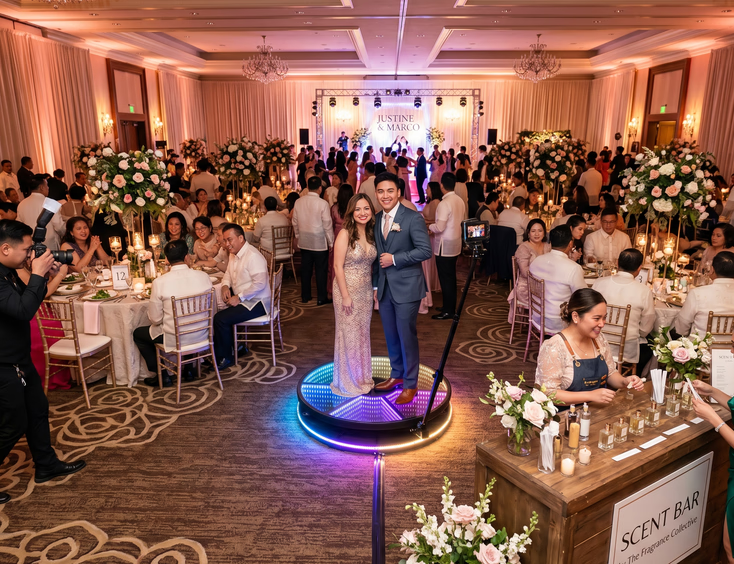
Add a 360 video booth on a budget as a fixed station near the dance floor. Guests who want a cinematic video clip head to the platform. Guests who prefer a printed photo wait for the roving photographer to swing by their table. The two formats serve different guest preferences without competing for the same space.
Add a scent bar during cocktail hour for a hands-on souvenir experience that keeps guests busy while the roving photographer covers the room. Add a video guestbook station near the entrance so guests record messages as they arrive.
For a full breakdown of how to combine booth types and activities across a Filipino reception timeline, read our guide on wedding booths and activities that keep Filipino wedding guests entertained all night.
What to Ask Your Roving Booth Supplier Before Booking
Get these details confirmed before you sign:
- Do you use a DSLR or a mirrorless camera? What lens?
- Is the base station printer thermal or inkjet? What paper type?
- How many guests per hour can you cover?
- Can I customize the print layout to match my invitation design?
- Do you offer magnetic or polaroid-style print upgrades?
- Is there an online gallery or cloud drive for digital copies?
- Do you charge extra for overtime, travel, or staff meals?
- Can you also shoot candid coverage of program highlights (not printed, raw files only)?
Keep communication in writing. Save all emails and messages. Confirm the booking with a signed contract and a downpayment.
Making It Work on Wedding Day
Brief your roving photographer during the final planning meeting, one to two weeks before the wedding. Share the following:
- Your reception timeline with program segments marked
- A shot list of priority tables (parents, godparents, VIP guests)
- Your floor plan showing table numbers, the dance floor, and the buffet
- Your emcee's name and contact number for day-of coordination
- Any restrictions from the venue (off-limits areas, lighting schedules)
On the day, the photographer arrives one to two hours before guests for setup and test prints. The base station printer goes on a side table near a power outlet, away from the buffet and the bar. The photographer tests print quality under the venue's actual lighting and adjusts camera settings before the first guest walks in.
Let the photographer work without heavy direction during the event. A good roving operator reads the room, identifies groups that are ready for a photo, and moves on before guests feel interrupted. Your job is to enjoy the night.
Browse verified roving photo booth suppliers and compare packages in our booths and activities supplier directory.
Still Searching for a Right Match?
Find Your Perfect Wedding Supplier Today!
Discover trusted wedding suppliers across the Philippines in our complete directory. Compare services and connect with the ones that fit your dream celebration.
Browse Wedding SuppliersFeatured Blog Posts

Filipino Wedding Entourage - Roles, Order of March, and Modern Etiquette
6 mins readCivil Weddings in the Philippines - Requirements, Costs, and Step-by-Step Process
9 mins readCivil Wedding Requirements in the Philippines - Complete Checklist
6 mins readCost of Wedding in the Philippines - 5 Essential Things You Need to Know
7 mins readPrincipal Sponsors (Ninong/Ninang) - How Many, How to Ask, What They Really Do
4 mins readVeil, Cord, Candle & Coins - Roles, Options, and When They Happen
4 mins readEntourage for a Traditional Pinoy Wedding - Complete Roles and Guide
6 mins readComplete List of Civil Wedding Requirements in the Philippines
8 mins readHow to Choose Wedding Ninongs and Ninangs - Ask Yourself These 3 Important Questions
5 mins read