

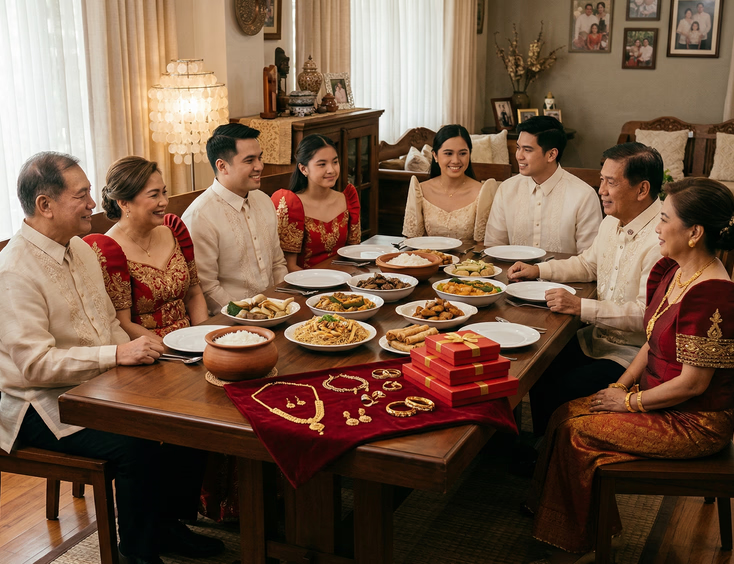
What to Wear to a Chinoy Wedding: A Guest Dress Code Guide
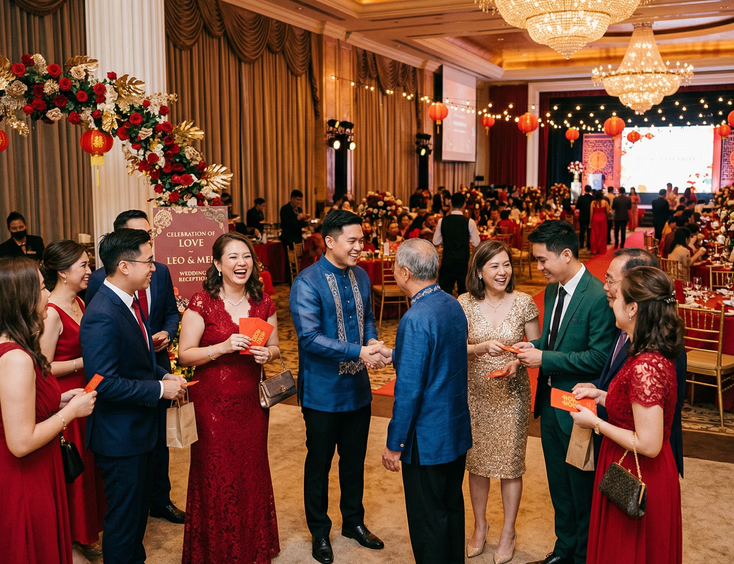
Getting the dress code right at a Chinoy wedding requires more than checking the formality level on the invitation. The color you wear carries meaning in Chinese culture, and showing up in the wrong shade signals something you almost certainly did not intend. This guide covers what to wear, what to avoid, how to dress for each part of the day, and how to read the dress code cues the invitation gives you.
Why Color Matters More at a Chinoy Wedding
At most Filipino weddings, color choice for guests is a matter of personal preference with one standard rule: avoid white because it belongs to the bride. At a Chinoy wedding, the color restrictions are wider and the reasoning runs deeper.
Chinese culture assigns specific meanings to colors, and those meanings travel into the wedding context. Wearing white to a Chinoy wedding does not just risk upstaging the bride. White is the color of mourning in Chinese tradition, associated with funerals and death. Wearing it to a celebration specifically designed to invoke prosperity and new beginnings reads as a profound mismatch to guests and family members who understand the symbolism.
Black alone carries similar associations. Worn without other colors, a fully black outfit carries funerary undertones in Chinese cultural contexts. Modern Chinoy families increasingly accept black as standard formalwear, particularly among younger guests, but dressing in head-to-toe black at a traditional Chinoy reception still registers as an odd choice to older family members who hold the symbolism seriously.
Red, gold, and jewel tones are not just acceptable at a Chinoy wedding. They are welcome. Wearing red as a guest does not upstage the bride the way it might at a Western wedding where the bridal party holds a color monopoly. Chinese culture celebrates red as the color of joy, luck, and prosperity. A room full of guests wearing red, gold, rose, emerald, and sapphire creates exactly the visual energy the family is trying to cultivate.
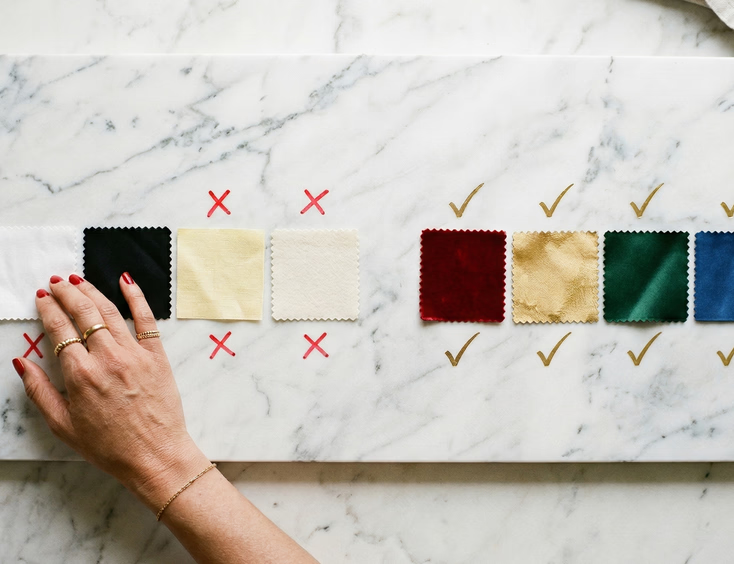
Colors to Wear
Red is the most celebratory choice and the one that signals the clearest cultural literacy. Wearing red to a Chinoy wedding shows that you understand the occasion and want to add to its festive energy. Any shade of red works, from deep burgundy to bright crimson to blush-adjacent rose.
Gold and champagne tones sit at the heart of Chinese celebration aesthetics. A gold evening gown or a champagne-toned barong pairs well with the red and gold decor that most Chinoy receptions feature. These colors photograph well in a ballroom environment and read as intentionally celebratory rather than accidentally matching.
Jewel tones work across the board. Deep emerald, sapphire blue, royal purple, and rich magenta all signal formal celebration and fit the visual language of a Chinoy reception. These shades appear frequently among the bridal party and among guests who understand the aesthetic.
Pink in its deeper shades, from dusty rose to hot pink to fuchsia, reads as celebratory and appropriate. Lighter blush pink sits in a slightly ambiguous zone because it edges toward white in low light, but for most modern Chinoy families, blush pink reads as a guest color without issue.
Warm earth tones, including terracotta, burnt orange, and rust, work well and add visual interest to the room without conflicting with the wedding palette. These are strong choices for guests who want to avoid the expected red or gold while still wearing a clearly celebratory color.
Colors to Avoid
White is the primary color to avoid, for the dual reason of mourning symbolism and the standard wedding rule of leaving white for the bride. An all-white outfit at a Chinoy wedding creates a double problem.
Solid black worn as the only color in your outfit is worth reconsidering. If you want to wear black, pair it with a strong colored accessory, a red clutch, a gold statement necklace, or a jewel-toned wrap, so the overall look reads as celebratory rather than somber. A black gown with bold gold jewelry and red heels communicates something entirely different from a plain black outfit with no color anywhere.
Pale yellow, in Chinese tradition, carries associations with funerals in certain regional contexts. This association is less widely held among Chinoy families in the Philippines than the white restriction, but traditional families may notice a pale yellow outfit where a deeper golden-yellow would have read as festive.
Any combination that creates an entirely monochromatic pale look, such as ivory on ivory or light gray on light gray, risks reading too close to the funeral palette for comfort at a traditional Chinoy wedding.
Formality Level: How to Read the Venue
The venue tells you the formality level more reliably than any printed instruction on the invitation. Chinoy wedding receptions at hotel ballrooms in Metro Manila, whether in Makati, Ortigas, or Quezon City, require formal to semi-formal evening attire. A 12-course Chinese banquet in a five-star hotel is a formal occasion by default.
Chinese restaurant banquet halls, even the most established ones in Binondo and Greenhills, carry a slightly more relaxed formality level than hotel ballrooms, but this is a matter of degree. Smart formal attire is still the appropriate target. The occasion is a wedding reception, and the Chinese banquet format is a sit-down multi-course dinner with ceremony throughout. Arriving in casual or smart casual attire will stand out for the wrong reason.
An invitation that specifies a dress code overrides the venue inference. If the couple writes cocktail attire, formal attire, or any specific instruction, follow it. If no dress code is specified, dress to match the venue category.
What to Wear for Men
Filipino male guests at a Chinoy wedding have two strong options: a barong tagalog or a Western suit.
A barong tagalog in a neutral shade, white, cream, or light blue, worn over dark trousers, is formal and culturally appropriate. The slight irony of wearing white in a barong context at a Chinoy wedding is generally accepted because the barong is a recognized Filipino formal garment rather than a deliberate color statement. Most Chinoy families with strong Filipino social networks expect to see barong tagalog on Filipino male guests and read it as respectful rather than culturally mismatched.
A Western suit in navy, charcoal, or dark gray with a colored tie or pocket square in red or gold strikes a formal note that also nods to the wedding's color palette. A fully black suit reads more somber than a dark navy or charcoal option, though it is widely accepted at modern Chinoy receptions.
Avoid a casual polo shirt and slacks combination regardless of how smart it is. A 12-course Chinese banquet in a hotel ballroom is a formal occasion, and underdressing at a Chinoy wedding is noticed.
What to Wear for Women
Female guests have the widest range of options and the most to navigate in terms of color.
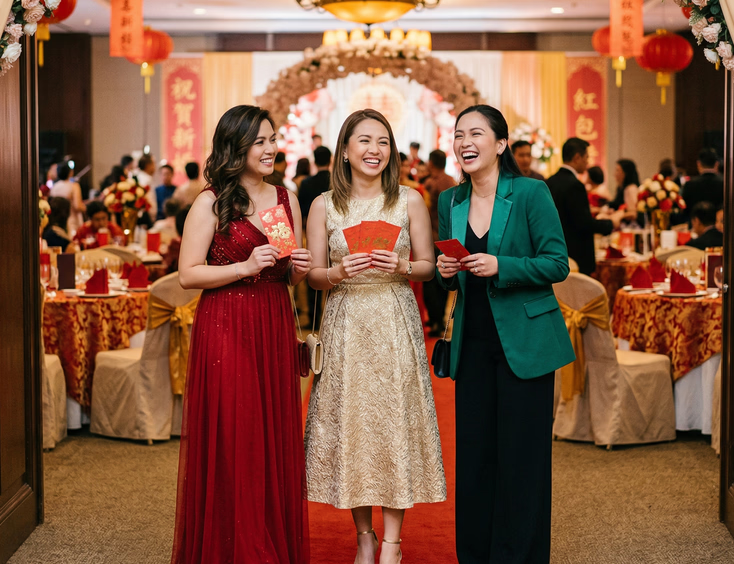
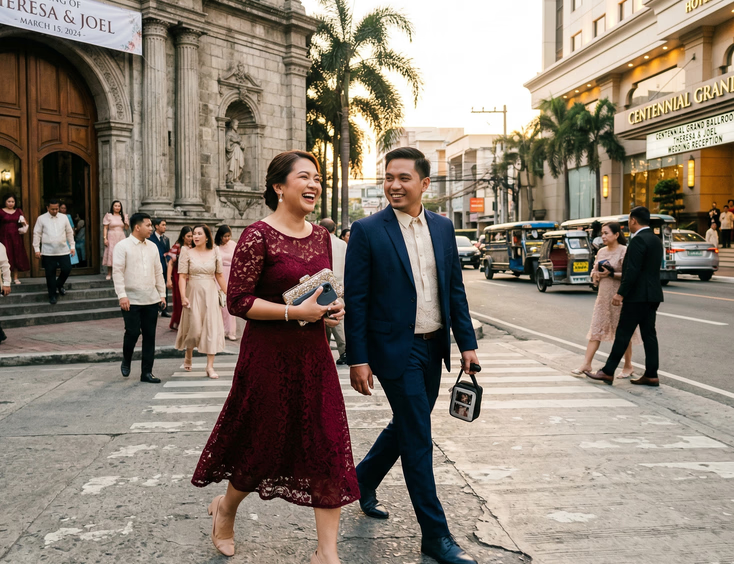
An evening gown or a formal midi dress in a celebratory color is the strongest choice for a hotel ballroom reception. Floor-length gowns in red, gold, emerald, or sapphire photograph well in a ballroom environment and communicate that the guest understood the occasion fully.
A formal cocktail dress in a jewel tone works for guests who prefer a shorter length. Pair it with heels and enough accessories to read as dinner-formal rather than event-casual.
A blazer over a formal top and wide-leg trousers in a rich color is acceptable at modern Chinoy receptions and reads as intentionally stylish rather than underdressed. The key is ensuring the overall look is polished and that the color palette stays within the celebratory range.
Avoid sandals with casual strapping, open-toe slides, or flat shoes that read as daytime footwear. Heels, strappy formal sandals, or polished block-heel styles all work. The formality of your footwear carries more weight at a sit-down banquet than at a reception where guests move around more freely.
What to Wear During the Tea Ceremony
If you are a family member attending the tea ceremony, your dress code adjusts based on your role.
Elders who will be served tea by the couple should dress formally and in colors that read as auspicious: red, gold, pink, or jewel tones. This is a photographed ritual that will appear in the couple's wedding album and in the family record of the day. Dressing well for it honors the moment.
Immediate family members who stand in attendance during the tea ceremony follow the same color and formality guidance. Some families coordinate their tea ceremony outfits deliberately, with the mothers of the couple wearing complementary shades and the fathers wearing matching suits or barong.
Guests who are not part of the tea ceremony and only attend the reception are not required to make any dress code adjustment for this portion of the day. The tea ceremony typically happens in a private room before the banquet begins.
For a full explanation of how the tea ceremony works and who participates, read the Chinoy tea ceremony explained: what it means and how it works.
What to Wear If the Wedding Includes a Church Ceremony
If you attend both the Catholic church ceremony and the Chinese banquet reception, you are dressing for a longer day that moves between two different environments.
The church ceremony is daytime and follows Filipino Catholic wedding norms. Semi-formal to formal attire in your chosen color works for the church. The same outfit you wear to the church can carry through to the reception if it reads as formal enough for a ballroom banquet.
Guests who prefer to change between the church and the reception have time to do so during the cocktail hour while the couple takes photographs. This window is typically one to two hours depending on the couple's schedule, which is enough time to change if you have made that arrangement.
Shoes that work across both environments are worth considering. Heels appropriate for a hotel ballroom may become uncomfortable on church paving stones or while standing through a one-hour mass. A low-heel or block-heel option often handles both without the midday footwear change.
For a full picture of what the day looks like across both ceremonies, read what happens at a Chinoy wedding: a step by step guide to every tradition and ritual.
Children's Dress Code
Children attending a Chinoy wedding follow the same color guidance as adults. Dressing a child in white for a Chinoy wedding reception misses the same symbolism note it does for adults. Children in red, gold, or jewel tones fit the occasion and add to the celebratory visual energy of the room.
Formal attire for children should be comfortable enough to last a three-hour dinner. A Chinoy banquet runs longer than most children anticipate, and an outfit that restricts movement or becomes uncomfortable midway through the soup course creates a difficult evening for both the child and the parents seated at the table.
Last-Minute Checks Before You Dress
Run through these before you leave for the venue.
Check the dominant color of your outfit against the restrictions: no solid white, no all-black, no pale yellow if you are attending a family with strict traditional observance.
Check the formality level against the venue. Hotel ballroom means evening formal. Chinese restaurant banquet hall means smart formal at minimum.
Check your accessories. Red, gold, and jewel-toned accessories elevate a neutral outfit and signal cultural awareness. A deep red clutch paired with a champagne gown reads well. Gold jewelry against a jewel-toned dress communicates formal celebration.
Check your footwear against the full day's schedule. If you are attending both a church ceremony and a hotel ballroom reception, your shoes need to handle both without requiring a change.
For a full understanding of what the Chinoy wedding day looks like so you can dress appropriately for every moment, read the complete guide to a Chinoy wedding in the Philippines.
Couples planning the guest experience for their own Chinoy wedding, including how to communicate the dress code and color guidance to non-Chinese guests, benefit from a coordinator who has managed this before. Browse the wedding planners and coordinators directory to find coordinators with experience running Filipino-Chinese receptions where the guest list spans both communities.
Still Searching for a Right Match?
Find Your Perfect Wedding Supplier Today!
Discover trusted wedding suppliers across the Philippines in our complete directory. Compare services and connect with the ones that fit your dream celebration.
Browse Wedding SuppliersFeatured Posts
Regional Wedding Customs Every Filipino Couple Should Know
23 mins readThe Complete Guide to Filipino Wedding Invitations: From Traditional Customs to Modern Trends
12 mins readThe Complete Filipino Couple's Guide to Wedding Rings & Bands in the Philippines: Traditions, Styles, Budgets & Where to Buy
22 mins read