

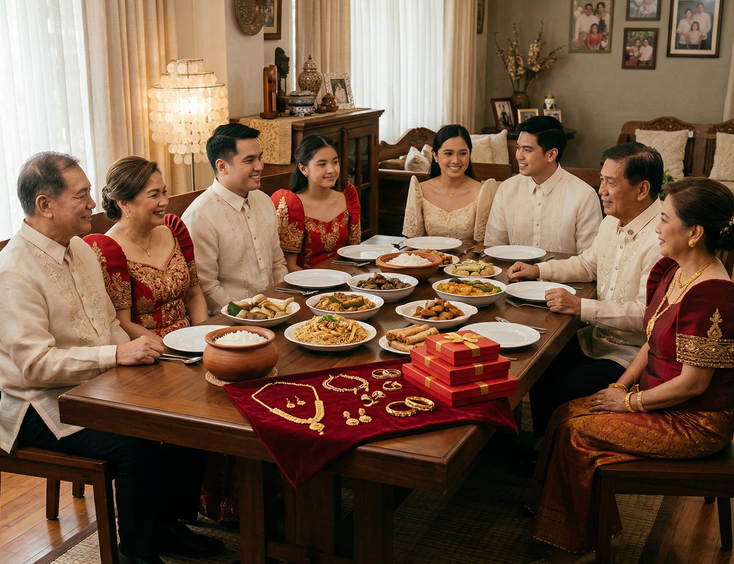
What Is Tinghun and Why It Still Matters in Filipino Culture Today
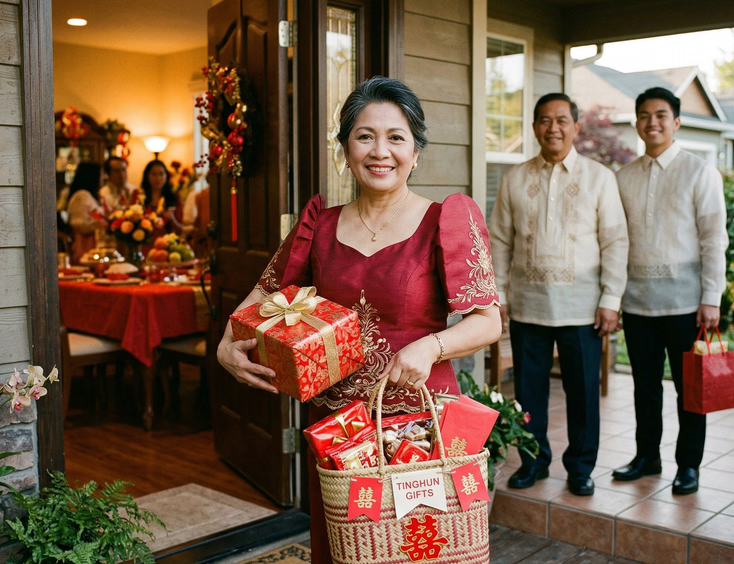
Picture this: the groom's mother walks into the bride's family home carrying a box of tikoy, a set of gold jewelry wrapped in red cloth, and a roasted pig. She did not come to drop off gifts. She came to ask permission for her son to marry.
That visit has a name. It is the Tinghun.
For generations, Filipino-Chinese families have held the Tinghun as the formal opening of the wedding journey. No venue gets booked before it happens. No wedding supplier gets called. The Tinghun comes first, because in this tradition, the marriage belongs to both families, not just the couple.
The Word and Its Origin
Tinghun comes from Hokkien, the Chinese dialect spoken by most of the Tsinoy community in the Philippines. The word translates to "fixed marriage" or "to set the engagement." It names the moment when both families formally agree that the union will happen.
The ceremony traveled to the Philippines with Fujianese-Chinese immigrants, most of whom settled in Manila and other major cities across the archipelago. Their descendants, now called Tsinoy or Filipino-Chinese, preserved the Tinghun as a cornerstone of their pre-wedding tradition. Over time, the ceremony crossed cultural lines. Today, many Filipino families with no Chinese ancestry hold a Tinghun because the values it carries resonate far beyond the community that brought it here.
For a full understanding of how the ceremony works from start to finish, Tinghun: The Complete Guide to the Traditional Filipino Engagement Ceremony covers every detail.
What the Ceremony Does
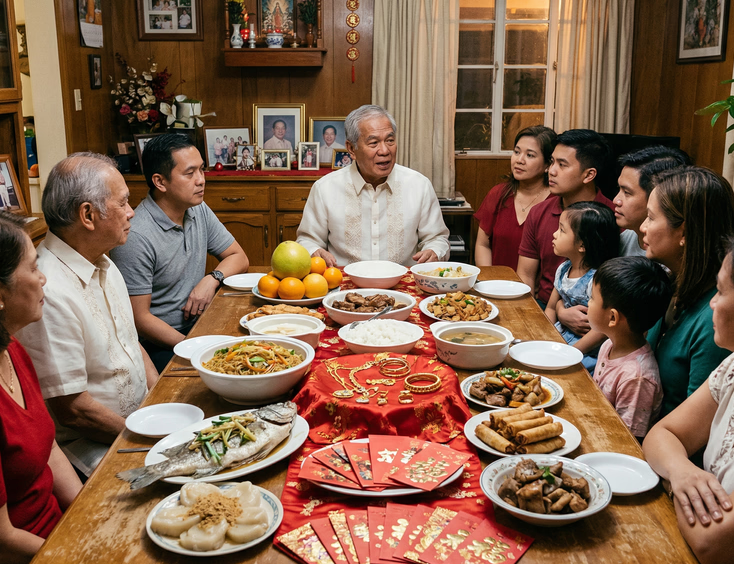
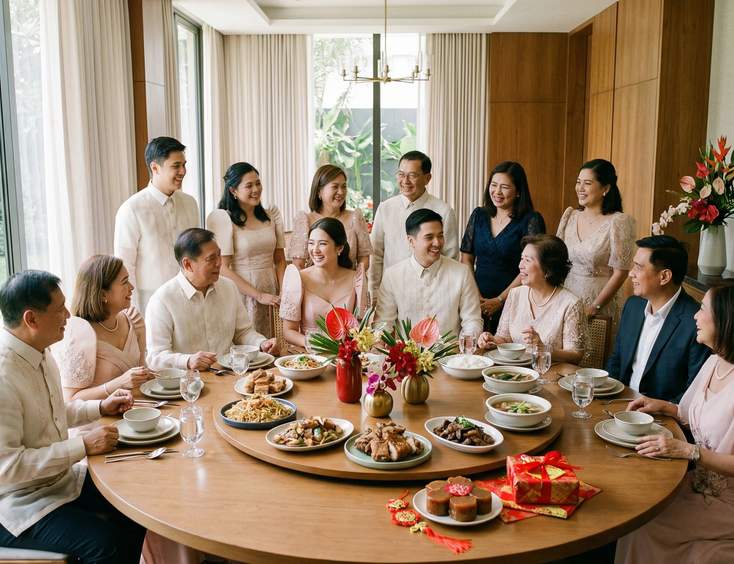
The Tinghun is a formal visit. The groom's family goes to the bride's family home. They bring gifts: gold jewelry, ang pao, food items loaded with symbolic meaning. The bride's family receives them, accepts the gifts, and in doing so, accepts the marriage.
Both families eat together. Elders speak. Blessings are given. The couple is formally recognized as engaged.
What makes this different from an ordinary family dinner is structure. Every element of the Tinghun carries weight. The gifts are not decorative. The seating follows a hierarchy. The food on the table is chosen for what it represents. When the groom's family walks out of that house, both sides understand that a commitment has been made at the family level, not just between two people.
To understand how the Tinghun compares to the Filipino pamamanhikan, which serves a similar but distinct purpose, Tinghun vs. Pamamanhikan: What Is the Difference and Which One Do You Need draws a clear line between the two.
Why Filipino Families Outside the Tsinoy Community Adopted It
The Tinghun spread beyond Filipino-Chinese households for one straightforward reason: it solves a problem most Filipino families face.
Filipino culture places enormous weight on family approval in marriage. Parents expect to be consulted. Elders expect to be respected. A private proposal between two people, however romantic, does not satisfy the family dimension of a Filipino wedding. The Tinghun fills that gap with ceremony, with structure, and with a ritual that gives both families a defined role in the couple's commitment.
For Catholic Filipino families, the Tinghun often sits alongside or replaces the pamamanhikan. For mixed Filipino-Chinese couples, it becomes the bridge between two sets of cultural expectations. Families adopt it not out of obligation but because it reflects something they already believe: that a marriage binds families together, not just two individuals.
The Role of the Elders
No Tinghun works without the elders. The groom's parents lead the visit. The bride's parents receive it. Grandparents, aunts, uncles, and senior family members attend as witnesses and as participants. Their presence is not ceremonial window dressing. Their approval matters.
In many families, the elders speak during the Tinghun, offering blessings or formally acknowledging the union. In Tsinoy households, this may happen in Hokkien, Filipino, or both. The language is secondary to the act of the elders voicing their acceptance.
This is why younger couples who feel tempted to skip the Tinghun or reduce it to a casual dinner often face resistance from their families. The elders are not being difficult. They are asking to play the role the tradition assigns them.
What the Tinghun Communicates That a Proposal Cannot
A proposal is between two people. The Tinghun is between two families.
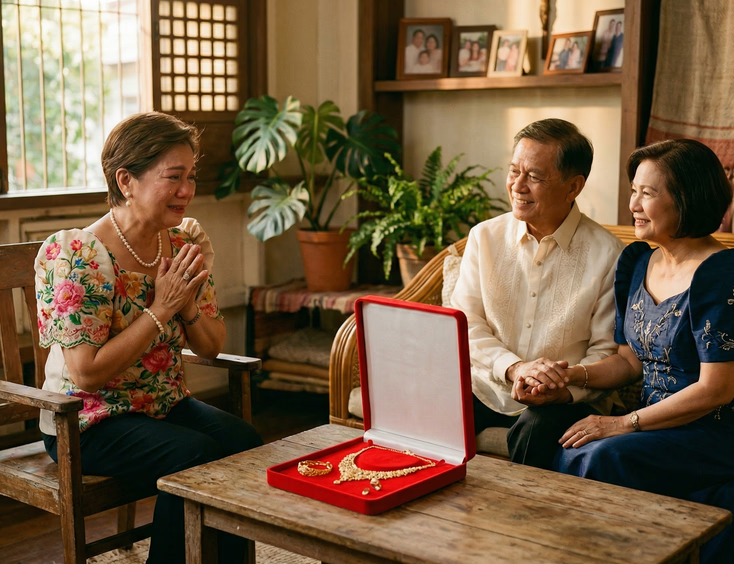
When the groom's family brings gold jewelry to the bride's home, they are telling her parents: we are serious, we are prepared, and we will take care of your daughter. When the bride's family accepts those gifts, they are telling the groom's family: we trust you, we welcome this union, and we give our blessing.
None of that gets communicated over a phone call or a dinner where the couple announces they got engaged. The Tinghun creates a shared memory for both families. It is the moment they both point to when they talk about how the wedding started.
Why It Still Matters
Filipino weddings have changed. Couples plan their own celebrations, hire their own suppliers, and make their own decisions about budget, venue, and style. The wedding industry in the Philippines has modernized around the couple as the primary client.
The Tinghun has not been displaced by any of that. If anything, families hold onto it more deliberately because it is one of the few pre-wedding moments that centers the family rather than the event.
In a season full of supplier meetings, food tastings, and logistics, the Tinghun stands apart. It is the moment before all of that, when the marriage is confirmed not with a contract but with presence, with gifts, with food, and with the blessing of the people who raised the couple.
Couples who skip it often report that something felt missing in their pre-wedding journey. Not the ritual itself, but what it represented: the families coming together before the wedding asked them to.
How Couples Approach It Today
Modern Filipino and Filipino-Chinese couples adapt the Tinghun without abandoning it. Some hold intimate ceremonies with only the immediate family present. Others blend the traditional Tinghun with a celebratory dinner that follows afterward. A growing number of couples use the occasion to formally introduce both families for the first time, turning the Tinghun into both a ceremony and a first meeting.
The core elements stay intact: the formal visit, the gift exchange, the shared meal, the blessing of the elders. The details around those elements shift to fit the couple's circumstances.
A wedding coordinator with experience in Filipino and Filipino-Chinese traditions can help both families navigate the planning, the sequence, and the etiquette. Browse Wedding Planners and Coordinators to find professionals who have handled Tinghun ceremonies.
Before You Start Planning the Wedding
If your family observes the Tinghun tradition, hold the ceremony before you book a single wedding supplier. The Tinghun is not a box to check after the planning begins. It is the foundation the planning stands on.
Both families need time to prepare their gifts, align on a date, and coordinate attendance. Give that process the attention it deserves. A Tinghun handled with care tells both families, from the very beginning, that this marriage was treated seriously.
For a complete walkthrough of how to plan the ceremony, what gifts to bring, how to choose a date, and how to handle the etiquette, read the full Tinghun Complete Guide.
Still Searching for a Right Match?
Find Your Perfect Wedding Supplier Today!
Discover trusted wedding suppliers across the Philippines in our complete directory. Compare services and connect with the ones that fit your dream celebration.
Browse Wedding SuppliersFeatured Posts
Regional Wedding Customs Every Filipino Couple Should Know
23 mins readThe Complete Guide to Filipino Wedding Invitations: From Traditional Customs to Modern Trends
12 mins readThe Complete Filipino Couple's Guide to Wedding Rings & Bands in the Philippines: Traditions, Styles, Budgets & Where to Buy
22 mins read