

What Is a Judge Wedding and How Is It Different from a Church Wedding in the Philippines
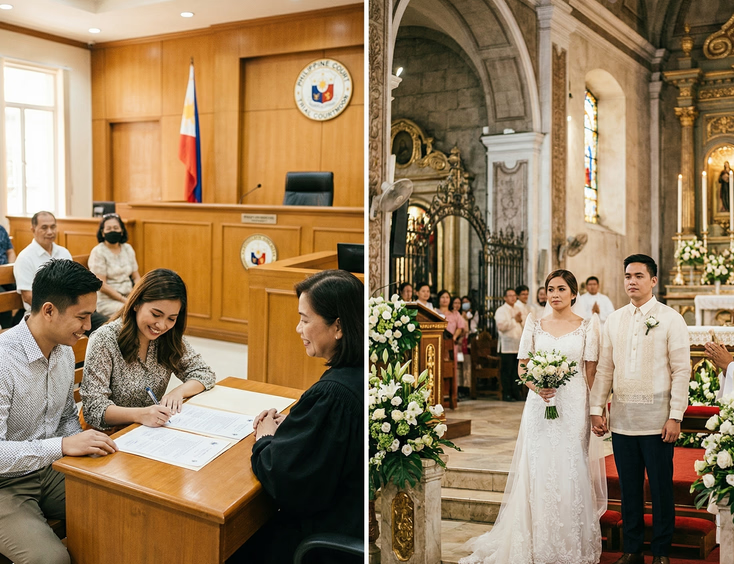
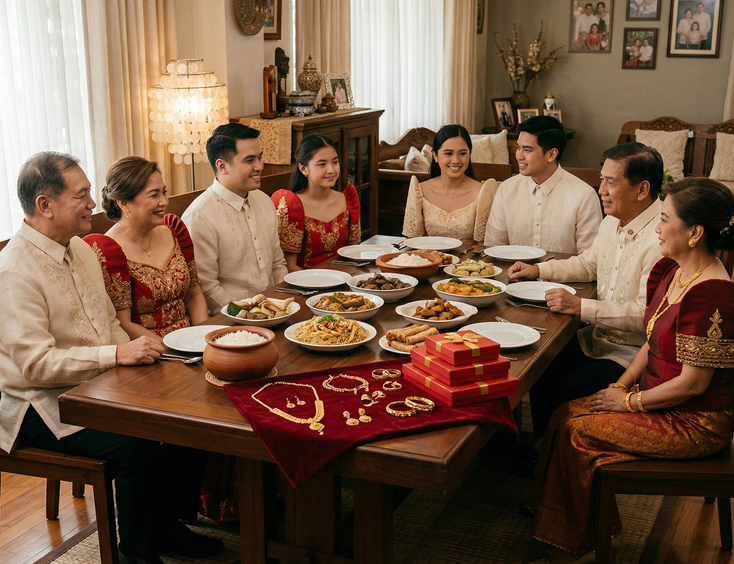
Two Filipinos can get married in two fundamentally different ways under Philippine law. One route goes through the Church. The other goes through the courts. Both produce a legally married couple. Beyond that, the similarities thin out fast.
If you are weighing your options or trying to understand what each path actually involves, this guide breaks down both ceremonies so you can make an informed decision.
The Legal Foundation of Each Type of Marriage
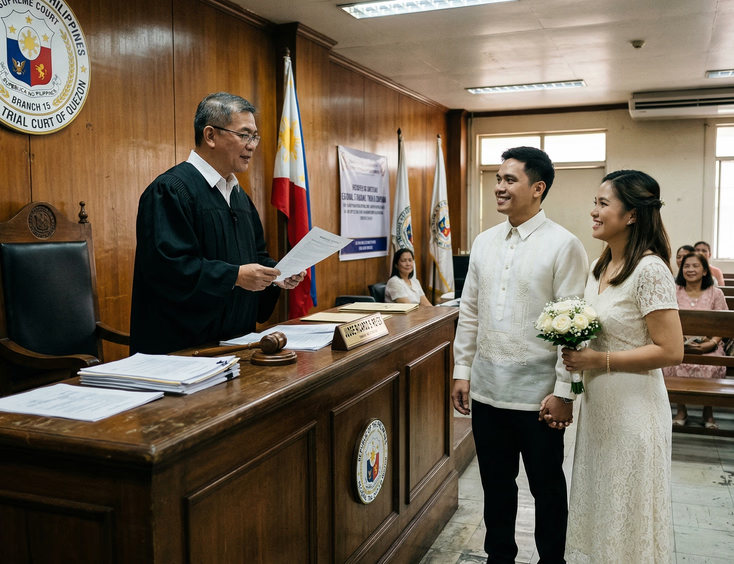
A judge wedding is a civil marriage. The legal basis is the Family Code of the Philippines, specifically Executive Order No. 209. Under this law, a judge of the Regional Trial Court or the Municipal Trial Court is a recognized solemnizing officer. The marriage a judge performs is a contract between two people, recorded by the state, and registered with the Philippine Statistics Authority.
A church wedding in the Philippines operates on two tracks at once. The Catholic Church treats marriage as a sacrament, governed by Canon Law. The Philippine state recognizes church weddings as legally valid because priests, bishops, and other ministers of religious organizations registered with the civil authorities are also recognized solemnizing officers under the Family Code. When a Catholic priest marries a couple, he acts simultaneously as a minister of the Church and as a state-recognized officiant.
This means both ceremonies produce the same PSA marriage certificate. The law does not rank one above the other.
Who Performs the Ceremony
A judge of the Regional Trial Court or the Municipal Trial Court performs the civil wedding. The judge must have jurisdiction over the area where the ceremony takes place. You cannot book a judge from Cebu to solemnize your wedding in Manila without confirming jurisdictional authority.
A Catholic priest performs the church wedding. He must have the faculties granted by his diocese to witness marriages. The ceremony happens inside a Catholic church or chapel, or in another location with the written permission of the local bishop.
Other religions follow the same dual-track structure as Catholics. A minister of a religious organization duly registered with the civil authorities can solemnize a marriage that is both religiously and legally valid.
The Documentary Requirements
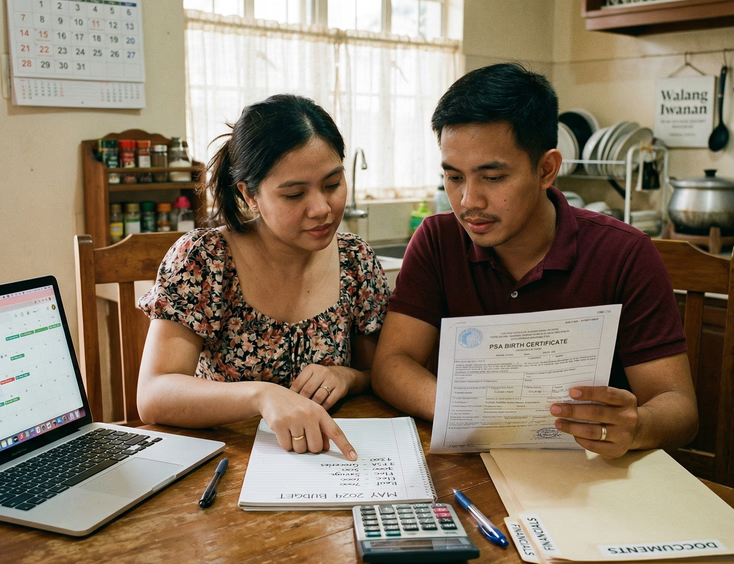
Both ceremonies require a marriage license as a baseline. You get this from the Local Civil Registrar of the city or municipality where either party has lived for at least six months. The ten-day posting period applies to both.
Beyond the marriage license, the requirements diverge.
For a judge wedding, you need PSA birth certificates for both parties, CENOMARs, valid government IDs, proof of residence, pre-marriage counseling and family planning certificates, and two witnesses. The full breakdown of every document is in the complete guide to judge wedding requirements in the Philippines.
For a Catholic church wedding, the parish adds its own layer of requirements on top of the civil documents. These typically include baptismal certificates issued within six months, confirmation certificates, a canonical interview with the parish priest, attendance at a pre-Cana or marriage preparation seminar, and a marriage banns announcement on three consecutive Sundays before the wedding date. Some parishes require additional documents depending on the couple's circumstances.
If either party is a non-Catholic, a foreigner, or has a previous marriage on record, the Catholic Church adds further requirements. The process runs parallel to the civil requirements but is governed entirely by Canon Law.
The Ceremony Itself
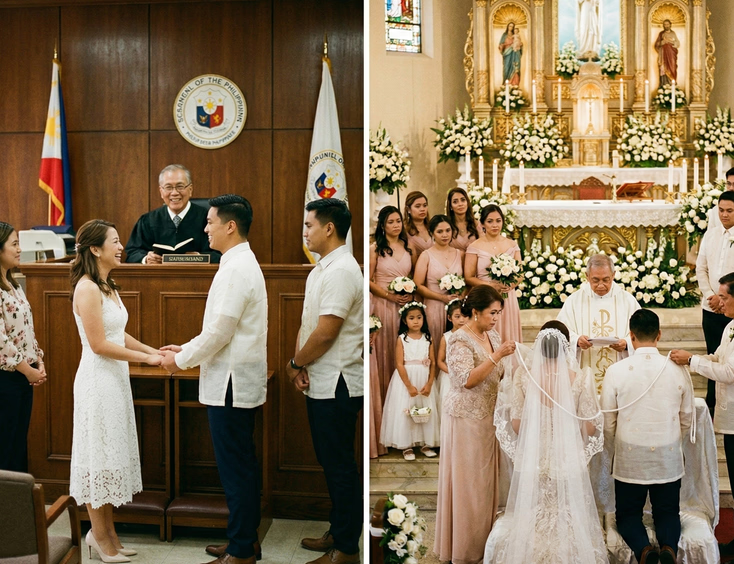
A judge wedding ceremony is brief by design. The judge reads the legal requirements for a valid marriage, the couple affirms their consent, they exchange vows, and all parties sign the marriage certificate. Two witnesses sign as well. The entire ceremony takes between fifteen and thirty minutes.
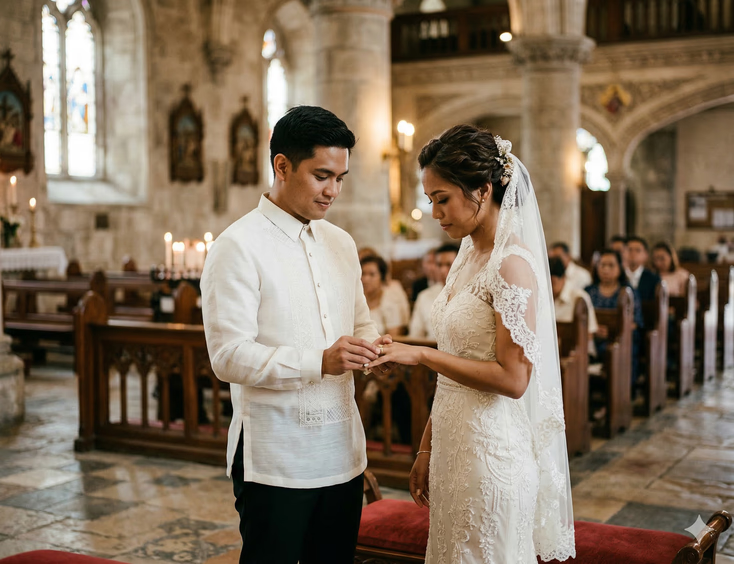
A Catholic wedding Mass runs between forty-five minutes and an hour and a half, depending on whether the couple chooses a full nuptial Mass or a ceremony without Mass. The rite includes the Liturgy of the Word, the Rite of Marriage with the exchange of vows and rings, the arras, the veil and cord, and the final blessing. Filipino Catholic weddings also typically involve principal sponsors, secondary sponsors, and a large entourage, all of which add to the ceremony's length and complexity.
The atmosphere differs as much as the structure. A judge wedding is a formal but functional government proceeding. A church wedding is a religious and cultural event shaped by decades of Filipino tradition, family expectation, and community celebration.
Where Each Ceremony Happens
A judge wedding takes place inside the judge's chambers or courtroom. Some judges allow couples to hold the ceremony at an outside venue, a garden, a function room, or a private residence, subject to the judge's approval and schedule. This flexibility makes civil weddings appealing for couples who want a personal setting without the constraints of a church venue.
A Catholic church wedding must take place inside a church or chapel, or in a location expressly permitted in writing by the diocesan bishop. Outdoor or non-church venues require this written permission, which not all bishops grant.
Legal Validity: Are They Equal?
Both are equally valid under Philippine law. The PSA marriage certificate carries the same legal weight regardless of who solemnized the marriage. Your marriage license, signed by a judge or a priest, produces the same legal outcome: a married couple recognized by the state.
The distinction matters in one specific context. The Catholic Church does not recognize a civil marriage as a sacramental marriage. In the eyes of the Church, two Catholics who marry only civilly are not sacramentally married. They are in what the Church calls an irregular union.
This becomes relevant when couples want a church blessing after a civil wedding. The Catholic Church has a specific process for recognizing and blessing a civil marriage. Read having a church wedding after a civil wedding in the Philippines for how that process works.
The state, on the other hand, does not concern itself with sacramental standing. A civil marriage is a complete, valid, legally binding marriage from the moment the judge signs the certificate.
Cost and Timeline Differences
A judge wedding costs a fraction of a church wedding. The government fees, PSA documents, marriage license, and judge's solemnization fee add up to a manageable total for most couples. The timeline from document gathering to wedding day runs four to six weeks at minimum, driven mainly by the ten-day posting period and court scheduling.
A church wedding carries all the civil costs plus the parish's own fees, seminar costs, and the expense of a ceremony that Filipino families typically pair with a full reception. The parish timeline adds weeks on top of the civil timeline because the canonical requirements run on a separate track. Many parishes require couples to begin the process three to six months before the wedding date.
For a full picture of what a judge wedding costs from PSA documents to solemnization, read how much a judge wedding costs in the Philippines. For the full document and scheduling timeline, read how long it takes to process all judge wedding requirements.
Which One Is Right for You
Filipino couples choose a judge wedding for reasons that have nothing to do with rejecting tradition. Budget constraints, timeline pressure, a preference for intimacy, or the practical need for a legal marriage on record before a church celebration later on are all valid reasons.
Couples who marry civilly first and plan a church blessing afterward are following a path that thousands of Filipino families take. The civil wedding handles the legal requirement. The church blessing handles the sacramental and cultural dimension. Both happen, just on a timeline that works for the couple.
Couples who choose a judge wedding as their sole ceremony are also making a complete, legitimate choice. The marriage is whole. The legal record is in place. Nothing is missing from a civil and legal standpoint.
If you are planning either route and want support managing the logistics, a wedding coordinator in the Philippines can handle the paperwork coordination, vendor management, and day-of details so you spend less time chasing documents and more time preparing for the marriage itself.
For everything you need to prepare for a civil wedding solemnized by a judge, start with the complete guide to judge wedding requirements in the Philippines.
Still Searching for a Right Match?
Find Your Perfect Wedding Supplier Today!
Discover trusted wedding suppliers across the Philippines in our complete directory. Compare services and connect with the ones that fit your dream celebration.
Browse Wedding SuppliersFeatured Posts
Regional Wedding Customs Every Filipino Couple Should Know
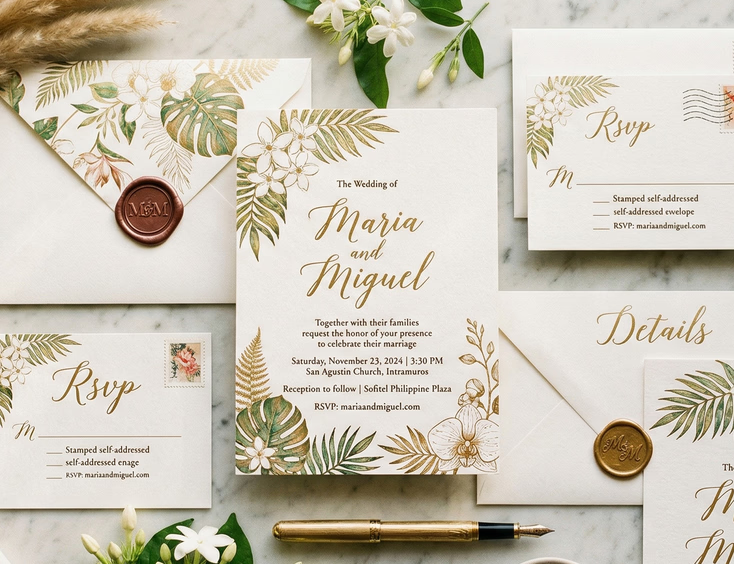
23 mins readThe Complete Guide to Filipino Wedding Invitations: From Traditional Customs to Modern Trends
12 mins readThe Complete Filipino Couple's Guide to Wedding Rings & Bands in the Philippines: Traditions, Styles, Budgets & Where to Buy
22 mins read