

What Happens at a Chinoy Wedding: A Step by Step Guide to Every Tradition and Ritual
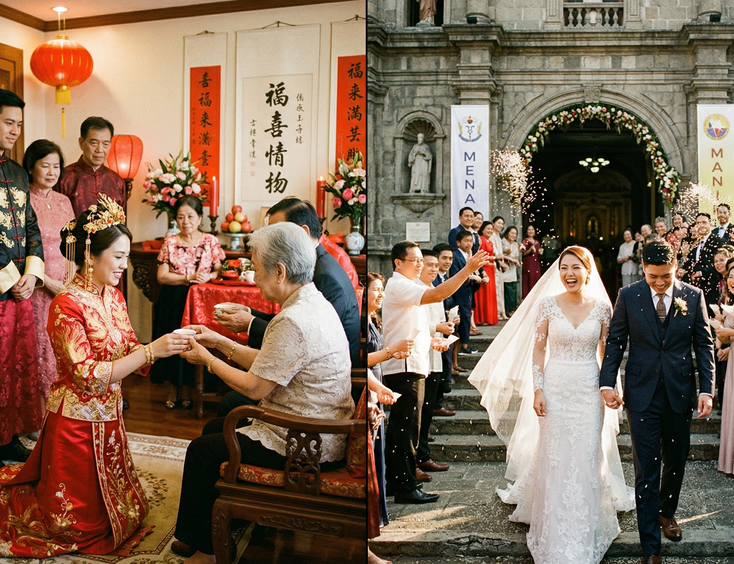
Most guests who attend a Chinoy wedding for the first time spend the day slightly unsure of what comes next. The program moves through rituals that blend two distinct cultural traditions, and without context, the symbolism behind each moment is easy to miss. This guide walks through the full sequence of a Chinoy wedding day so you arrive knowing exactly what you are watching and why it matters.
Before the Day Begins: The Betrothal and Pre-Wedding Rituals
A Chinoy wedding does not begin on the wedding day. It begins weeks or months earlier with a series of pre-wedding customs that formalize the relationship between two families.
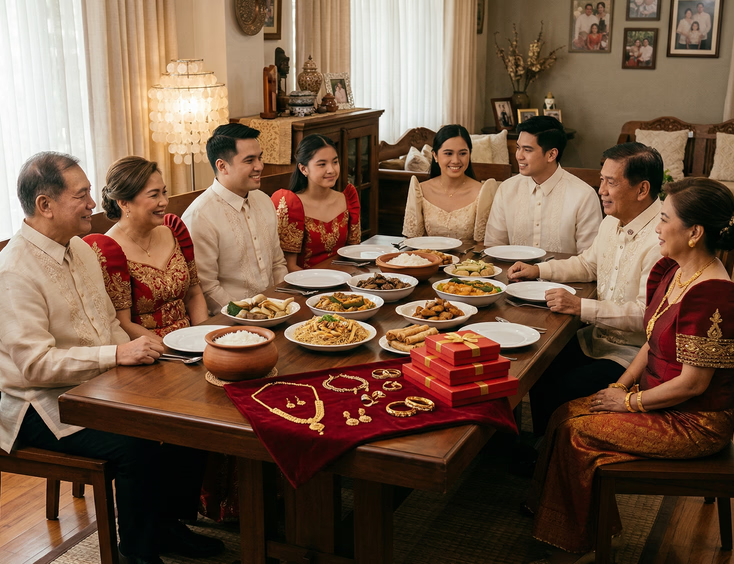
The betrothal meeting, sometimes called the engagement or the formal proposal, brings both families together so the groom's family can officially ask for the bride's hand. This meeting involves the exchange of gifts from the groom's family to the bride's. The gifts typically include food items with symbolic meaning: tikoy or glutinous rice cake for unity, oranges and pomelos for good fortune, and sometimes a whole roasted pig that signals the groom's family's sincerity and the bride's virtue.
Some families hold a dowry discussion during this meeting, where the two sides align on what the bride brings into the marriage and what the groom's family provides. This conversation has become more informal in modern Chinoy families, but the exchange of symbolic gifts remains standard.
The bride's family accepts the gifts, reciprocates with their own set of items, and the wedding planning begins in earnest. The date selected at this stage or shortly after comes from the Chinese almanac, cross-referenced with the couple's birth charts. A feng shui master or a trusted elder familiar with the Tong Shu makes the final recommendation.
For a full walkthrough of the complete guide to a Chinoy wedding in the Philippines, including all the planning decisions that shape the day, start there before reading further here.
Morning of the Wedding: Preparations at the Bride's Home
The wedding day starts at the bride's home with hair, makeup, and the bridal party getting ready together. This part of the morning mirrors a standard Filipino wedding preparation, with a photographer and videographer documenting the process.
What sets a Chinoy wedding apart is the ritual that follows the getting-ready session. Before the bride leaves her family home, some families observe a hair-combing ceremony called shang tou. An elder woman deemed lucky, typically someone who is still married, has living children and grandchildren, and has not experienced recent loss, combs the bride's hair four times while reciting blessings. Each stroke corresponds to a wish: a good marriage, a long life together, many children, and wealth. Not all Chinoy families in the Philippines observe shang tou today, but families with stronger ties to Chinese tradition include it.
The bride changes into her qipao or cheongsam for the tea ceremony, which happens before the church ceremony in some families, or after it in others depending on preference and logistics. Either way, the qipao is the first formal outfit of the day.
The Tea Ceremony
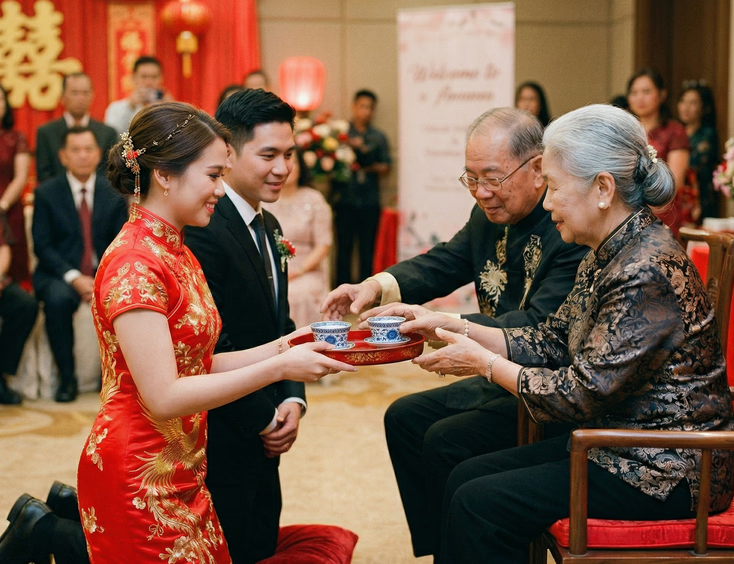
The tea ceremony is the most distinctly Chinese ritual in a Chinoy wedding. It formalizes the couple's entrance into both families through an act of service and respect. The couple kneels or bows before each family member in order of seniority, from the eldest relative down, offers a cup of tea held with both hands, and receives a blessing in return.
The tea served is usually chrysanthemum, red date, or longan tea. Each cup is prepared and offered with care. The elder who receives the cup accepts it with both hands, drinks, and then gives the couple a gift before the couple moves to the next person in the sequence.
The gifts given during the tea ceremony carry weight. Elders typically give gold jewelry, jade pieces, ang pao envelopes with significant amounts, or a combination of all three. The bride receives much of the gold jewelry during this ritual, which is why you will see her wearing more jewelry as the day progresses. Each piece she receives during the tea ceremony goes on immediately.
The sequence of kneeling follows strict seniority. Serving a younger relative before an elder is considered disrespectful, so families map out the order in advance. Large families with many elders plan the tea ceremony carefully to make sure no one is skipped or served out of turn.
For a deeper explanation of what happens at each moment, what the elders give, and how modern couples adjust the ceremony for smaller families, read the Chinoy tea ceremony explained: what it means and how it works.
The Catholic Church Ceremony
After the tea ceremony, the couple proceeds to the church. The Catholic mass follows the same structure as any Filipino church wedding. The couple enters with their principal sponsors, the ninong and ninang, who serve as witnesses and symbolic godparents to the marriage.
The rites inside the church include the exchange of vows, the blessing and exchange of rings, the arras or thirteen coins that the groom passes to the bride as a symbol of his commitment to provide for their household, the veil placed over the couple's shoulders signifying unity, and the cord or lazo looped in a figure eight around the couple symbolizing their bond.
The wedding mass runs approximately one hour. Families who choose a nuptial mass with a full homily should prepare guests for a longer ceremony. Families who prefer a simpler rite without mass may opt for a Catholic blessing ceremony, which runs shorter.
The dress code for the church ceremony is the white wedding gown for the bride and barong tagalog or a suit for the groom. The bridal party typically wears coordinated gowns chosen by the bride.
The Cocktail Hour and Guest Arrival at the Reception
While the couple takes post-ceremony photos, guests move to the reception venue. Most Chinoy wedding receptions happen in hotel ballrooms or Chinese restaurant banquet halls. Guests find their table assignments, greet relatives, and deposit their ang pao at the designated table near the entrance.
The cocktail hour gives guests time to settle before the formal program begins. Light appetizers or a cold platter may be served at the tables during this period, though some families hold off on food entirely until the couple enters.
For guidance on ang pao etiquette at a Chinoy wedding, including how much to give and what amounts to avoid, read that guide before you arrive at the reception.
The Grand Entrance
The couple enters the reception hall to music and the full attention of the room. The emcee announces the couple and leads the guests in a welcome. The bridal party typically enters before the couple, walking in pairs while upbeat music plays.
The couple's entrance is a full moment. Some families incorporate a spotlight, a fog machine, or a choreographed first walk through the ballroom. Others keep it simple with a walk-in and a first song. The choice depends on the couple's preference and the venue's capabilities.
After the entrance, the couple proceeds to the stage or the sweetheart table at the front of the room.
The Lechon Presentation
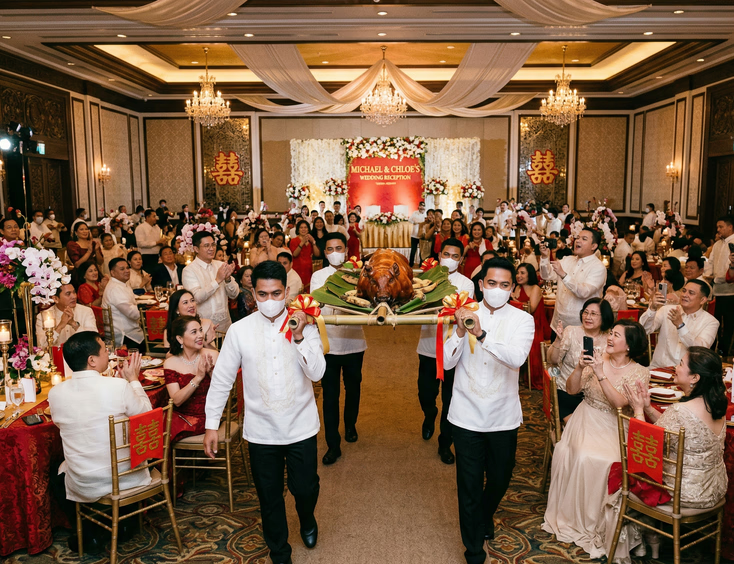
Before or shortly after the couple enters, some families present the lechon ceremonially. A whole roasted pig is carried into the reception hall and displayed at the front of the room. This presentation traditionally signals the bride's honor and the groom's family's recognition of it.
After the presentation, the lechon is taken back to the kitchen for carving and served as one of the courses during dinner. Some families present both a Filipino-style lechon and a Chinese-style roast pig, the latter prepared with a crispier skin and served with hoisin sauce rather than Mang Tomas liver sauce.
The formality of the lechon presentation varies. Families with stricter traditional observance treat it as a solemn moment with an announcement from the emcee. Others bring it out with less ceremony and simply include it as a prominent course.
The Program: Toasts, Games, and Speeches
Chinoy wedding programs follow a structure familiar to anyone who has attended a Filipino reception, with a few additions rooted in Chinese custom.
The program opens with a prayer, followed by the couple's first dance. Speeches from parents and principal sponsors follow. The father of the bride and the father of the groom both address the room, often in a mix of Filipino, English, and occasionally Hokkien or Mandarin depending on how traditional the family is.
The toast is a significant moment at a Chinoy reception. The host or emcee leads a toast to the couple using the Chinese congratulatory phrase gong xi, and guests raise their glasses. Yam seng, a prolonged toast call drawn out across a single breath, appears at some receptions, particularly those with guests from Singapore, Malaysia, or mainland Chinese backgrounds.
Games make up a portion of the middle program. These range from trivia about the couple to more elaborate games involving members of the bridal party. The bridal chamber game, called chuang, traditionally involves the groomsmen and the couple, with playful tasks the groom must complete before being allowed to enter a designated space with his bride. Modern Chinoy receptions adapt this into reception floor games rather than an actual bridal chamber setting.
The 12-Course Banquet
The dinner at a Chinoy wedding is not a buffet. It is a structured 12-course Chinese banquet served course by course to every table simultaneously. The sequence follows a specific order tied to symbolism, and the pacing is managed by the banquet team.
A typical sequence moves from cold appetizers and jellyfish salad through shark's fin or thick seafood soup, roasted meats, abalone or premium seafood, steamed whole fish served with its head and tail intact for completeness, a rice or braised dish, and finally noodles served uncut for longevity. Dessert closes the meal, usually with a sweet soup or glutinous rice preparation.
The fish course is one of the most symbolically loaded dishes. Serving a whole fish, head to tail, represents abundance and completeness. Flipping the fish over at the table to access the other side is considered bad luck at a traditional Chinoy table. Guests who know this lift the bones instead.
The noodles served toward the end of the banquet must remain uncut. Cutting them shortens the couple's life together in traditional belief. The noodles are long, and guests twirl them into the bowl rather than biting them off.
The Cake Cutting and Bouquet Toss
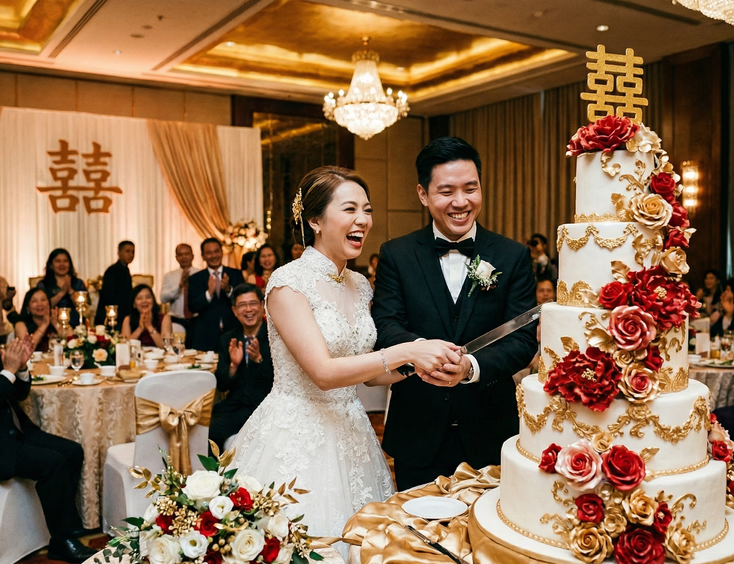
Cake cutting at a Chinoy wedding follows the same format as a Filipino reception. The couple cuts the first slice together, feeds each other a bite, and poses for photographs. Some families incorporate a multi-tiered cake decorated with red and gold elements or double happiness symbols alongside Western floral decorations.
The bouquet toss follows, with single female guests gathering on the dance floor. Some couples skip the bouquet toss in favor of a more deliberate presentation, where the bride gives her bouquet to a specific person she wants to see married next.
The Money Dance
The money dance, called the dollar dance in some regions, appears at many Chinoy receptions. Guests pin cash to the couple's outfit or stuff it into a bag or pouch as they take a brief dance with the bride or groom. This is a lighthearted moment in the program and gives guests who want to offer an additional cash gift a fun way to do so beyond the ang pao.
Not all Chinoy families include the money dance. It is more common in receptions where the guest list includes a mix of Filipino and Filipino-Chinese guests accustomed to both traditions.
The Send-Off
The reception closes with a send-off for the couple. Guests gather at the exit with sparklers, dried flower petals, or paper fans to wave the couple out. The couple walks through the crowd and boards their car while guests cheer.
Some families schedule the send-off before the banquet fully ends, allowing older guests to leave at a reasonable hour while the younger crowd continues into the after-party. Others hold the send-off as the final act of the evening.
Making It All Work
A Chinoy wedding runs through more transitions in a single day than most other celebrations. The couple changes outfits multiple times, moves between two venues, shifts between Catholic and Chinese ceremonial modes, and keeps a banquet on schedule across 12 courses for a full room of guests.
A wedding coordinator who understands Chinoy wedding logistics makes the difference between a day that flows and one that stalls. Browse the wedding planners and coordinators directory to find coordinators with experience running Filipino-Chinese wedding days from start to finish.
Still Searching for a Right Match?
Find Your Perfect Wedding Supplier Today!
Discover trusted wedding suppliers across the Philippines in our complete directory. Compare services and connect with the ones that fit your dream celebration.
Browse Wedding SuppliersFeatured Posts
Regional Wedding Customs Every Filipino Couple Should Know
23 mins readThe Complete Guide to Filipino Wedding Invitations: From Traditional Customs to Modern Trends
12 mins readThe Complete Filipino Couple's Guide to Wedding Rings & Bands in the Philippines: Traditions, Styles, Budgets & Where to Buy
22 mins read