


What Does a Wedding Lights and Sound Package in the Philippines Actually Include
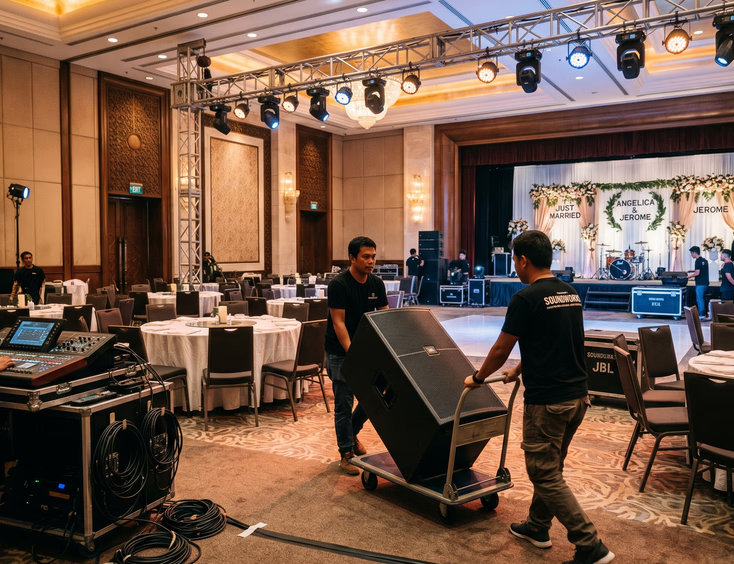
You asked three suppliers for a quote. All three said "lights and sounds package." All three quoted different prices. None of them explained what you're paying for.
That confusion is normal. Lights and sound packages in the Philippines vary from a single speaker with a wired mic to a full production setup with LED walls, intelligent lights, and a dedicated sound engineer. The label "lights and sounds" tells you nothing until you see the equipment list.
This breakdown covers what goes into each package tier so you can compare quotes and spot gaps before you sign.
The Basic Sound-Only Package
A sound-only package is the entry-level tier. Suppliers offer this for intimate weddings, small corporate events, and debut parties with under 100 guests.
A typical sound-only package includes:
- Two powered speakers (10" or 12")
- One wired microphone
- One wireless microphone
- A mixer or audio console
- A music player (laptop, phone input, or USB)
- One operator or technician
- Six hours of service
Rates for this tier start around ₱3,500 to ₱5,000 in Metro Manila. Provincial rates may go lower, but expect to pay a travel fee if your venue sits outside the supplier's standard service area.
This package works for a church ceremony or a backyard reception where you need clear speech audio and background music. It does not work for a 200-guest ballroom reception with a live band, games, and dance segments.
The Standard Lights and Sounds Package
This is the most common tier Filipino couples book. It bundles audio equipment with basic lighting.
A standard package includes:
- Two high-power speakers (12" or 15")
- One to two subwoofers
- Two wireless microphones
- A mixer with a dedicated operator
- Six to eight LED par lights (RGB color mixing)
- Two to four moving head lights
- A DMX lighting controller with operator
- A music player or DJ setup
- Six hours of service
Rates for this tier fall between ₱8,000 and ₱15,000 depending on your guest count, venue size, and Metro Manila vs. provincial location.
The LED par lights handle ambient color washes on your walls and ceiling. The moving heads provide sweeping beam effects for entrances, first dances, and party segments. Your technician programs the color sequences to match your motif and switches between warm dinner lighting and energetic dance floor lighting on cue.
If your reception includes an AVP (audio-visual presentation), a same-day edit video, or a live feed, you need a projector or LED wall on top of this package. Most standard packages do not include video equipment. Read our comparison of AVP setups, sound systems, and full production packages to see where the lines fall.
The Full Production Package
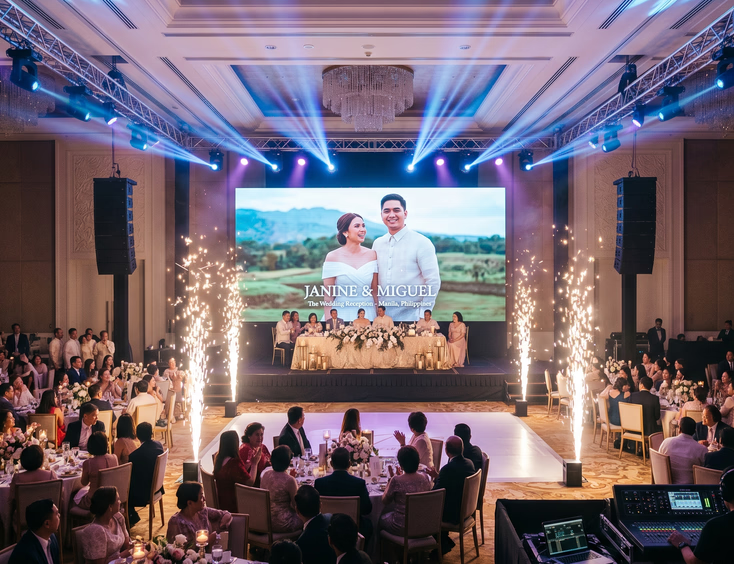
Full production is for couples who want their reception to look and feel like a concert or awards show. This tier is common at large hotel ballroom weddings, destination weddings with 300 or more guests, and receptions with live bands or celebrity performers.
A full production package includes:
- Four or more powered speakers with subwoofers
- Delay speakers for large venues
- Four to six wireless microphones
- A 16-channel or 32-channel digital mixer
- A full lighting rig (par cans, moving heads, beam lights, wash lights, spotlights)
- A DMX controller with a dedicated lighting operator
- An LED wall (P3 or P4 resolution, sized to venue)
- A video switcher and camera setup for live feeds
- Cold pyro machines (indoor spark fountains)
- Low-lying fog machine
- A dedicated sound engineer and lighting technician
- Eight to twelve hours of service
Rates for full production start at ₱30,000 and climb past ₱100,000 for large-scale setups. The LED wall alone can run ₱10,000 to ₱50,000 depending on size and resolution.
At this tier, your supplier coordinates with your event coordinator, emcee, photographer, and videographer to sync lighting cues, spotlight moments, and video playback with your program flow.
Equipment You Should Ask About
Not all suppliers list their equipment in detail. Some bundle items under vague labels like "standard lighting" or "premium sound." Ask your supplier to itemize the following:
Audio
- Speaker brand, model, and wattage
- Number of subwoofers
- Wireless microphone brand and frequency (cheap wireless mics pick up interference from nearby signals)
- Mixer channel count and whether it's analog or digital
- Backup mics and cables
Lighting
- Number and type of LED par lights
- Number of moving head lights (spot, beam, or wash)
- Whether a DMX controller and dedicated operator are included
- Spotlight for the couple's entrance and first dance
Video
- LED wall size (measured in feet or panels) and pixel pitch (P2, P3, P4)
- Projector lumens and screen size (if using a projector instead of an LED wall)
- Whether cameras and a video switcher are included for live feeds
- Laptop or media player for AVP playback
Effects
- Number of cold pyro machines and duration per burst
- Low-lying fog machine (dry ice or glycol-based)
- Gobo projector for monogram or name projection
- Confetti or bubble machines
If a supplier cannot provide this level of detail, they may be renting equipment from a third party and marking it up. That arrangement is not a dealbreaker, but you should know about it.
What Is Not Included (But Often Assumed)
Couples run into surprise costs because they assumed certain items came with the package. Clarify these before signing.
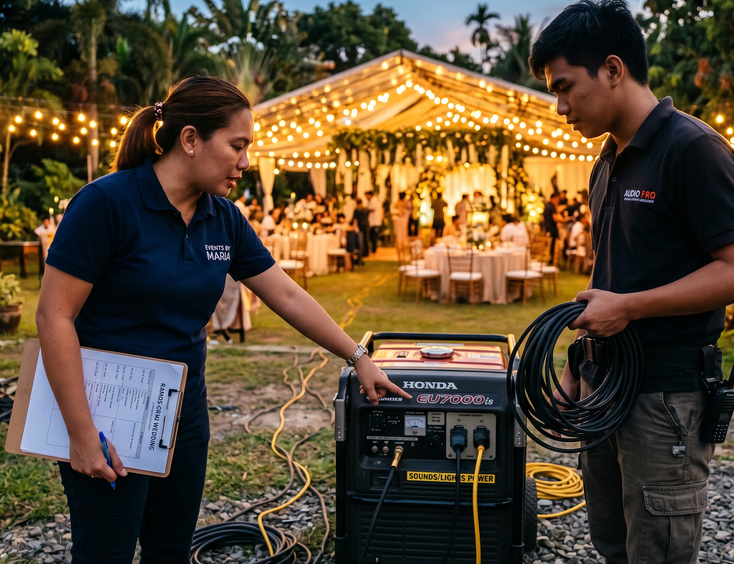
Generator rental. Outdoor venues and provincial locations may lack stable power. Your supplier may require a generator, and the rental cost falls on you.
Overtime fees. Most packages cover six to eight hours. Receptions that run past midnight will trigger hourly overtime charges, often ₱1,000 to ₱3,000 per hour.
Travel and accommodation. Suppliers based in Metro Manila charge travel fees for venues in Tagaytay, Batangas, Laguna, Pampanga, and other provinces. Overnight stays for the crew add to the cost.
Venue corkage. Some venues charge a corkage fee for outside suppliers. Check your venue contract before booking a separate lights and sounds provider.
Rigging and trussing. Large lighting rigs need trusses mounted from the ceiling or freestanding structures. Rigging hardware and labor may cost extra.
Coordination meetings. Some suppliers include one or two pre-wedding coordination meetings. Others charge for site visits and technical planning sessions.
Get a written quote that lists every item, fee, and condition. Compare it line by line against other quotes so you're measuring the same things.
How Guest Count Affects Your Package
Your guest count determines speaker quantity, volume requirements, and lighting coverage.
50 to 100 guests (intimate reception). Two powered speakers and six to eight LED par lights cover the room. One subwoofer adds warmth to music playback.
100 to 200 guests (medium reception). Add a second pair of speakers or delay speakers for the back of the room. Upgrade to 10 or more par lights and add two moving heads for the dance floor.
200 to 400 guests (large reception). You need four or more speakers with subwoofers, delay speakers positioned at intervals, a full lighting rig with moving heads and beam lights, and a dedicated sound engineer managing levels throughout the event.
400 or more guests (grand reception). Full production is the baseline. Add an LED wall, cold pyro, fog machines, and a video switching setup for live camera feeds.
Suppliers who quote you a flat rate without asking your guest count are guessing. Your supplier should size the equipment to your venue and headcount after conducting an ocular inspection.
For a broader look at how all of this fits into your wedding planning process, read our complete guide to wedding lights and sound in the Philippines.
Indoor vs. Outdoor: Different Gear for Different Venues
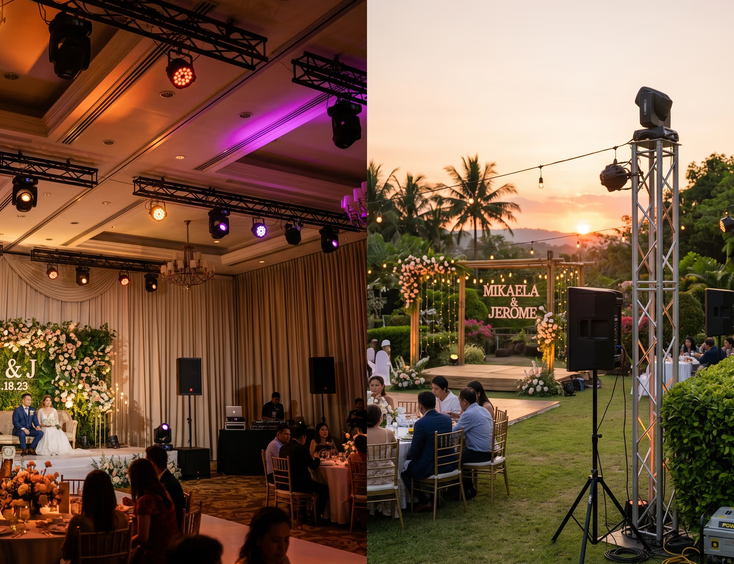
Indoor ballroom receptions benefit from controlled acoustics and existing power infrastructure. Your supplier can mount lights on ceiling tracks, bounce sound off walls for fuller coverage, and run cables to nearby outlets.
Outdoor garden and beach receptions present different challenges. Sound dissipates in open air, so your supplier needs more powerful speakers and additional units to cover the space. Lighting rigs require freestanding trusses since there are no ceilings to mount equipment on. Generators become a requirement rather than a backup option. Weather protection for electronic equipment adds another layer of planning.
Tell your supplier whether your venue is indoor, outdoor, or semi-outdoor (covered pavilion, tent, or glass-walled venue) during your first inquiry. The answer changes the equipment list and the price.
Red Flags When Reviewing a Quote
Watch for these warning signs in supplier proposals.
No equipment list. A quote that says "lights and sounds package" without itemizing speakers, lights, mics, and operators is too vague to evaluate.
No site visit offered. A supplier who quotes you a price based on guest count alone, without offering to inspect your venue, may deliver the wrong setup on your wedding day.
No backup equipment mentioned. Microphones fail. Cables short out. Ask whether the supplier brings spares.
Unusually low pricing. A ₱3,000 "full lights and sounds" package for a 200-guest reception means outdated equipment, no dedicated technician, or both.
No contract or terms. A professional supplier provides a written agreement covering equipment, service hours, overtime rates, cancellation terms, and liability.
Booking Timeline
Six months before the wedding is a safe booking window for standard packages. Full production setups with LED walls and special effects need eight to ten months of lead time, especially during peak wedding season (December through February and June).
Book early enough to secure a site visit, a coordination meeting with your other suppliers, and a technical rehearsal if your program includes complex lighting cues or timed pyro effects.
Compare quotes from at least three providers before making a decision. Browse lights and sounds suppliers in the Philippines to start your search.
You might also want to read about the biggest wedding lighting trends at Philippine receptions right now and how couples are adding cold pyro, fog machines, and special effects to their setups.
Still Searching for a Right Match?
Find Your Perfect Wedding Supplier Today!
Discover trusted wedding suppliers across the Philippines in our complete directory. Compare services and connect with the ones that fit your dream celebration.
Browse Wedding SuppliersFeatured Blog Posts

Filipino Wedding Entourage - Roles, Order of March, and Modern Etiquette
6 mins readCivil Weddings in the Philippines - Requirements, Costs, and Step-by-Step Process
9 mins readCivil Wedding Requirements in the Philippines - Complete Checklist
6 mins readCost of Wedding in the Philippines - 5 Essential Things You Need to Know
7 mins readPrincipal Sponsors (Ninong/Ninang) - How Many, How to Ask, What They Really Do
4 mins readVeil, Cord, Candle & Coins - Roles, Options, and When They Happen
4 mins readEntourage for a Traditional Pinoy Wedding - Complete Roles and Guide
6 mins readComplete List of Civil Wedding Requirements in the Philippines
8 mins readHow to Choose Wedding Ninongs and Ninangs - Ask Yourself These 3 Important Questions
5 mins read