


Wedding Entourage and Guest Transportation in the Philippines
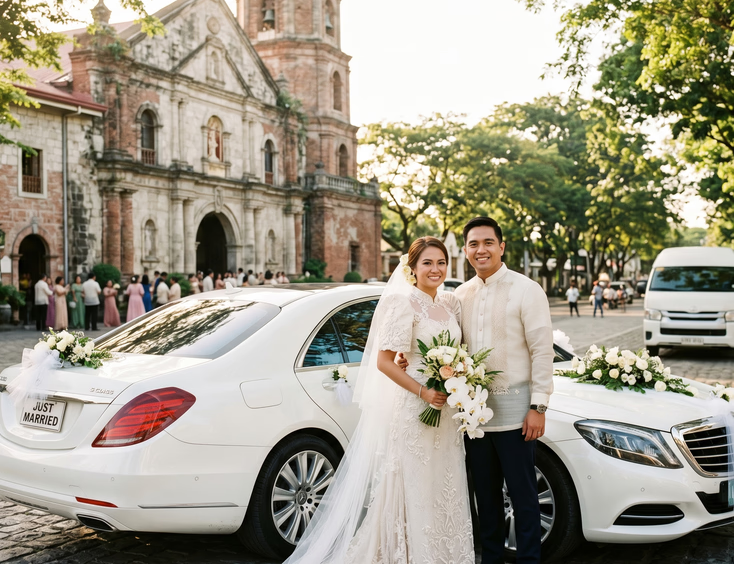
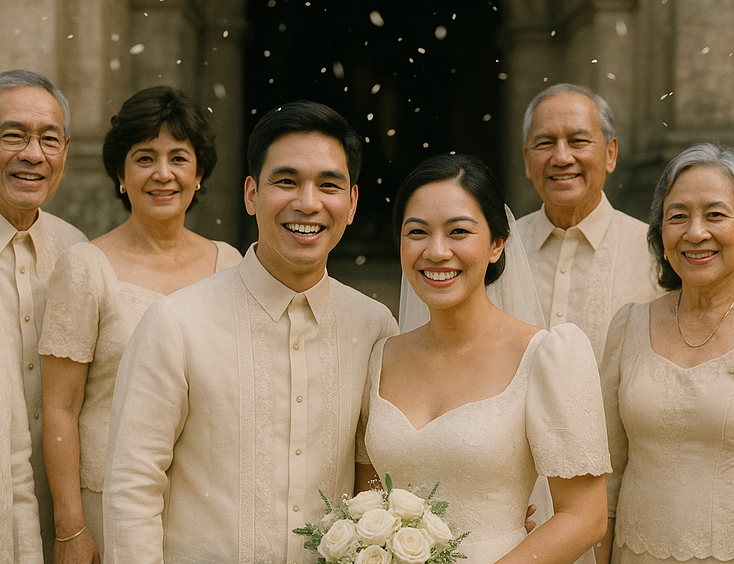
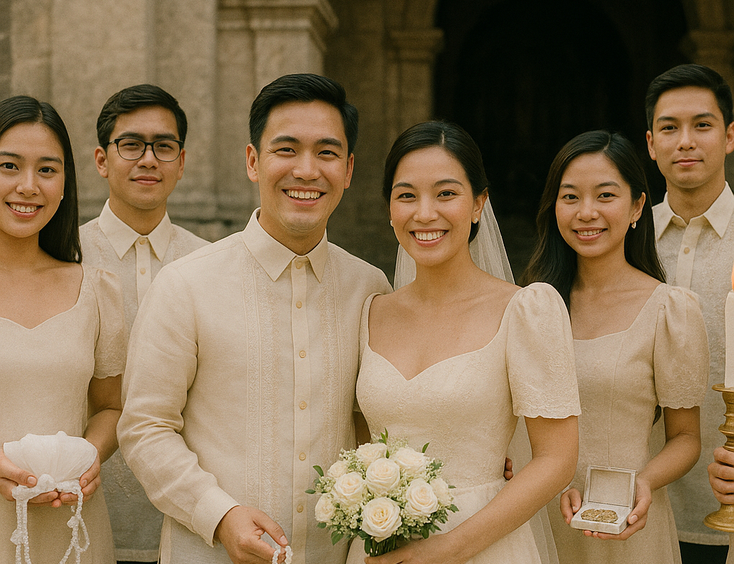
Filipino weddings run on community. Your entourage alone can include principal sponsors (ninongs and ninangs), secondary sponsors for the veil, cord, candle, and coins, bridesmaids, groomsmen, flower girls, coin bearers, bible bearers, and ring bearers. Add parents, grandparents, and close relatives to that list, and you're coordinating transport for 20 to 40 people before a single guest arrives at the church.
Most couples spend weeks choosing gowns, caterers, and florists. Transportation gets a few minutes of attention the week before. That gap between planning effort and logistical need is where wedding day headaches start.
This guide covers the practical side of moving your entourage and guests from point A to point B across Philippine roads, traffic, and weather. You'll find specific strategies for different venue types, budgets, and group sizes.
Why Transportation Deserves a Line Item in Your Wedding Budget
You've booked the church in Intramuros. Your reception is in Alabang. That's a 45-minute drive with zero traffic, and Manila traffic is never zero. Your ninongs and ninangs, some in their 60s and 70s, need a comfortable ride. Your bridesmaids finished hair and makeup at a hotel in Makati. Your flower girls are getting ready at the bride's family home in Quezon City.
Each of those groups needs a vehicle, a driver who knows the route, and a schedule that accounts for delays. Couples who skip this planning end up calling Grab cars at the last minute, splitting the entourage across random vehicles, and starting the ceremony 45 minutes late.
A dedicated transportation budget prevents that scramble. Even a modest amount set aside for two vans and a bridal car keeps the day moving. If you're working with a tight budget, read our guide on how to cut wedding transportation costs without compromising the experience.
Mapping Out Who Needs a Ride
Before you book a single vehicle, list the people who need transportation and group them by pickup location. A typical Filipino wedding breaks down into these groups:
The couple. The bride rides in the bridal car from her preparation venue to the church, then with the groom to the reception. The groom's car handles his route from his own preparation venue.
Principal sponsors. Filipino weddings can have eight to twelve pairs of ninongs and ninangs. Many are older family friends or relatives who may not drive themselves. A coaster or large van keeps them together and on schedule.
Secondary sponsors and the wedding party. Your veil, cord, candle, and coin sponsors, plus bridesmaids and groomsmen, form a second transport group. One or two vans handle this group in most weddings.
Parents and grandparents. A dedicated car for each set of parents keeps them comfortable and gives them space to manage last-minute family logistics.
Children in the entourage. Flower girls, ring bearers, coin bearers, and bible bearers travel with their parents or a designated guardian. Factor in car seats and extra time for restroom stops.
Guests. This group varies the most. Guests driving from nearby cities can manage their own transport. Out-of-town relatives flying into Manila or Cebu need clearer guidance or arranged rides.
Figuring out how many cars you need for your wedding entourage depends on the total headcount, the number of pickup points, and the distance between venues.
Vehicle Options for Philippine Weddings
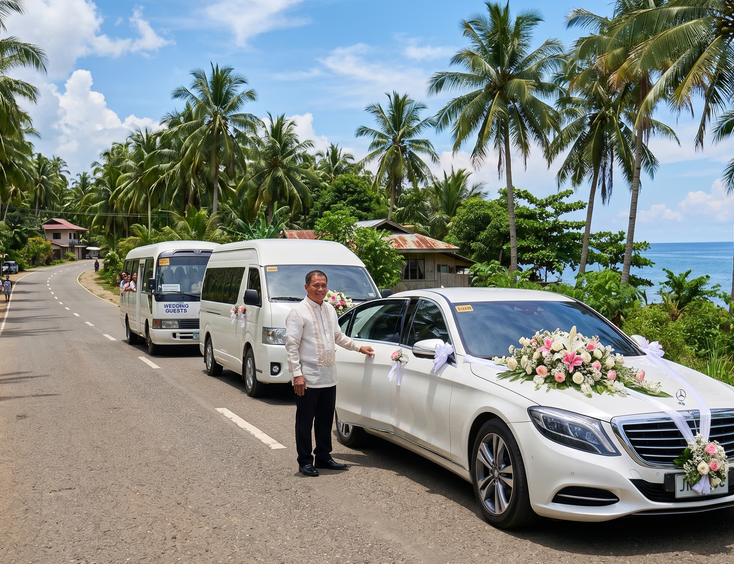
Bridal cars. Sedans and luxury vehicles dedicated to the bride (and later, the couple). Popular choices in the Philippines include the Mercedes-Benz S-Class, Rolls-Royce Ghost, BMW 7 Series, and classic cars like the Volkswagen Beetle convertible or Ford Mustang. Bridal car packages often include a uniformed chauffeur, ribbons, flower arrangements, and signage.
Entourage vans. The Toyota HiAce and Hyundai Starex seat 10 to 15 passengers each. These vans handle most entourage transport needs at a lower cost per head than sedans.
Coasters and minibuses. A Toyota Coaster seats 25 to 30 passengers. If your principal sponsors alone number 16 to 24 people, one coaster consolidates their transport into a single vehicle and a single schedule.
SUVs. A Fortuner or Montero Sport works for parents, grandparents, or VIP guests who need a private ride without the bridal car price tag.
Guest shuttles. For weddings where you're providing guest transportation, chartered vans or coasters running set routes between hotels and the venue keep the schedule tight.
Browse bridal cars and transportation suppliers to compare fleets, packages, and rates from verified providers across the Philippines.
Scheduling Your Wedding Day Transport
A transport schedule works best when you build it backward from the ceremony start time. If the church ceremony begins at 2:00 PM:
1:15 PM — Bride arrives at the church. The bridal car picks her up from the preparation venue with enough buffer for traffic and photos at the church entrance.
1:00 PM — Entourage van drops off bridesmaids, groomsmen, and secondary sponsors. They need time to line up for the processional.
12:45 PM — Principal sponsors arrive. Older ninongs and ninangs appreciate extra time to settle in, find their seats, and greet family.
12:30 PM — Parents and grandparents arrive. They greet early guests and take their positions.
Build in 30-minute buffers for Metro Manila drives and 15-minute buffers for provincial routes. If your venue is along EDSA, Ortigas, or C5, add more.
For the ceremony-to-reception transfer, assign a coordinator to each vehicle. That person confirms headcount, manages stragglers, and communicates with the reception venue team. The gap between ceremony and reception is where most transportation breakdowns happen. Guests scatter. Vehicles get reassigned. The couple gets stuck in a photo session while ninongs and ninangs wait in a hot parking lot.
If your timeline runs into unexpected problems, our guide on managing last-minute transportation problems on your wedding day covers backup plans and quick fixes.
Transporting Your Wedding Guests
Filipino couples face a specific question other cultures rarely consider: do you need to provide transportation for wedding guests? The answer depends on your venue, your guest list, and your budget.
When arranged guest transport makes sense:
- Your venue sits in a remote location with limited parking and no nearby Grab coverage (common for garden, farm, and mountain venues in Cavite, Laguna, Batangas, or Bukidnon).
- Your ceremony and reception are at different venues more than 30 minutes apart.
- A large portion of your guests flew in from other cities or provinces and have no vehicles.
- Your venue is a beach resort accessible only by specific routes or boats.
When guests can handle their own transport:
- Your venue is in a metro area with good road access, parking, and rideshare availability.
- Most guests live within the same city.
- The ceremony and reception happen at the same location.
Even when you choose not to arrange rides, include transport details on your wedding website or invitation suite: Waze links, parking instructions, Grab pickup points, and contact numbers for local transport services.
Venue-Specific Transportation Challenges
Philippine wedding venues come with specific logistical problems. A church wedding in BGC has different transport needs than a beachfront ceremony in Batangas or a garden reception in Tagaytay.
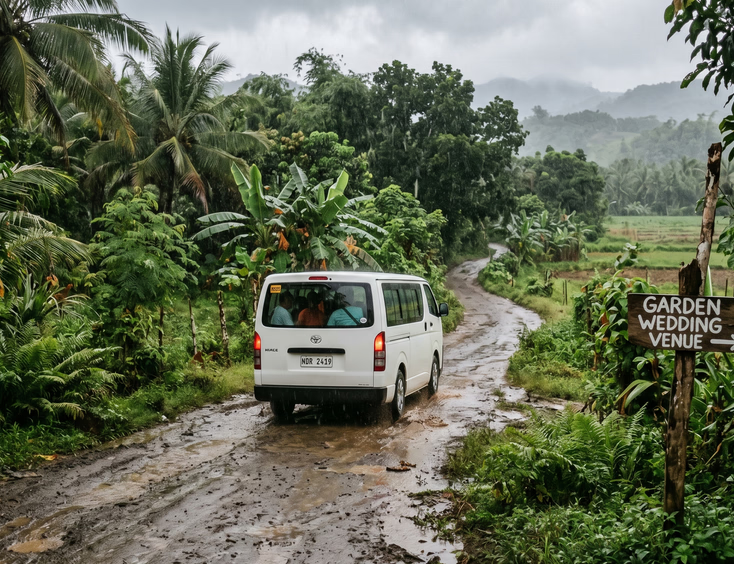
Garden and farm weddings. Venues in Silang, Alfonso, Tanay, or Antipolo sit along narrow provincial roads. Rain turns unpaved driveways into mud. Low-clearance sedans can't reach some properties. Vans and SUVs handle these routes better. If you're planning this type of celebration, check our detailed guide on garden and farm wedding transportation challenges and solutions.
Beach weddings. Coastal venues in Batangas, La Union, Zambales, or Cebu add distance and route complexity. Guests coming from Manila face 2 to 4 hours of highway driving. Some island venues require boat transfers. Coordinating arrivals across scattered resorts adds another layer. We cover the details in our guide on beach wedding transportation and coordinating guests across resorts.
Church-to-hotel weddings in the metro. Manila, Cebu City, and Davao present traffic as the main obstacle. Saturday afternoon weddings in Metro Manila collide with weekend mall traffic along EDSA and major thoroughfares. Number coding on weekday weddings limits certain vehicles. Build wider time buffers and pick routes that avoid known chokepoints.
Booking Your Wedding Transportation
Start looking for transport six to nine months before the wedding date. Peak wedding season in the Philippines (December through February, and June) fills supplier calendars fast.
Get specific quotes. Ask what's included: driver, fuel, mileage, toll fees, parking, decorations, and overtime charges. Ask what's excluded and billed separately. Out-of-town surcharges, village gate fees, and hotel valet fees add up.
See the vehicle in person. Photos on a supplier's website might show a car from three years ago. Visit the garage or request a recent video walkthrough. Check seat condition, air conditioning, and overall cleanliness.
Confirm the backup plan. Ask what happens if the vehicle breaks down on the way to pick you up. Reputable suppliers keep a backup unit or a partner company on standby.
Book entourage vehicles from the same supplier. Coordinating call times, dispatch, and driver communication is easier when one company handles your bridal car and entourage vans together.
Put verbal promises in the contract. Decoration rules, call times, included items, and backup arrangements belong in writing, not in a Viber conversation.
Find trusted bridal car and van suppliers to start comparing options for your wedding date.
Building Your Transport Communication Plan
A transport plan fails if the people involved don't know it exists. Share the schedule with these groups:
Your wedding coordinator. They manage the timeline and communicate with drivers. If you don't have a coordinator, assign a trusted friend or family member as the transport point person.
Your drivers. Send each driver a document with pickup addresses, contact numbers, route options (primary and alternate), and venue gate instructions. Include Waze links. Call each driver the day before the wedding to confirm.
Your entourage. Create a group chat per vehicle. Post the pickup time, the vehicle plate number, and the driver's contact number. Remind the group the night before and the morning of.
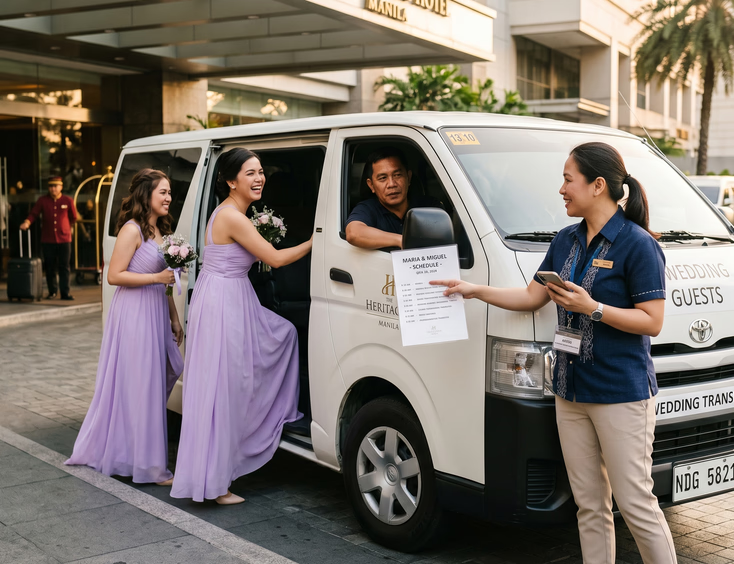
Your guests (if shuttles are provided). Post shuttle schedules on your wedding website. Include pickup points, departure times, and a note that the shuttle leaves on time. Print the schedule and post it at hotel lobbies if possible.
Common Mistakes to Avoid
Underestimating headcount. You counted 12 people for the entourage van but forgot the flower girls' parents and the makeup artist who needs a ride to the church. Add 20% buffer to your seat count.
Ignoring the return trip. You planned transport to the ceremony and the reception but forgot that guests at a remote venue need rides back to their hotels at 11 PM. Book vehicles for the full day or confirm return trip availability.
Relying on a single point of failure. One van for 15 people on a highway with no cell signal is a risk. For remote venues, book a backup vehicle or confirm that your supplier can dispatch a replacement within a reasonable window.
Skipping the dry run. Drive the route between your preparation venue, the church, and the reception at the same time of day and day of the week as your wedding. Saturday afternoon traffic in Metro Manila is a different animal than a Tuesday morning test drive.
Forgetting provincial road conditions. Tagaytay, Tanay, and Batangas routes include steep inclines, hairpin turns, and sections without streetlights. Brief your drivers on the specific route. Choose vehicles with enough engine power for uphill stretches.
Your Transportation Planning Checklist
- [ ] List all people who need transportation, grouped by pickup location
- [ ] Determine vehicle types and quantities for each group
- [ ] Set a transportation budget with buffer for overtime and surcharges
- [ ] Book vehicles 6 to 9 months before the wedding date
- [ ] Visit suppliers and inspect vehicles in person
- [ ] Confirm backup vehicle arrangements in writing
- [ ] Build a transport schedule working backward from ceremony time
- [ ] Assign a transport coordinator or point person
- [ ] Create per-vehicle group chats with drivers, contact numbers, and schedules
- [ ] Share shuttle details on the wedding website and at hotel lobbies
- [ ] Drive the route at the same time and day of the week as the wedding
- [ ] Confirm all bookings with each driver the day before
Your wedding day moves as fast as your slowest vehicle. Plan the transport the same way you plan the ceremony: with names, times, routes, and a backup for when Manila traffic has other ideas.
Start building your transport plan by browsing bridal cars and wedding transportation suppliers in the Philippines.
Still Searching for a Right Match?
Find Your Perfect Wedding Supplier Today!
Discover trusted wedding suppliers across the Philippines in our complete directory. Compare services and connect with the ones that fit your dream celebration.
Browse Wedding SuppliersFeatured Blog Posts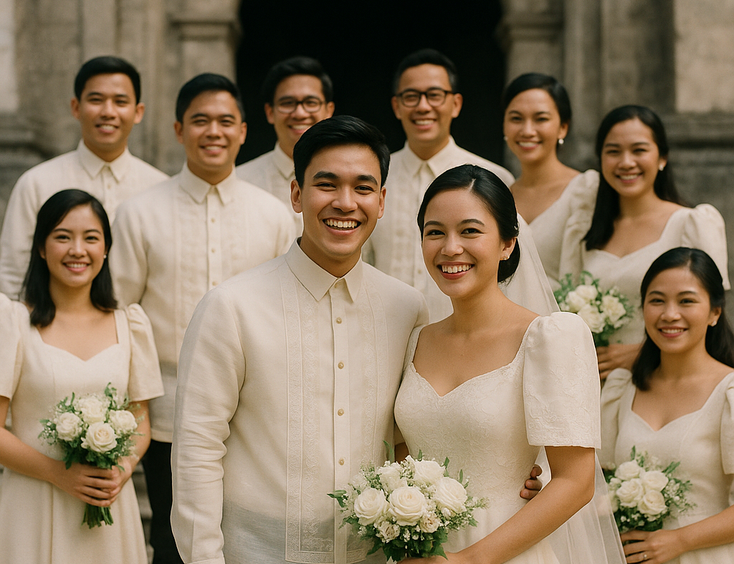



Filipino Wedding Entourage - Roles, Order of March, and Modern Etiquette
6 mins readCivil Weddings in the Philippines - Requirements, Costs, and Step-by-Step Process
9 mins readCivil Wedding Requirements in the Philippines - Complete Checklist
6 mins readCost of Wedding in the Philippines - 5 Essential Things You Need to Know
7 mins readPrincipal Sponsors (Ninong/Ninang) - How Many, How to Ask, What They Really Do
4 mins readVeil, Cord, Candle & Coins - Roles, Options, and When They Happen
4 mins readEntourage for a Traditional Pinoy Wedding - Complete Roles and Guide
6 mins readComplete List of Civil Wedding Requirements in the Philippines
8 mins readHow to Choose Wedding Ninongs and Ninangs - Ask Yourself These 3 Important Questions
5 mins read