

The Role of Lechon in a Chinoy Wedding and What It Symbolizes
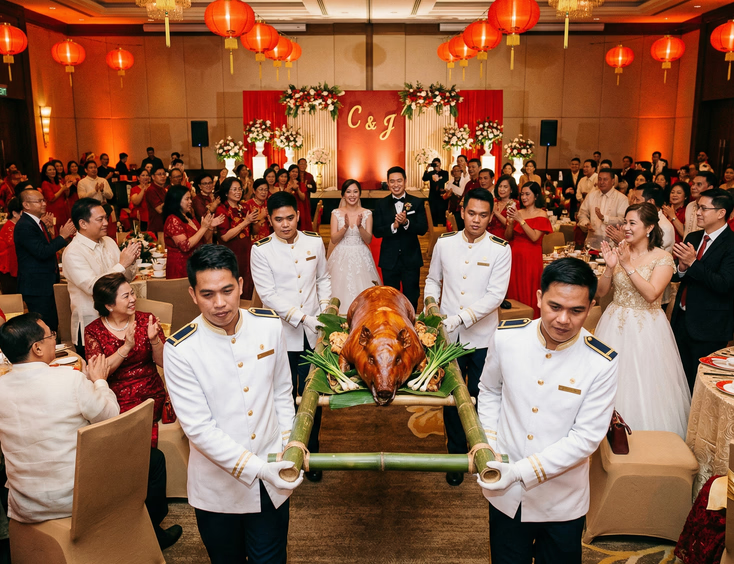
Lechon appears at celebrations across the Philippines, from fiestas to birthdays to graduation parties. At a Chinoy wedding, it carries a meaning that goes beyond festivity. The roasted pig at a Filipino-Chinese wedding is a cultural statement, a ritual object, and a message from one family to another. Knowing what it represents changes how you read the moment when the pig is carried into the reception hall.
Where the Tradition Comes From
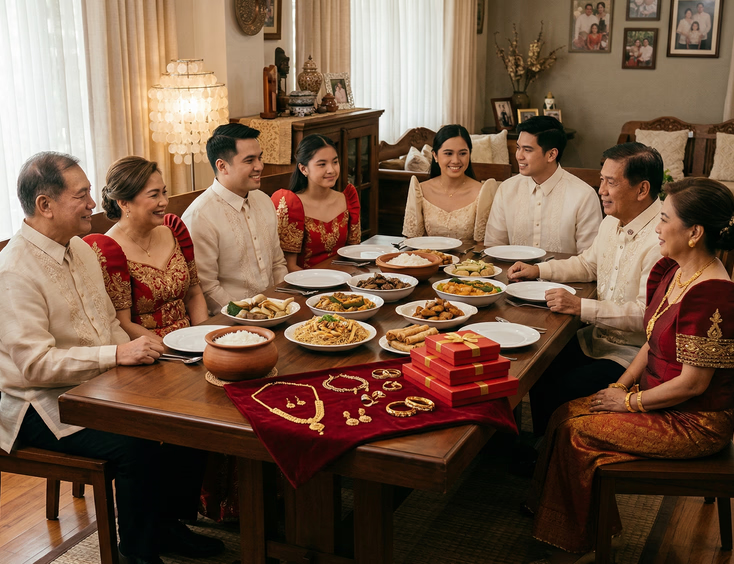
The presentation of a whole roasted pig at a Chinese wedding traces back to ancient Chinese betrothal customs. In traditional Chinese wedding practice, the groom's family sends a whole roasted pig to the bride's family as part of the betrothal gifts. The pig is not sent as food. It is sent as a declaration.
A whole pig presented intact, uncut and unblemished, signals that the bride comes from a family of virtue and that the groom's family acknowledges and honors that. The pig's unbroken skin is the symbol. An intact roasted pig represents an intact family reputation.
The Hokkien-speaking migrants who settled in the Philippines brought this tradition with them, and it took root in Chinoy wedding culture alongside the other betrothal and reception customs that distinguish a Filipino-Chinese wedding from a standard Filipino reception.
For a full picture of how the lechon fits within the broader sequence of a Chinoy wedding day, read what happens at a Chinoy wedding: a step by step guide to every tradition and ritual.
What the Roasted Pig Represents
The whole roasted pig at a Chinoy wedding carries three distinct layers of meaning that operate simultaneously.
The first is the bride's honor. The intact pig signals that the bride enters the marriage with her reputation and virtue intact. This meaning is rooted in a historical context where a young woman's personal virtue before marriage carried significant weight for both families. The pig is a public statement from the groom's family that they received the bride with full respect and that her family raised her well.
The second is the sincerity of the groom's family. Presenting a whole roasted pig is a gesture of substantial effort and expense. A family that provides this is showing the bride's family that their commitment to the union is serious and that they do not approach the marriage lightly.
The third is abundance. A whole pig feeds many people and its presentation at a large gathering signals that the hosting family provides generously. In Chinese cultural contexts, hospitality and generosity expressed through food carry deep social meaning. A family that serves abundantly is a family that welcomes abundantly.
The Presentation Ceremony
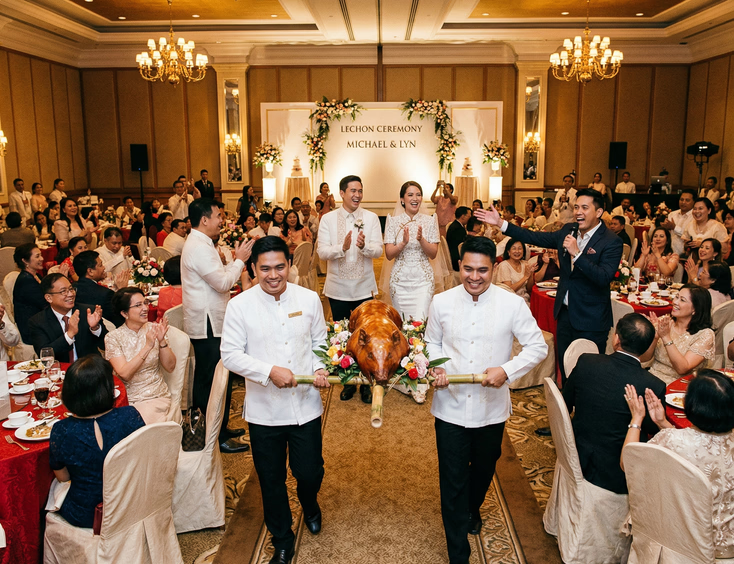
The lechon presentation at a Chinoy wedding reception is a distinct ceremonial moment, not simply a delivery of food from the kitchen. The pig is carried into the reception hall whole, typically on a bamboo spit or a dedicated roasting rack, by staff or family members assigned to the task.
The emcee announces the arrival of the lechon and draws the room's attention to it. The pig is carried through the center of the hall and brought to the front of the room, often to a dedicated table or stand where the couple and the senior family members acknowledge it. Some families have a brief spoken moment at this point where the significance of the pig is explained to guests who may be unfamiliar with the tradition.
The pig is then displayed for a period before being taken back to the kitchen for carving. Some families allow the couple to pose with the lechon for photographs before it is removed. After carving, the meat is served as one of the courses in the 12-course banquet or plated separately and distributed to tables.
The timing of the presentation varies by family. Some families bring the lechon out before the couple enters, as part of the pre-reception setup. Others present it after the couple's grand entrance, using it as an early highlight of the reception program. A smaller number of families present it during the betrothal process and bring a separate serving pig to the reception.
The Difference Between Filipino Lechon and Chinese Roast Pig
At a Chinoy wedding, you may encounter two distinct roasted pig preparations that look similar but taste and function differently.
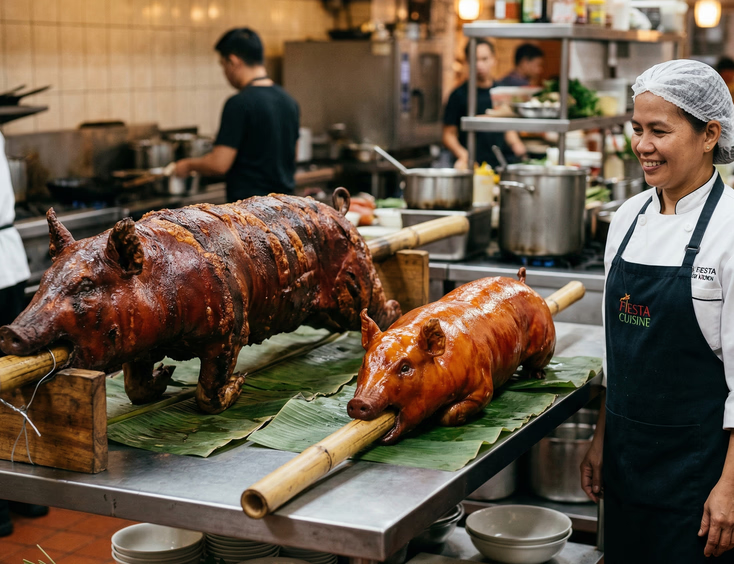
Filipino-style lechon, the version most Filipinos know from fiestas and celebrations, involves a whole pig roasted slowly over charcoal on a bamboo spit. The skin crisps to a deep mahogany and is seasoned from the inside with lemongrass, garlic, onions, and herbs. It is served with Mang Tomas liver sauce or a vinegar dipping sauce and is carved tableside. Cebu lechon carries its own distinct preparation with heavier internal seasoning and no liver sauce requirement.
Chinese-style roast pig, called sio bak in Hokkien, uses a younger, smaller pig and focuses specifically on the skin. The pig is air-dried before roasting to achieve a thin, crackled, lacquered skin that shatters on contact. The preparation is closer to Cantonese roast pork in technique but applied to a whole animal. It is served with hoisin sauce and is carved into small pieces that preserve the skin-to-meat ratio in each portion.
Some Chinoy families present a Filipino-style lechon for the ceremonial moment because its visual impact in a large ballroom is more dramatic, and serve Chinese-style roast pork as part of the roasted meat platter within the 12-course banquet. Others present the Chinese-style pig for the ceremony because its connection to the original tradition is more direct.
Both are correct within the context of a Chinoy wedding. The family's preference, their chef's capability, and their interpretation of the tradition all inform which they choose.
What Size Pig the Family Presents
The size of the pig presented at a Chinoy wedding reception corresponds generally to the scale of the celebration. A reception with two hundred guests calls for a larger pig than one with eighty guests, both because the symbolic statement needs to be visible across a large room and because the meat will eventually feed the crowd.
Some families present a lechon kawali, a smaller roasted belly section, when the reception is intimate and a whole pig would be disproportionate to the gathering. This is a practical adaptation rather than a break in tradition. The symbolic gesture remains. The scale adjusts to match the event.
For the ceremonial presentation, the pig should be large enough to be visible when carried through the room. A pig that disappears between the serving staff loses the theatrical weight of the moment. Families who want the full ceremonial impact should discuss the pig's size with their lechon supplier specifically in the context of a ballroom presentation rather than a food service delivery.
The Lechon at the Betrothal
The roasted pig does not always wait until the reception. In families who observe the betrothal customs strictly, the groom's family sends a whole roasted pig to the bride's family home before the wedding day as part of the formal engagement gifts.
This betrothal pig is separate from the reception lechon. It is a private exchange between the two families and is not presented to a crowd. The bride's family receives it, acknowledges the gift, and distributes the meat to close relatives. The act of receiving the pig and sharing it within the family circle completes this part of the betrothal ritual.
Families who observe the betrothal pig tradition still present a separate lechon at the reception. The two appearances of the roasted pig serve different functions. The betrothal pig is a private family statement. The reception pig is a public declaration before the full guest list.
For a full breakdown of how the pre-wedding rituals connect to the wedding day itself, read the complete guide to a Chinoy wedding in the Philippines.
How Modern Chinoy Families Handle the Tradition
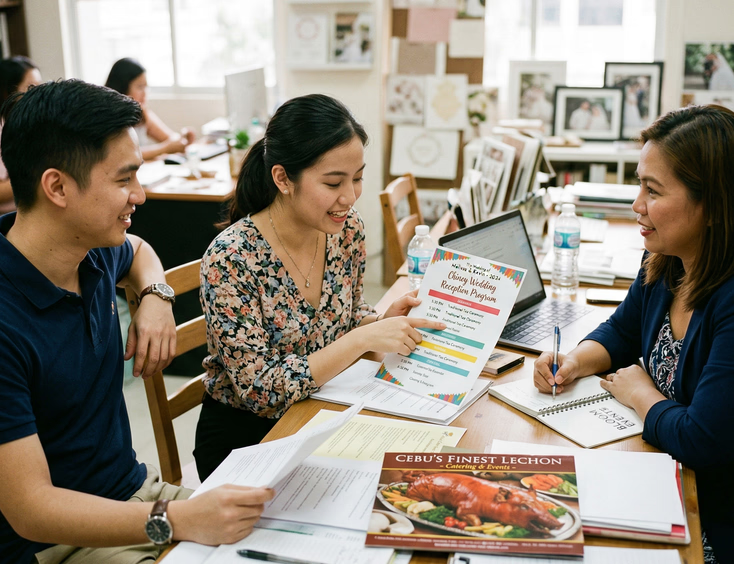
The lechon presentation at a Chinoy wedding ranges from a full ceremonial procession with an emcee announcement to a quiet inclusion of roast pig as one item on the banquet menu. How a family handles it reflects how formally traditional they are and how much of the historical symbolism they want to carry forward.
Families with strong Hokkien roots and multiple generations of Chinoy wedding experience tend to observe the full presentation with ceremony. Families who are more assimilated into mainstream Filipino culture may include the lechon as a standard part of the reception meal without the formal procession.
A smaller number of younger Chinoy couples skip the lechon entirely, either because they disagree with the specific symbolism tied to the bride's virtue or because they prefer a fully Chinese-style roast pig served as part of the banquet without ceremonial framing. Both decisions are increasingly common and neither signals disrespect for Chinese tradition. They reflect how the tradition is being reinterpreted by a generation that takes ownership of its cultural heritage rather than simply inheriting it.
For a broader look at how modern Chinoy couples navigate tradition and personal preference, read modern Chinoy weddings: how Filipino Chinese couples are reinventing their traditions.
Sourcing the Lechon for a Chinoy Wedding
The lechon supplier for a Chinoy wedding reception needs to understand that the pig will be presented ceremonially before it is carved. This affects how the supplier prepares and delivers it.
A lechon supplier who delivers for standard parties wraps the pig in foil to maintain heat during transport and often begins the carving process before arrival to speed up service. Neither of these works for a ceremonial presentation. The pig needs to arrive intact, uncut, with the skin visibly crisp, on the spit or rack used for transport and presentation. The supplier needs to coordinate the delivery timing with the reception program so the pig arrives at the venue ready to be carried in at the correct moment.
Discuss this specifically with your supplier before you confirm the order. Show them the reception program so they understand the timeline. Confirm that the pig will be delivered whole and that the presentation condition is their responsibility up to the moment it enters the reception hall.
In Metro Manila, established lechon suppliers who work regularly with Chinoy wedding receptions are available in the Binondo area and across the major wedding supplier networks in Quezon City and Makati. In Cebu, suppliers experienced with the ceremonial Chinoy presentation cluster around the areas serving the city's Filipino-Chinese community.
A wedding coordinator with Chinoy wedding experience maintains supplier relationships that include lechon providers who understand the ceremonial requirements. Browse the wedding planners and coordinators directory to find a coordinator who can connect you with the right supplier and manage the lechon logistics as part of the full reception timeline.
Couples thinking through the full scope of Chinoy wedding food, from the lechon presentation through all 12 courses of the banquet, should read the 12-course Chinoy wedding banquet: every dish explained and why it matters alongside this guide.
Still Searching for a Right Match?
Find Your Perfect Wedding Supplier Today!
Discover trusted wedding suppliers across the Philippines in our complete directory. Compare services and connect with the ones that fit your dream celebration.
Browse Wedding SuppliersFeatured Posts
Regional Wedding Customs Every Filipino Couple Should Know
23 mins readThe Complete Guide to Filipino Wedding Invitations: From Traditional Customs to Modern Trends
12 mins readThe Complete Filipino Couple's Guide to Wedding Rings & Bands in the Philippines: Traditions, Styles, Budgets & Where to Buy
22 mins read