

The Role of Food in a Tinghun Ceremony and What Dishes Are Traditionally Served
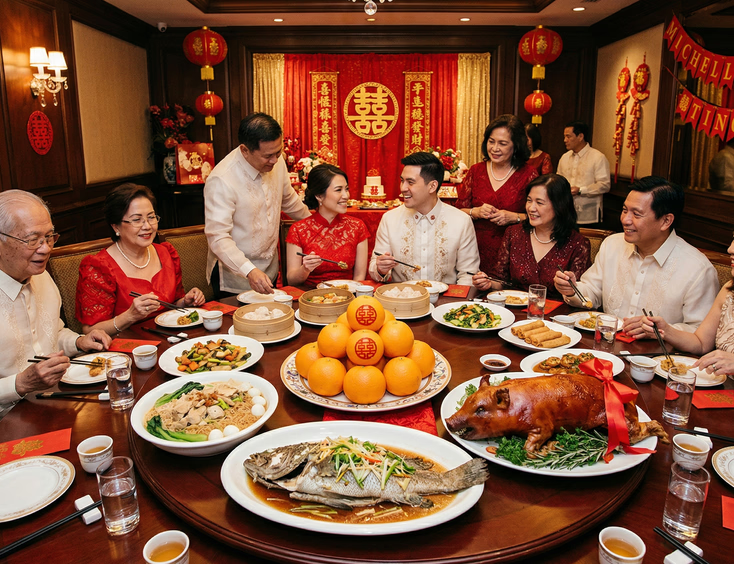
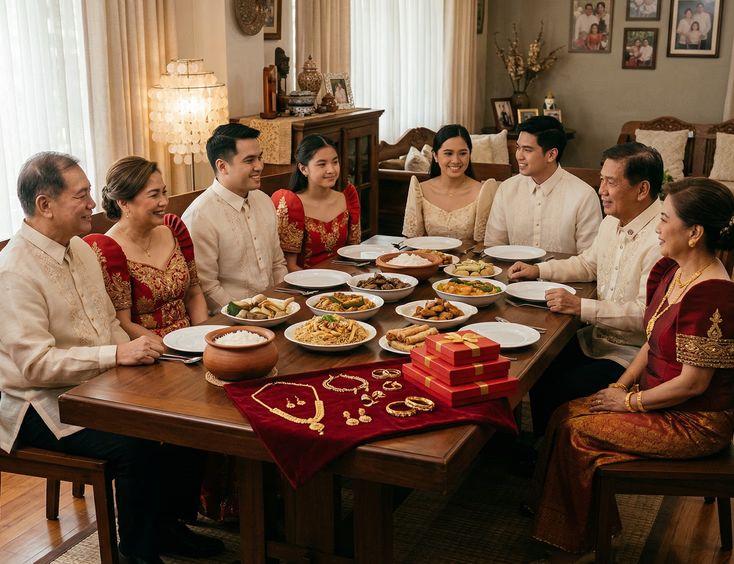
Food at a tinghun is not catering. Every dish on the table was chosen for a reason, and the families seated around it know what each one means. Serving the wrong food, or treating the meal as an afterthought, signals to the other family that you did not take the occasion seriously.
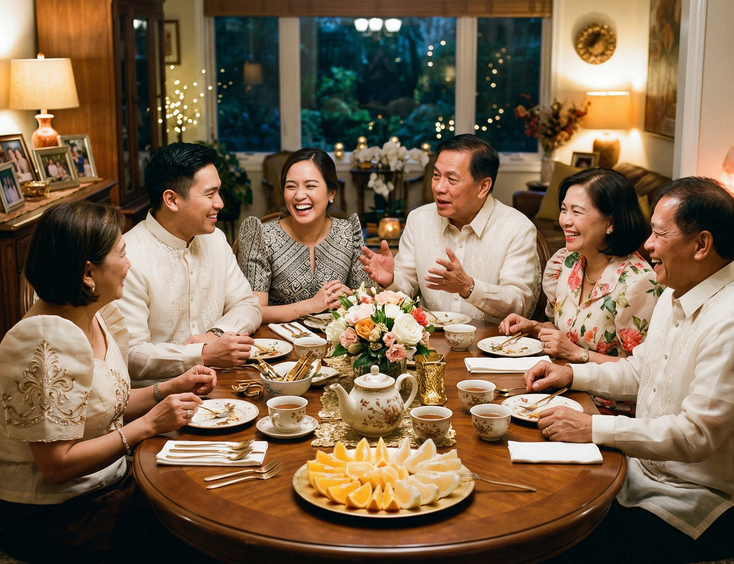
The tinghun meal is where both families sit together for the first time as future relatives. The conversation flows around the table, the elders observe, and the food carries meaning that no speech can fully replace. Getting it right matters as much as getting the gifts right.
Why the Meal Is Inseparable From the Ceremony
Filipino-Chinese tradition treats food as a form of communication. Certain dishes represent prosperity. Others represent longevity, fertility, or the strength of family bonds. Serving them at a tinghun is not superstition for its own sake. It is a way of stating, through the meal itself, what you wish for the couple and for the union between your families.
In most tinghun ceremonies, the groom's family hosts the meal or takes responsibility for arranging it. The dishes they select reflect their values, their cultural background, and the seriousness with which they approach the occasion. A thoughtfully prepared spread tells the bride's family they are entering into a relationship with people who pay attention.
The Dishes Most Commonly Served
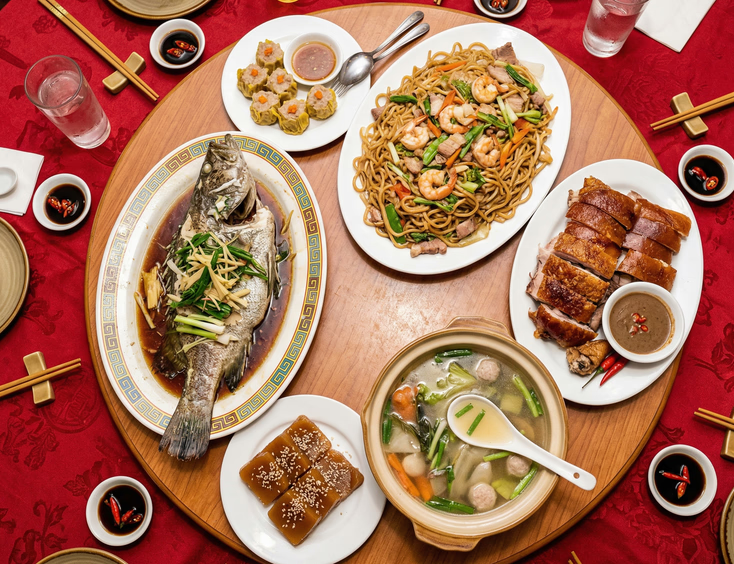
Whole fish appears on nearly every tinghun table. In Chinese tradition, a whole fish represents abundance and completeness. Serving it whole, with the head and tail intact, signals that the relationship being formed is whole and unbroken. Lapu-lapu steamed with ginger and soy is a common choice. Some families serve it twice, once at the start and once near the end of the meal, to reinforce the symbolism.
Whole roasted pig, or lechon, is the centerpiece in many Filipino tinghun spreads, particularly in families that blend Filipino and Chinese traditions. Lechon represents celebration and prosperity. Its presence at the table signals that the occasion is being honored at full scale. Some families send a whole lechon to the bride's family as part of the formal gifts before the ceremony even begins.
Noodles are non-negotiable in families that observe Chinese traditions carefully. Long noodles represent long life. You do not cut them before serving, and guests do not cut them on their plates. The length is the point. Pancit canton or misua prepared simply with minimal toppings lets the noodles themselves remain the focus.
Tikoy or nian gao is a sticky rice cake that represents family unity and the sticking together of two households. Its texture is the message. Families who include tikoy in the tinghun meal are drawing a direct line between the food and the purpose of the gathering.
Sweet rice dishes in general carry positive associations in both Filipino and Chinese traditions. Biko, palitaw, or maja blanca served as part of the spread reinforce the wish for a sweet life ahead for the couple.
Chicken prepared whole, typically as a whole steamed or roasted chicken, represents good luck and the completeness of the family. Like fish, it is served whole rather than portioned before it reaches the table. Families who observe this tradition carefully avoid serving chicken that has already been broken down, as a partial animal on the table carries the wrong symbolism.
Sea cucumber or other prized seafood appears in more formal tinghun spreads, particularly in Filipino-Chinese families from Binondo or those with strong Hokkien roots. Sea cucumber is expensive, and serving it signals the groom's family's willingness to provide generously for the bride and for the household they will build together.
Soup anchors the meal in many Filipino-Chinese traditions. A clear broth with whole ingredients, served at the start, sets a calm and auspicious tone. Some families serve shark's fin soup or a substitute for it, though many modern families have moved away from shark's fin for ethical reasons and replaced it with a comparable premium broth.
Fruits close the meal. Oranges and pomelos carry luck and prosperity in Chinese tradition. Round fruits in general are preferred because their shape echoes coins and completeness. Families arrange them in even numbers, as odd numbers carry associations with mourning rather than celebration.
What to Avoid Serving
Pears are traditionally excluded from celebratory Chinese meals because the word for pear in several Chinese dialects sounds like the word for separation. Serving pears at a tinghun, even inadvertently, can unsettle older family members who observe these traditions.
Bitter dishes are generally avoided. The meal is meant to begin the relationship between two families on a sweet and prosperous note, and bitterness at the table contradicts that intention.
Incomplete or halved presentations of dishes that carry symbolic weight, such as a fish served without its head, undermine the very meaning of the food. If you are going to include a symbolic dish, present it correctly or replace it with something else.
How Much Food to Prepare
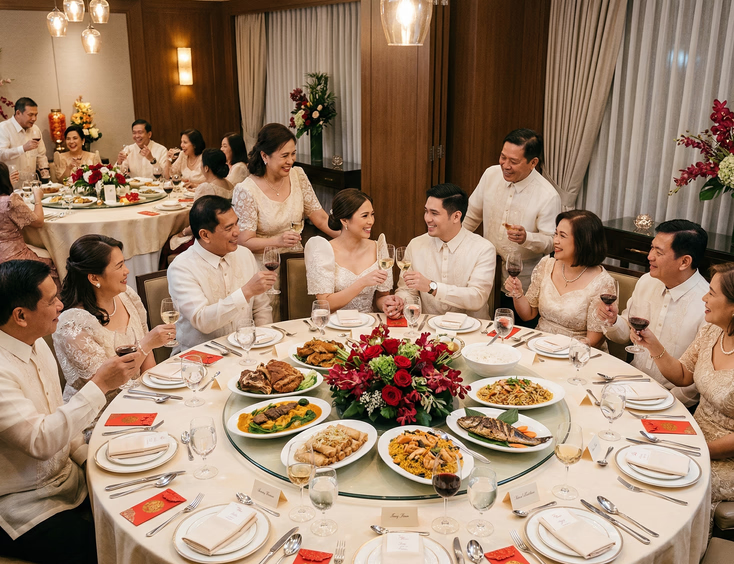
Tinghun meals are typically served in courses at a round table, family-style. Eight courses is considered auspicious in Chinese tradition because the number eight carries associations with prosperity. Families who follow this closely plan their menu around eight dishes, not counting rice or fruit.
If both families are large, the meal may extend across multiple tables. The immediate families of both the bride and groom typically share the main table. Extended family members and close friends, if invited, sit at adjacent tables and receive the same dishes.
Leftovers after a tinghun are not a sign of poor planning. In Chinese tradition, abundance at the table is intentional. An empty table at the end of the meal can suggest that not enough was provided, which reflects poorly on the hosting family.
Who Prepares the Food
Some families cook the tinghun meal at home, particularly when the ceremony is held at the family residence. A home-cooked meal carries intimacy and signals effort in a way that a restaurant cannot fully replicate.
Other families choose a private dining room at a Chinese restaurant where the kitchen already knows how to prepare the traditional dishes correctly. This approach works well when the groom's family wants to ensure every dish is executed properly without placing the burden of cooking on family members who are also participating in the ceremony.
A wedding coordinator familiar with Filipino-Chinese traditions can help you decide which approach fits your family size, your venue, and your budget. If you have not yet found someone to help manage the logistics, browse the wedding planners and coordinators in our supplier directory who have experience with tinghun ceremonies.
Connecting the Meal to the Bigger Picture
The food is one layer of a ceremony that has many. If you want to understand how the meal fits into the full sequence of events, read the step-by-step guide to what happens during a tinghun ceremony. For a complete picture of everything prepared and presented on the day, the symbolic gifts in a tinghun and what each one represents covers the full scope of what both families bring to the table beyond food.
If you are still in the early stages of organizing the event, how to plan a tinghun ceremony: a checklist for both families will help you keep the meal planning in step with everything else that needs to happen before the day arrives.
For everything the tinghun involves from start to finish, the complete guide to the tinghun covers the full tradition in one place.
Still Searching for a Right Match?
Find Your Perfect Wedding Supplier Today!
Discover trusted wedding suppliers across the Philippines in our complete directory. Compare services and connect with the ones that fit your dream celebration.
Browse Wedding SuppliersFeatured Posts
Regional Wedding Customs Every Filipino Couple Should Know
23 mins readThe Complete Guide to Filipino Wedding Invitations: From Traditional Customs to Modern Trends
12 mins readThe Complete Filipino Couple's Guide to Wedding Rings & Bands in the Philippines: Traditions, Styles, Budgets & Where to Buy
22 mins read