

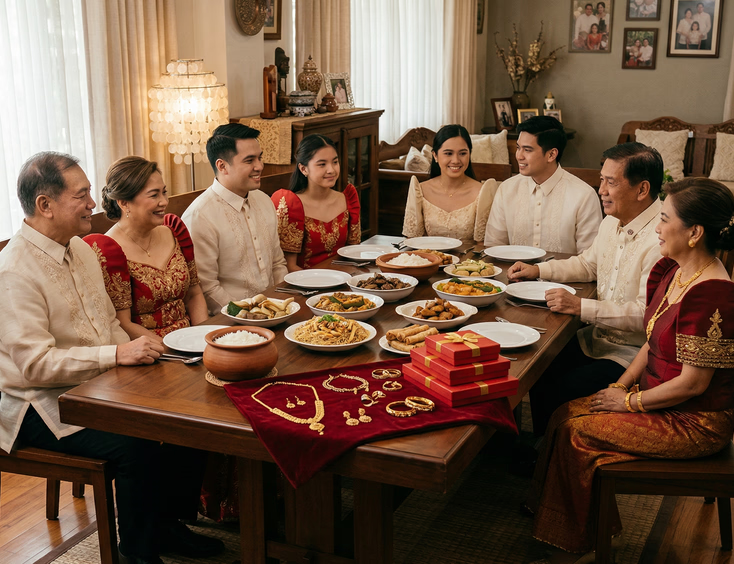
The Complete Guide to Judge Wedding Requirements in the Philippines
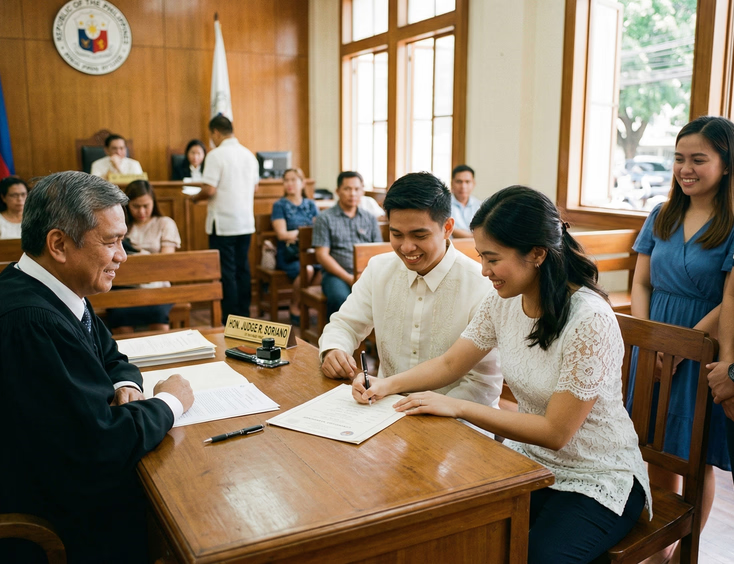
Getting married through a judge is one of the most practical decisions a Filipino couple can make. The process is legal, binding, and recognized by the Philippine Statistics Authority. No church, no elaborate ceremony required. Just the two of you, your documents, your witnesses, and a solemnizing officer authorized by law.
But "practical" does not mean simple. The paperwork alone trips up hundreds of couples every month. Miss one document, show up with an expired certificate, or skip a required step at the Local Civil Registrar, and your wedding day gets postponed.
This guide covers every requirement, every step, and every decision point so you walk into that courtroom prepared.
What a Judge Wedding Actually Is
A judge wedding is a civil marriage solemnized by a judge of the Regional Trial Court or the Municipal Trial Court. Under the Family Code of the Philippines, judges are recognized solemnizing officers. The marriage they perform carries full legal weight. Your PSA marriage certificate looks identical to one issued after a church wedding.
Couples choose this route for different reasons. Some need a legal marriage on record before scheduling a church blessing. Some are working within a tight budget. Some simply prefer an intimate ceremony with close family and no audience of three hundred.
The ceremony itself is brief. The judge reads the legal provisions, you exchange vows, you sign the marriage certificate along with your two witnesses, and the judge signs as well. From start to finish, the ceremony rarely exceeds thirty minutes.
For a deeper look at how this compares to a church wedding in terms of legal standing, documentation, and Catholic Church recognition, read what a judge wedding is and how it differs from a church wedding in the Philippines.
The Complete List of Requirements
Every couple applying for a judge wedding in the Philippines needs to prepare the following documents.
PSA Birth Certificate
Both parties need an original PSA-issued birth certificate. The copy must be recent. Most judges and Local Civil Registrars require a copy issued within the last six months to one year, though this varies by LGU. Request your copy through the PSA Serbilis portal, PSAHelpline.ph, or walk in to any PSA outlet.
If your birth was not registered or your PSA copy has errors, fix this at the Local Civil Registrar of your birth municipality before you do anything else. This single document blocks more weddings than any other.
Certificate of No Marriage (CENOMAR)
The CENOMAR confirms you have no existing marriage on record with the PSA. Both parties need one. Like the birth certificate, most offices require a copy issued within the last six months.
Order your CENOMAR through PSAHelpline.ph or at any PSA outlet. Processing time varies between three to seven business days for online orders, shorter for walk-in depending on the branch.
If you were previously married, a CENOMAR alone will not suffice. See the section on annulled and widowed applicants below.
Valid Government-Issued IDs
Bring at least two valid government-issued IDs each. Acceptable IDs include your passport, driver's license, UMID, PhilSys National ID, Voter's ID, and PRC ID. Requirements vary slightly by LGU, so confirm with your Local Civil Registrar.
Marriage License
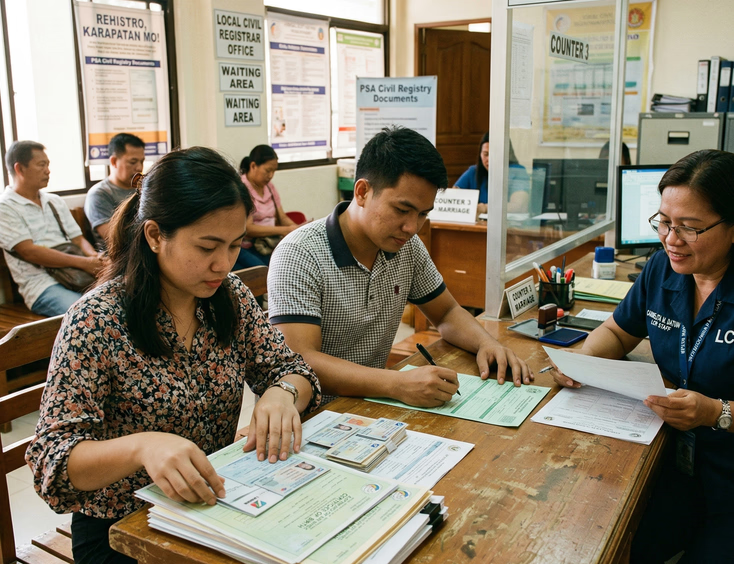
The marriage license is the most time-consuming requirement. You apply for it at the Local Civil Registrar of the city or municipality where either party has resided for at least six months.
To apply, you submit:
- PSA birth certificates of both parties
- CENOMARs of both parties
- Valid IDs
- Accomplished application form from the LCR
- Proof of residence (barangay certificate or utility bill)
- Pre-marriage counseling certificate (required in most LGUs)
- Family planning seminar certificate (required in most LGUs)
After you submit all documents, the LCR posts your application for ten days. This posting period is required by law and cannot be skipped or shortened. After the ten days, assuming no one files an objection, the LCR releases your marriage license.
The marriage license is valid for 120 days from the date of issue. Use it within that window or apply again.
Parental Consent or Parental Advice
If either party is between 18 and 21 years old, the parents or legal guardian must appear personally at the LCR to give parental consent. This consent is mandatory and must be on record before the marriage license is issued.
If either party is between 21 and 25 years old, parental advice is required. This is different from consent. The parents give their advice in writing, and the couple submits it to the LCR. If the parents refuse or are unavailable, the couple must wait 90 days after the application date before the LCR releases the marriage license.
Both parties 26 years old and above need neither consent nor advice.
Pre-Marriage Counseling Certificate
Most LGUs require couples to attend a pre-marriage counseling seminar before they can receive a marriage license. The barangay or city social welfare office usually conducts these sessions. Bring the certificate to your LCR application.
Two Witnesses
You need two witnesses on your wedding day. They must be of legal age and able to sign the marriage certificate. There is no requirement that witnesses be relatives. Bring their valid IDs.
Additional Requirements for Special Circumstances
Foreigners marrying a Filipino national must present a Certificate of Legal Capacity to Contract Marriage issued by their country's embassy or consulate in the Philippines. Requirements vary by nationality, so contact the relevant embassy early.
Annulled parties must present a certified true copy of the court decision granting the annulment, the Certificate of Finality of the decision, and an updated CENOMAR reflecting the annulled status.
Widowed parties must present the PSA death certificate of the deceased spouse and an updated CENOMAR.
For a full breakdown of these cases, read requirements for annulled or widowed Filipinos getting remarried.
Couples with one party abroad face additional considerations around representation and document authentication. Read civil wedding requirements when one party is abroad before assuming a proxy arrangement is possible.
Where to Schedule Your Judge Wedding
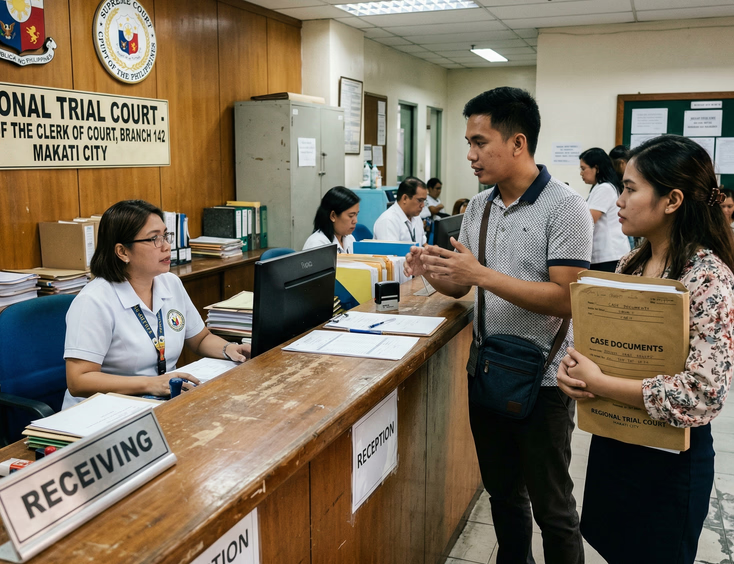
Contact the Office of the Clerk of Court of your target Regional Trial Court or Municipal Trial Court. Inform them you want to schedule a civil wedding. They will tell you which judge handles civil weddings, what their schedule looks like, and whether the judge requires any additional documents beyond the standard list.
Some judges conduct ceremonies inside their chambers. Others allow couples to hold the ceremony at an outside venue, subject to the judge's discretion and availability. Coordinate this early. Judges have court calendars and cannot always accommodate last-minute bookings or off-site requests.
Bring your complete documents when you inquire. Some courts process the coordination faster when they can verify your requirements on the spot.
How Long the Entire Process Takes
Most couples underestimate the timeline. The ten-day posting period alone adds nearly two weeks to the process before the marriage license is even released.
A realistic breakdown:
- PSA documents: three to seven business days if ordered online, faster walk-in
- LCR application and ten-day posting period: approximately two to three weeks from submission to license release
- Court scheduling: one to four weeks depending on the judge's calendar and your preferred date
From the day you start gathering documents to your actual wedding day, budget four to six weeks at minimum. Complications with PSA records, LCR requirements, or court availability can stretch this further.
For a week-by-week breakdown of the full timeline, read how long it takes to process all judge wedding requirements.
How Much a Judge Wedding Costs
The total cost of a judge wedding in the Philippines stays well below most other wedding formats, but it is not free.
Expect to spend on:
- PSA birth certificates and CENOMAR: between Php 365 to Php 530 per document depending on delivery method
- Marriage license fee: varies by LGU, typically between Php 200 to Php 500
- Pre-marriage counseling: usually free or minimal fee at the barangay level
- Judge's solemnization fee: varies widely, from Php 500 to several thousand pesos depending on the judge and whether the ceremony is in-court or at an outside venue
- Miscellaneous LCR fees: document processing, certification fees
For a complete cost breakdown with ranges for each expense, read how much a judge wedding costs in the Philippines.
What Happens After the Ceremony
The judge signs the marriage certificate immediately after the ceremony. You and your two witnesses sign as well. The judge's office or the court clerk submits the certificate to the Local Civil Registrar for registration. The LCR then endorses the record to the PSA.
Requesting your PSA-authenticated marriage certificate takes time after registration. Give it at least four to six months before ordering through PSAHelpline or any PSA outlet. Some couples receive theirs sooner, but the endorsement process between LCR and PSA varies.
Keep the Local Civil Registrar copy of your marriage certificate as your working document while you wait for the PSA copy. Use it for name change applications, bank updates, and other post-wedding transactions in the meantime.
Planning Beyond the Legal Ceremony
Many Filipino couples treat the judge wedding as the legal foundation and build the rest of their celebration around it. A church blessing, an intimate reception, or a full reception party can follow weeks or months after the civil ceremony.
The Church Blessing
Catholic couples who marry civilly can still receive a church blessing, but the Catholic Church has its own process for this. The parish priest will ask for your PSA marriage certificate and guide you through the requirements. The blessing is not a second wedding ceremony. It is the Church's recognition of your existing civil marriage. Read having a church wedding after a civil wedding in the Philippines for the full process.
The Reception
A judge wedding does not mean skipping the celebration. Plenty of couples hold a lunch, dinner, or garden party on the same day as the civil ceremony or on a separate date. Your guest count, venue type, and budget determine the shape of the celebration. Read how to plan a reception after a judge wedding for practical ideas across different budgets.
Planning the Full Experience
If you want the judge wedding to feel like more than a courthouse transaction, the details matter. Styling, attire, flowers, and a thoughtful venue choice transform a simple ceremony into a memory. Read how to plan an intimate judge wedding in the Philippines for a full planning approach.
On the attire side, Filipino brides navigating a civil wedding have more options than they think. Read civil wedding outfit ideas for Filipino brides for looks that work from courthouse to garden reception.
A wedding coordinator in the Philippines handles the logistics so you focus on the day itself. Even for small ceremonies, a coordinator manages vendor communication, timeline, and on-the-day details that pile up faster than couples expect.
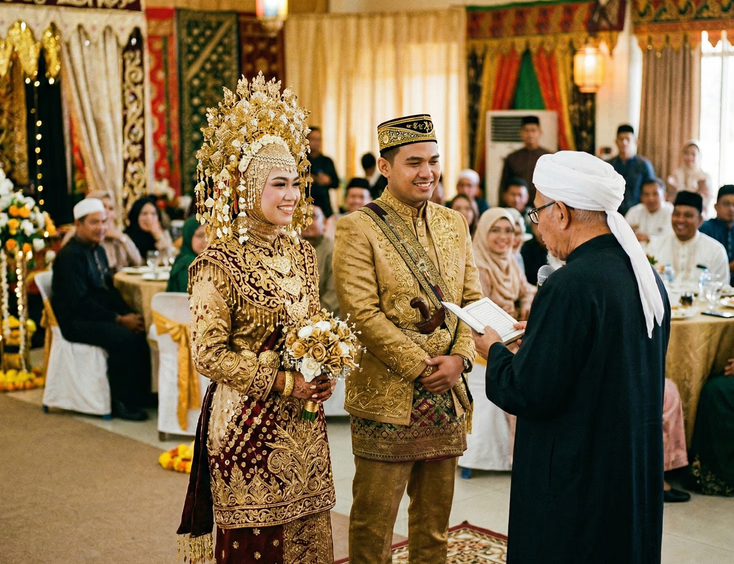
For Muslim Couples
Muslim couples in the Philippines marry under the Code of Muslim Personal Laws, not the Family Code that governs civil weddings and judge-solemnized marriages. The solemnizing officer, the requirements, and the legal framework differ. Read Muslim wedding requirements vs a civil wedding by a judge for a side-by-side comparison.
The Mistakes That Delay Weddings
Expired PSA documents catch more couples off guard than any other issue. Order your birth certificate and CENOMAR close to your LCR application date, not months in advance.
Skipping the pre-marriage counseling seminar is the second most common delay. Some couples assume they can submit this after the fact. Most LGUs require it before they accept your application.
Waiting until after the marriage license is in hand to contact the court is another misstep. Courts have limited scheduling windows. Start coordinating with the clerk of court the moment you submit your LCR application, not after the license arrives.
Bringing incomplete witness information on the wedding day causes unnecessary delays at the signing. Confirm your witnesses' availability and bring their IDs.
A Final Note on Preparation
The judge wedding process rewards couples who prepare early and follow up consistently. The government offices involved, including the PSA, the Local Civil Registrar, and the court, each move on their own timelines. Your job is to keep everything moving in parallel rather than treating each step as a sequence.
Start with your PSA documents. File your LCR application the moment those documents are in hand. Contact the court while the posting period runs. By the time your marriage license is ready, your wedding date should already be on the judge's calendar.
For everything covered in this guide in greater detail, explore the full collection of resources on judge and civil weddings in the Philippines, starting with what a judge wedding is and how it differs from a church wedding.
Still Searching for a Right Match?
Find Your Perfect Wedding Supplier Today!
Discover trusted wedding suppliers across the Philippines in our complete directory. Compare services and connect with the ones that fit your dream celebration.
Browse Wedding SuppliersFeatured Posts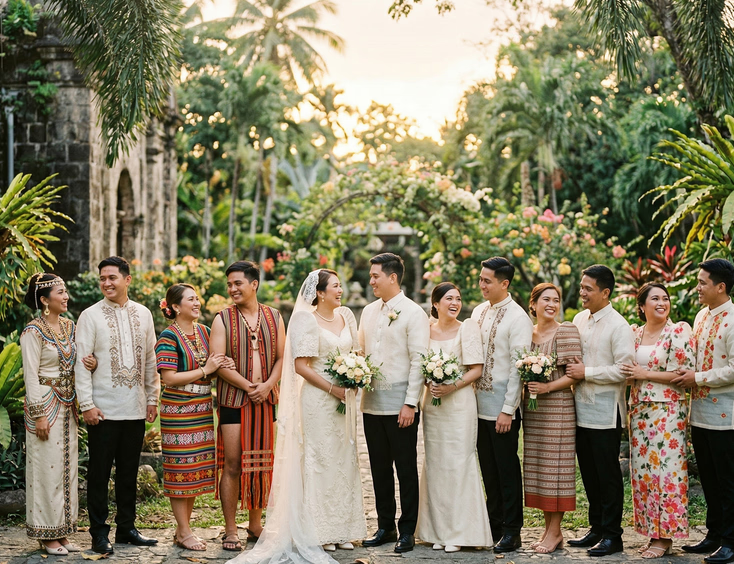
Regional Wedding Customs Every Filipino Couple Should Know
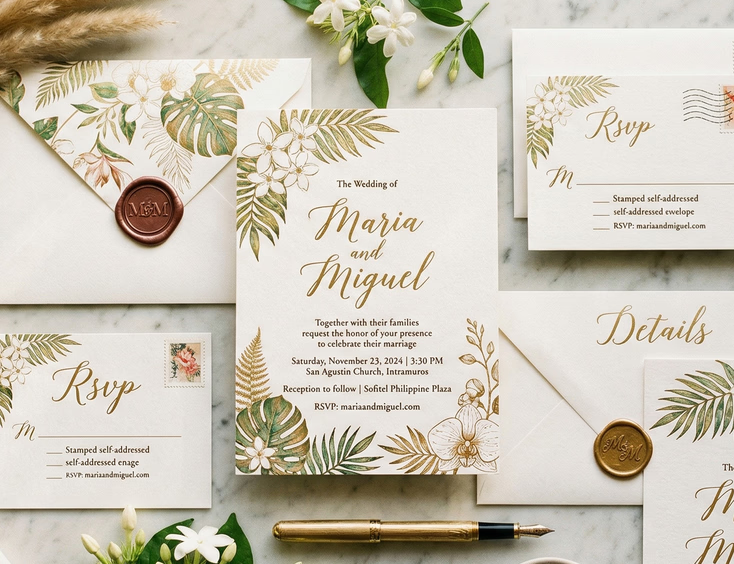
23 mins readThe Complete Guide to Filipino Wedding Invitations: From Traditional Customs to Modern Trends
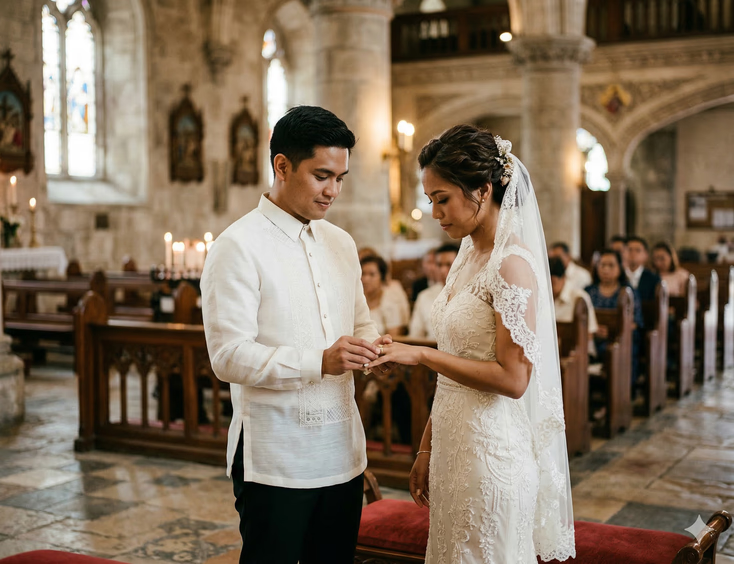
12 mins readThe Complete Filipino Couple's Guide to Wedding Rings & Bands in the Philippines: Traditions, Styles, Budgets & Where to Buy
22 mins read