

The Complete Guide to a Chinoy Wedding in the Philippines: Traditions, Rituals, and Modern Touches
Chinoy weddings sit at the intersection of two cultures that both take celebration seriously. Filipino families fill a room with warmth, Catholic ceremony, and enough food to feed the entire barangay. Chinese families bring ritual, symbolism, and a banquet structure refined over centuries. When these two meet at a Chinoy wedding, the result is one of the most layered and meaningful celebrations in the Philippines.
This guide covers everything you need to understand about a Chinoy wedding, whether you are planning one, attending one, or simply trying to make sense of the traditions you have witnessed at a relatives reception.
What Makes a Chinoy Wedding Different
Filipino-Chinese couples, locally called Chinoy, follow a wedding format that most guests experience in two distinct acts. The first is the Catholic church ceremony, standard in most Filipino weddings. The second is a Chinese-style banquet reception that follows a sequence of rituals rooted in Hokkien and Cantonese traditions, the two dominant Chinese dialects among the Filipino-Chinese community.
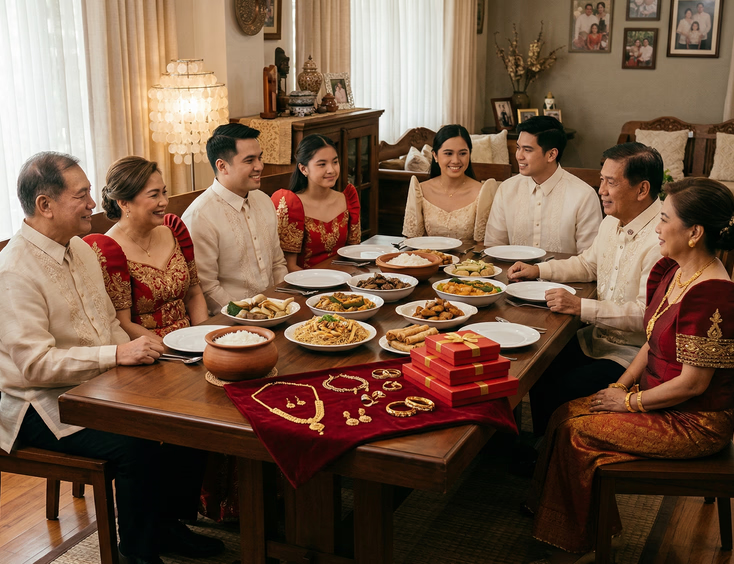
Neither side cancels the other out. A Chinoy couple gets confirmed in a church and then serves tea to their elders. They exchange vows before a priest and then receive gold jewelry from their in-laws at a tea table draped in red. The blending is deliberate, and most Chinoy families have navigated it for generations.
If you want a full breakdown of the sequence of events across the wedding day, read what happens at a Chinoy wedding: a step by step guide to every tradition and ritual.
The Tea Ceremony
The tea ceremony is the heart of every Chinoy wedding. It is not a casual moment between courses. It is the formal act by which the couple presents themselves to both families as a married pair and receives acknowledgment from their elders in return.
The couple kneels or bows before each family member in order of seniority, starting from the eldest. They serve Chinese tea, usually chrysanthemum or red date tea, in small cups held with both hands. Each elder drinks, offers a blessing, and gives the couple a gift, typically gold jewelry, jade, or an ang pao.
The order of kneeling matters. Serving the wrong person before a more senior relative is considered disrespectful. Families who take the ceremony seriously spend time before the wedding mapping out the correct sequence.
For a complete explanation of the ceremony, including what the couple wears, what the elders give, and how modern families adapt it, read the Chinoy tea ceremony explained: what it means and how it works.
Ang Pao: The Gift of Cash in Red Envelopes
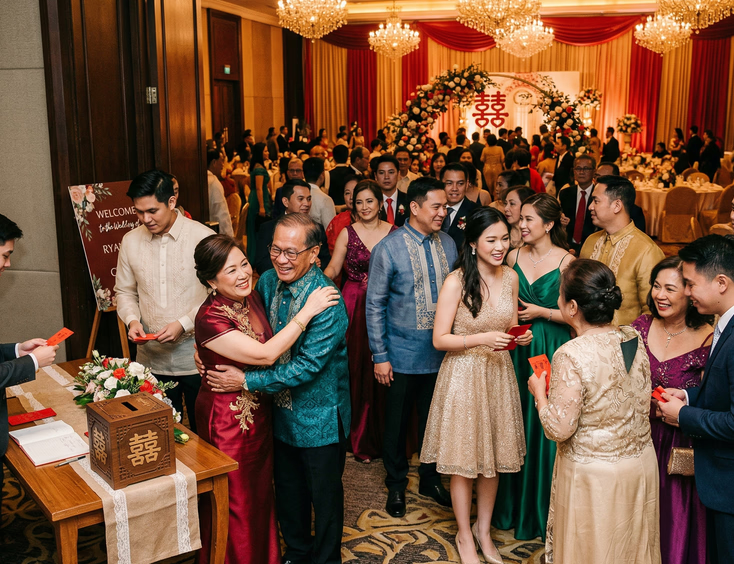
Red envelopes are the standard monetary gift at a Chinoy wedding. Guests place cash inside a red envelope called an ang pao and give it during the reception. Most families set up a designated table or box near the entrance for this purpose.
The amount inside an ang pao carries meaning. Chinese numerology favors even numbers, particularly those with 8 and 6, because 8 sounds like prosperity in Hokkien and 6 sounds like smooth sailing. Odd numbers are avoided because they carry associations with mourning. Amounts like 888, 1,888, or 8,888 pesos are common. Guest who give amounts ending in 4 make an unintentional reference to death, since the word for 4 in Chinese sounds like the word for dying.
The amount you give also reflects your relationship to the couple. A close friend or relative gives more than a distant acquaintance. A table host typically gives enough to cover the cost of their seat at the banquet, which is a standard expectation in Chinese reception culture.
Read ang pao etiquette at a Chinoy wedding: how much to give and what you need to know before you show up to your next Chinoy wedding reception.
Choosing the Wedding Date
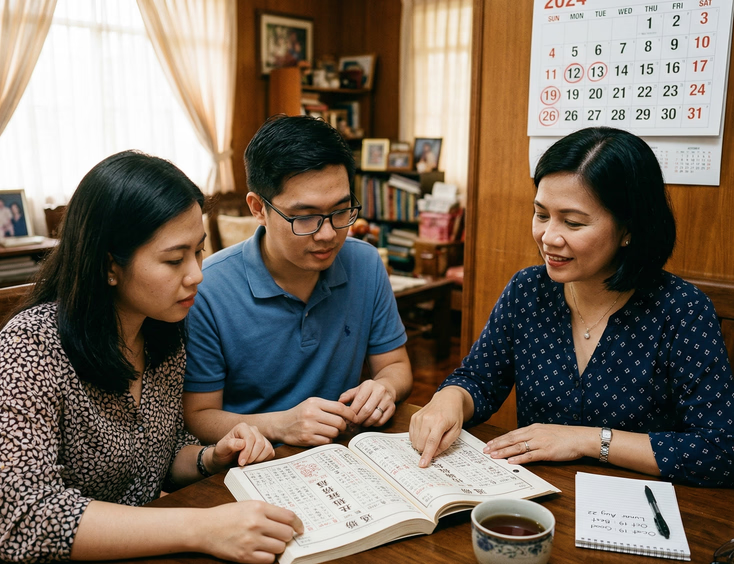
Chinoy families rarely pick a wedding date from a wall calendar alone. Most consult the Chinese almanac, called the Tong Shu, which assigns each day a set of activities it favors or prohibits. A day marked favorable for marriage is an auspicious date. A day marked unfavorable is avoided regardless of how convenient it is for the venue.
Some families go further and consult a feng shui master, who calculates a date based on the birth charts of the couple. The master looks for days when the couple's elements align and avoids dates that conflict with either partner's chart.
This process narrows the calendar significantly, which is why Chinoy couples often book venues months or years in advance. The most auspicious dates fill up fast, especially those that fall on dates with repeated 8s or during the eighth lunar month.
Learn how to approach date selection in detail at how to choose a lucky wedding date for a Chinoy wedding using the Chinese almanac.
The Venue: Banquet Hall or Chinese Restaurant
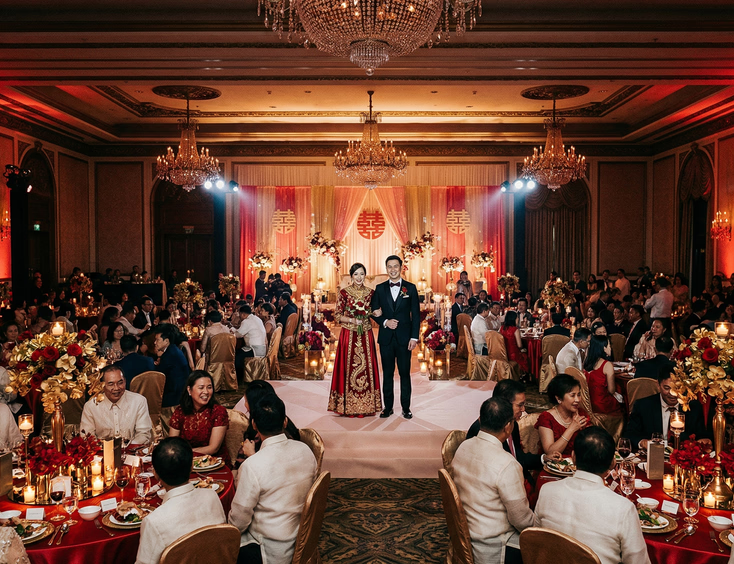
The Chinoy wedding reception rarely happens in a garden or at a beach. Families favor large hotel ballrooms or Chinese restaurant banquet halls for a reason. The traditional Chinese banquet runs on round tables, and the format requires space for many tables with full table service across multiple courses.
Round tables are not aesthetic preference. They reflect the Chinese value of equality among guests, with no head or foot position at the table. Everyone faces the center. Everyone shares from the same dishes.
Families in Metro Manila often look at venues in areas with strong Chinese community ties, including Binondo, Greenhills, and the hotel corridors of Makati and Quezon City. In Cebu, the Fuente Osmena area and major hotel ballrooms serve a similar purpose.
Before you book, read the Chinoy wedding venue guide: what to look for in a banquet hall or restaurant in the Philippines to understand what to check beyond capacity and price.
The 12-Course Banquet
A Chinoy wedding reception does not serve a buffet. It serves a structured 12-course Chinese banquet, and each dish arrives at the table in a specific order. The sequence is not arbitrary. Each course carries symbolic meaning tied to prosperity, longevity, harmony, or fertility.
The meal typically opens with cold appetizers and moves through shark's fin soup or a premium alternative, roasted meats, steamed fish, abalone dishes, fried rice, and noodles. The noodles signal longevity and are served uncut. Cutting them shortens the couple's life together, at least in traditional belief. The meal closes with a sweet dessert, often a glutinous rice dish or fresh fruit.
Families who accommodate non-Chinese guests sometimes add Filipino dishes to the rotation or substitute some courses with local ingredients while keeping the structure intact.
Read the full breakdown at the 12-course Chinoy wedding banquet: every dish explained and why it matters.
The Lechon and Its Place at a Chinoy Wedding
A roasted pig appears at many Filipino celebrations, but at a Chinoy wedding it carries a specific ritual meaning. The presentation of a whole lechon at the start of a Chinoy wedding reception traditionally signals that the bride comes from a family of good standing and that she enters the marriage with honor. Some families present the pig to the groom's family as part of the reception proceedings.
The lechon is not simply served as food. It is presented whole, ceremonially, before being carved and distributed. Some families pair this with Chinese roast duck or roast suckling pig prepared in a specifically Chinese style, separate from the Filipino-style lechon.
The tradition is observed with varying degrees of formality today. Some families keep the full ceremony. Others serve lechon as part of the banquet menu without the formal presentation.
Get the full context at the role of lechon in a Chinoy wedding and what it symbolizes.
What to Wear as a Guest
Red is welcome at a Chinoy wedding. Gold is welcome. Deep jewel tones are welcome. White is not, because white is the color of mourning in Chinese tradition. Black, worn alone without other colors, can also carry funerary associations, though modern Chinoy families often accept black as standard formalwear.
The safe approach is to wear celebratory colors and dress at the formality level the venue demands. A hotel ballroom reception requires formal evening attire. A smaller restaurant reception may accept smart casual, though most guests lean formal at Chinoy weddings out of respect for the family.
Read what to wear to a Chinoy wedding: a guest dress code guide for a full breakdown before you open your closet.
The Chinoy Bride's Outfits
Most Chinoy brides wear at least two outfits on their wedding day. The first is the qipao or cheongsam, a form-fitting Chinese dress typically in red or gold, worn during the tea ceremony. The second is a Western-style white wedding gown worn during the Catholic church ceremony. A third outfit, often a contemporary evening gown in red, blush, or gold, appears at the reception.
The qipao worn at the tea ceremony is usually embroidered with auspicious symbols, dragons and phoenixes being the most traditional. The dragon represents the groom and the phoenix represents the bride. Wearing both together on a single garment signals their union.
Brides today blend these expectations in creative ways. Some wear a modern structured qipao instead of a traditional floor-length one. Some carry forward the red color across all three looks with different silhouettes. Others commission custom pieces that fuse Chinese embroidery with Western gown construction.
Explore the full range of options in Chinoy bridal style: how Filipino Chinese brides blend the qipao and the wedding gown.
Planning a Chinoy Wedding on a Budget
The 12-course banquet, multiple outfit changes, gold jewelry for the tea ceremony, lechon presentation, red and gold decor across a large ballroom — a Chinoy wedding carries a reputation for being expensive. That reputation is not without basis. But couples plan meaningful Chinoy weddings without spending at the highest tier.
The areas where most families overspend on optics rather than substance include oversized floral arrangements and imported table centerpieces. The areas where cutting costs affects the experience include food quality and the tea ceremony gifts. Guests notice the food. Few guests examine the flower arrangements in detail.
Couples who focus their budget on the banquet menu and the tea ceremony essentials can reduce spending on decor, stationery, and favors without guests noticing the difference.
Read how to plan a Chinoy wedding on a budget without skipping the important traditions for a practical guide on where to allocate and where to trim.
How Modern Chinoy Couples Approach Their Wedding
Younger Chinoy couples today carry on the traditions they grew up watching but shape them around their own values. Some simplify the tea ceremony to immediate family only. Some replace the full 12-course banquet with a curated six-course menu at a more intimate venue. Some skip the lechon presentation and serve roast pig as one dish among many.
None of these choices signal disrespect. They reflect how Chinoy culture has always adapted. The Filipino-Chinese community has been blending two cultures for generations, and each generation finds its own balance between honoring the past and building something of its own.
Decor has shifted as well. The heavy red and gold maximalism that defined Chinoy receptions in past decades now shares space with soft blush, warm ivory, and modern minimalist aesthetics that keep Chinese symbolic elements in the details rather than across every surface.
Read modern Chinoy weddings: how Filipino Chinese couples are reinventing their traditions for a closer look at where things are heading.
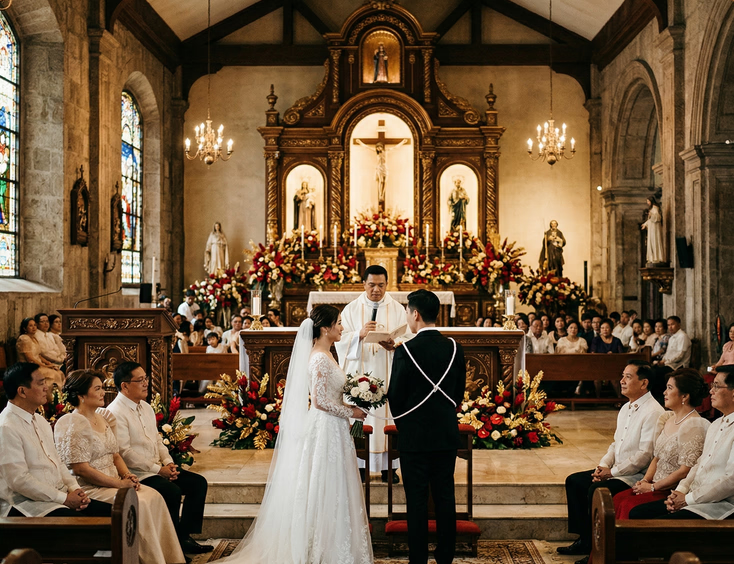
Blending the Catholic Ceremony with Chinese Traditions
Most Chinoy couples hold a Catholic mass before the reception, which means the wedding day runs on two separate cultural tracks that must coordinate smoothly. The church ceremony follows Filipino Catholic wedding norms, with principal sponsors called ninong and ninang, a unity candle, a veil and cord ceremony, and arras coins. The reception that follows switches into Chinese banquet mode.
The transition between the two requires planning. Guests who attend both need to know the schedule and the venue shift. The couple needs time to change from church attire to tea ceremony qipao before the reception begins. The tea ceremony typically happens before the banquet starts, so the couple changes again before they sit down for dinner.
Coordinating this across two families with different expectations is where a good wedding coordinator becomes worth every peso.
Read Chinoy wedding meets Filipino Catholic ceremony: how to blend both beautifully for guidance on making both sides work together without friction.
The Suppliers You Need for a Chinoy Wedding
A Chinoy wedding requires suppliers who understand its specific requirements. A caterer who has never run a 12-course Chinese banquet will struggle with the pacing, the dish sequence, and the table service format. A florist unfamiliar with Chinese symbolism may suggest flowers that carry bad omens in Chinese culture, such as yellow chrysanthemums, which are used at funerals.
Couples benefit from working with suppliers who have Chinoy wedding experience or who are willing to be briefed thoroughly on the requirements. This includes the caterer, the florist, the qipao tailor or rental shop, and the photographer, who needs to know when the tea ceremony happens and how to document it with accuracy and respect.
Explore top wedding suppliers you need for a Chinoy wedding in the Philippines for a category-by-category guide to building your supplier team.
A wedding coordinator who specializes in Chinoy weddings can connect you with the right suppliers and manage the logistics of a two-ceremony day. Browse the wedding planners and coordinators directory to find coordinators experienced in Filipino-Chinese weddings.
The Full Chinoy Wedding Checklist
Planning a Chinoy wedding involves more steps than a standard Filipino reception. You need to consult the Chinese almanac before booking anything. You need to secure the venue early because auspicious dates go fast. You need to commission or rent a qipao well in advance. You need to prepare the tea ceremony setup, including the tea set, the cushion for kneeling, and the red table covering. You need to source the lechon from a supplier who can deliver it whole for a ceremonial presentation.
Each of these tasks has its own timeline, and missing one creates pressure on the others.
Read the Chinoy wedding checklist: everything you need to prepare from engagement to reception for a full task list organized by timeline.
A Celebration Built on Two Cultures
A Chinoy wedding asks a lot of the couple, their families, and their guests. It runs longer than most receptions. It involves more costume changes, more rituals, and more symbolic detail than a single-culture wedding. Families on both sides arrive with expectations shaped by decades of tradition.
And yet Chinoy weddings consistently produce receptions that guests remember for years. The tea ceremony carries genuine emotion. The banquet feeds people well and at length. The combination of Filipino warmth and Chinese ritual creates a celebration that feels both rooted and alive.
Couples who understand their traditions plan with confidence. Guests who understand what they are witnessing participate with respect. This guide gives both a foundation to build from.
Still Searching for a Right Match?
Find Your Perfect Wedding Supplier Today!
Discover trusted wedding suppliers across the Philippines in our complete directory. Compare services and connect with the ones that fit your dream celebration.
Browse Wedding SuppliersFeatured Posts
Regional Wedding Customs Every Filipino Couple Should Know
23 mins readThe Complete Guide to Filipino Wedding Invitations: From Traditional Customs to Modern Trends
12 mins readThe Complete Filipino Couple's Guide to Wedding Rings & Bands in the Philippines: Traditions, Styles, Budgets & Where to Buy
22 mins read