

Regional Wedding Customs Every Filipino Couple Should Know
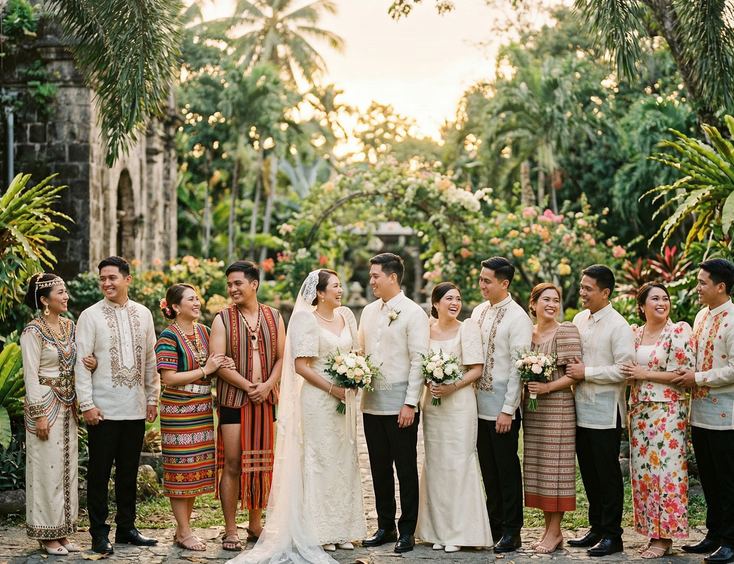
Filipino weddings are not one thing. From the rice terraces of the Cordillera to the coral shores of Tawi-Tawi, couples mark marriage with rituals shaped by centuries of local belief, colonial history, and family pride. A wedding in Pampanga looks nothing like a wedding in Maguindanao. A Bicolano bride carries different expectations than an Ilocana one.
If you are planning a Filipino wedding or sourcing suppliers across regions, understanding these traditions helps you serve couples better and honor what each ceremony actually means to the families involved.
Tagalog Weddings in Luzon's Heartland
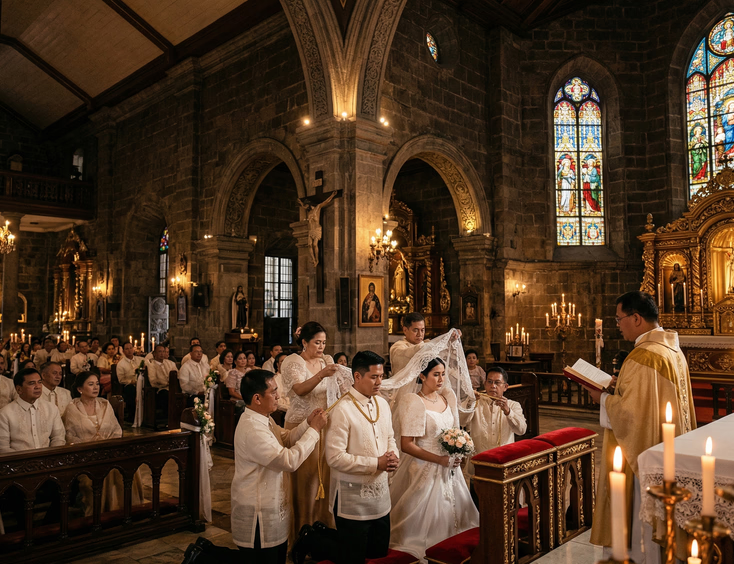
The Tagalog regions, covering Metro Manila, Calabarzon, and parts of Central Luzon, follow a Catholic wedding structure most Filipinos recognize on television. But the rituals embedded inside that Mass carry older meanings.
The Arras, Veil, and Cord
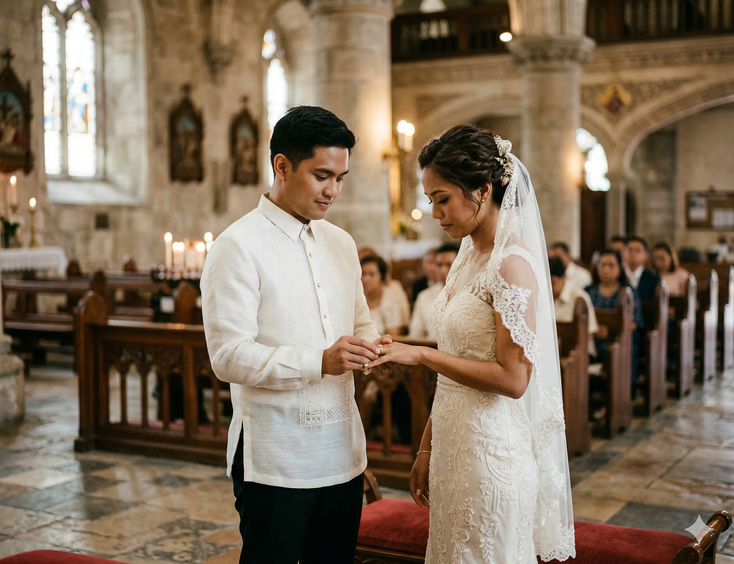
Three symbolic rituals anchor the Tagalog Catholic wedding. The arras consists of thirteen gold coins the groom passes to the bride. The coins represent his promise to provide, and the bride cups them in her hands to receive and steward that promise together. Sponsors called the padrino and madrina ng arras hold the coin box before the exchange.
The wedding veil is pinned over the groom's shoulder and the bride's head by a pair of sponsors. It means the couple now covers each other, sheltered under the same life. The cord, a white or silver rope shaped into a figure eight, drapes over both shoulders during the ceremony. The infinity shape signals a bond with no endpoint.
These three rituals have pre-Hispanic roots adapted into Catholic practice over four centuries. The sponsors who hold each item are not ceremonial extras. Families select them carefully, and the responsibility is a social honor tied to the couple's community standing.
The Reception: Pagtatanggap
Tagalog receptions in the provinces, particularly in Batangas and Bulacan, still open with a formal receiving line where the couple greets every guest personally. Elders bless the couple with whispered prayers or the laying of hands before sitting down.
In Bulacan, brass bands called bandang bayan once played outside the church and led the procession to the reception hall. Some families in Malolos and San Miguel still hire them today.
The toast at a Tagalog wedding often runs long. Parents of both sides speak. A ninong or ninang from a prominent family may deliver remarks that function more as a public endorsement than a sentimental message. Guests expect this. The program is not a timeline, it's a living document.
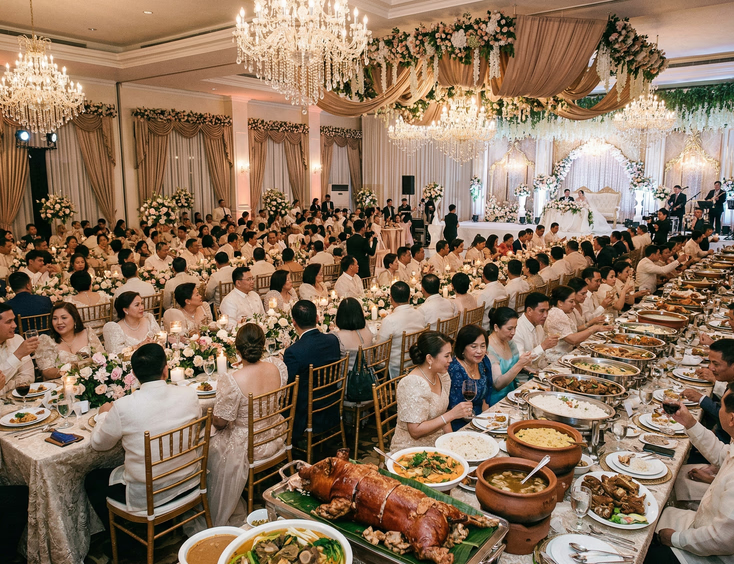
Pancit, lechon, and rice dominate the table. Skipping the lechon at a Tagalog provincial wedding is a decision families still talk about years later.
The Midnight Cotillion
Some Tagalog families, particularly in Laguna and Cavite, incorporate a cotillion de honor during the reception. Pairs of young sponsors perform a choreographed dance. The number of pairs varies, but eighteen pairs remain common, echoing the debutante tradition. The couple watches from the main table while their community dances around them.
Kapampangan Weddings: Ceremony as Spectacle
Pampanga has a reputation for celebrating with scale. Kapampangan weddings are events families plan for years, and the preparation itself carries cultural weight.
Pamanhikan
Before any wedding date is set, the groom's family visits the bride's home in a formal courtship ritual called pamanhikan. The men sit on one side, the women on the other. The groom's father presents the intention formally. The bride's father responds. Food is served, and the families negotiate the wedding's scope, the guest list, and financial contributions during this visit.
Pamanhikan is not a formality. Families in San Fernando and Angeles City still treat it as the binding agreement. A wedding planned without it is considered socially incomplete, regardless of how grand the reception turns out.
Cooking as Ceremony
Kapampangan identity is inseparable from food, and weddings are the stage where family recipes become heirlooms. Grandmothers take control of specific dishes weeks before the wedding. Morcon, kare-kare, and sisig prepared from secret family recipes fill the reception tables. Guests from outside Pampanga are expected to eat more than they planned.
Catering at a Kapampangan wedding from an outside vendor, especially one not from the province, is a decision that requires diplomatic handling. Some families split the arrangement, assigning specific dishes to family members while leaving the logistics to a hired caterer.
The Dress and the Barong
Kapampangan brides have historically favored heavily embroidered gowns with pronounced butterfly sleeves, honoring the traditional terno silhouette. Contemporary brides adapt this, but the influence shows in sleeve and neckline choices. Grooms wear the barong Tagalog embroidered by local artisans from Lumban, Laguna, or from Kapampangan needlework families.
Ilocano Weddings: Practicality and Precision
Ilocano culture prizes thrift and preparation. Wedding traditions in Ilocos Norte, Ilocos Sur, La Union, and Pangasinan reflect a community that plans carefully and celebrates without waste.
Katulogan
The night before the wedding, families gather at the bride's home for katulogan, an overnight vigil. Relatives and close neighbors come to help with last-minute preparations, cook food, and keep the bride's family company. The gathering doubles as a security measure rooted in older times when the bride needed protection the night before leaving her family home.
Younger generations in Laoag and Vigan have shortened katulogan to an evening gathering rather than a full overnight, but the act of arriving the night before remains meaningful to older Ilocano families.
The Dowry and Padya
Ilocano families negotiate the padya, a gift from the groom's family that helps cover wedding expenses. Unlike a dowry in the traditional Western sense, the padya is a contribution to the shared celebration rather than a payment for the bride. Families document it and its amount signals the groom's family's regard for the union.
Vigan Weddings: Heritage Architecture as Backdrop
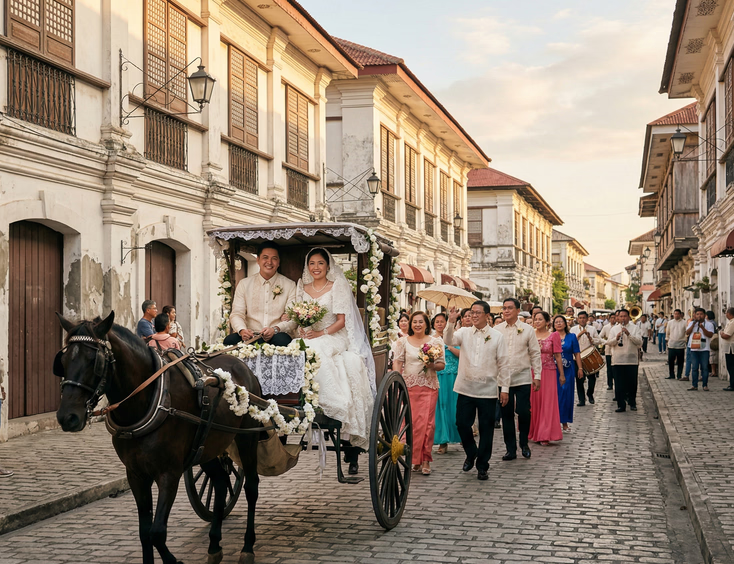
Couples from Vigan, a UNESCO World Heritage City, often marry in one of the centuries-old churches along Crisologo Street, with the cobblestone road and Spanish colonial facades forming a natural backdrop. The kalesa, a horse-drawn carriage, traditionally carries the bride to the church. Some families still hire one today, and it photographs beautifully against the brick facades.
The reception in Vigan often features empanada, bagnet, and longganisa alongside traditional rice dishes. The food is as deliberate as the ceremony.
Ilocano Thrift as a Value, Not a Limitation
Ilocano families do not overspend on decoration. Flowers and table settings are sufficient rather than excessive. This is not a lack of care. It is a cultural statement. Resources go toward the food, the church ceremony, and the family gathering rather than installations the couple will photograph once and never see again.
Bicolano Weddings: Devotion and Fire
Bicol Region couples, particularly those from Albay, Camarines Sur, and Sorsogon, weave deep Catholic devotion into their wedding customs. The region's patron saints and local shrines shape how families approach the ceremony.
The Pre-Wedding Novena
Many Bicolano families pray a nine-day novena before the wedding. The couple attends together, joining family members at the home altar or the parish church each evening. The novena is not a pre-wedding party. It's a spiritual preparation, and families take absences from it seriously.
Traslacion and Procession
In towns where the Nuestra Señora de Peñafrancia devotion runs deep, particularly in Naga City, couples often schedule their wedding around the church calendar in a way that honors her feast. The influence of this Marian devotion shapes how Bicolano families think about the sacred weight of the wedding ceremony itself.
The Bicolano Reception Table
Bicolano food is built on coconut milk and heat. A reception table in Legazpi or Iriga features laing, pinangat, bicol express, and fresh seafood from the nearby coast. The meal is not mild. Guests who are unfamiliar with the region's cooking learn this quickly.
Albay's Mayon as Wedding Backdrop
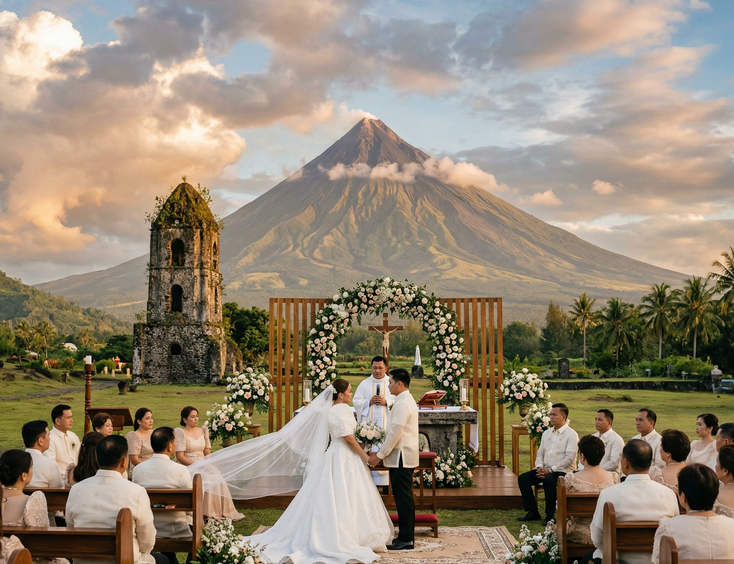
Couples in Albay frequently plan outdoor ceremonies or receptions that frame Mayon Volcano. The volcano's perfect cone appears in wedding photos so consistently that it has become a visual signature of an Albay wedding. Photographers from outside the region come specifically to shoot there.
Cebuano Weddings: Where Visayan Pride Lives
Cebu is the cultural capital of the Visayas, and Cebuano weddings carry regional pride alongside Catholic ritual. The Visayan concept of pagdiriwang (celebration) runs through every decision from venue to food to gown.
The Harana Tradition
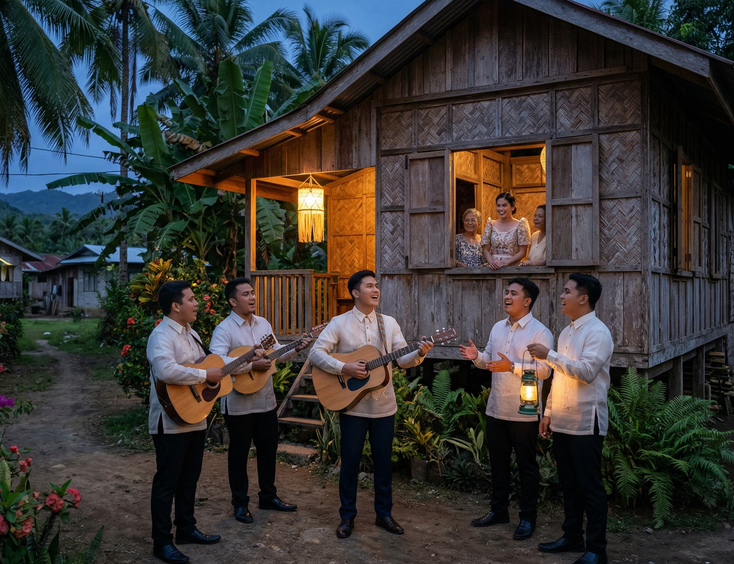
Harana, a serenade performed by the groom and his friends outside the bride's window, historically preceded the wedding as part of courtship. In rural areas of Bohol, Cebu, and Leyte, families still stage a harana the night before the wedding as a tribute to this tradition. The groom sings or at minimum leads the group. Musicians accompany him with guitars and sometimes brass instruments.
Young Cebuano couples in Cebu City rarely do a traditional harana, but families from the towns of Carcar, Dalaguete, and the southern Cebu municipalities continue the practice with genuine feeling.
The Visayan Wedding Sponsors
Cebuano weddings involve an elaborate sponsor system. The principal sponsors, called ninong and ninang, hold social prestige. Having a prominent businessman, a local politician, or a respected professional as a principal sponsor signals the couple's community standing. Some Cebuano families spend as much time curating the sponsor list as they do selecting the venue.
Secondary sponsors handle the veil, cord, candles, and arras during the Mass. Each pair carries a distinct responsibility, and families assign these roles to specific relatives based on relationship depth and family politics.
Lechon sa Sugba
No Cebuano reception ends without Cebu lechon. The Cebu-style roasted pig, seasoned with lemongrass, garlic, and green onions from the inside, is a different animal from Tagalog lechon. Families order whole pigs, and the number of pigs ordered indexes the wedding's generosity. Two pigs for three hundred guests is a baseline. Ordering one is remembered.
The Visayan Cotillion and Rigodon
Cebuano receptions in formal venues feature the rigodon de honor, a formal quadrille dance performed by the principal sponsors. This Spanish-influenced dance dates to colonial-era balls and has survived because it gives the senior figures in the wedding a ceremonial moment. The couples hold each other's partners through the steps, then return. It's stately, and older guests watch it with visible appreciation.
Waray Weddings in Eastern Visayas
The Waray people of Samar and Leyte are known for directness and intensity. Their weddings are communal events where the whole barangay is, if not invited, at least involved.
Bigay-Kaya and Community Contribution
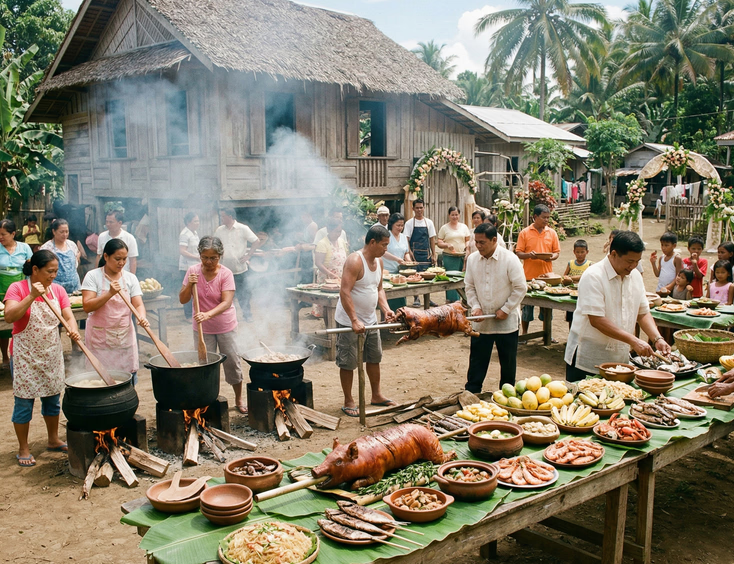
Waray tradition includes bigay-kaya, where the groom's family contributes financially to the wedding preparations. Neighbors and relatives on both sides also contribute food, labor, and supplies in a cooperative arrangement the community calls bayanihan. A neighbor might arrive with a sack of rice. Another brings charcoal for cooking. This isn't charity. It's an exchange system the same families have maintained across generations.
The Leyte Wedding Feast
Eastern Visayas is fish and rice country, and the wedding table reflects this. Grilled fish, kinilaw, dinuguan, and rice dominate. Families along the coast of Tacloban and Palo incorporate freshly caught seafood, and the quality depends on what fishermen brought in that morning.
Post-Wedding Night Watch
In some Samar municipalities, close male relatives of the bride stay near the couple's first home on their wedding night. This tradition, rooted in the older custom of protecting the new family unit from bad spirits or interference, has faded in urban areas but persists in barangay communities where family networks remain tight.
Ilonggo Weddings in Western Visayas
Western Visayas, covering Iloilo, Capiz, Antique, Aklan, and Guimaras, holds some of the most gracious wedding traditions in the country. The Ilonggos are known for hospitality, and weddings are where that hospitality performs at full scale.
Atang and Ancestral Recognition
Before the reception meal begins, some Ilonggo families set a small plate of food aside as atang, an offering to the couple's deceased ancestors. This syncretism of Catholic ceremony and animist respect for the dead is common in rural Iloilo and Capiz. The family matriarch usually performs it quietly, without drawing attention.
The Ilonggo Longganisa Table
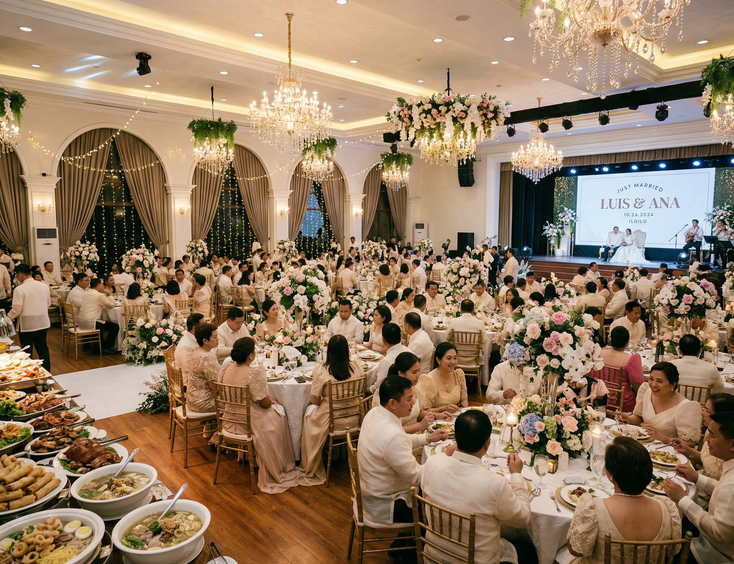
Iloilo's culinary identity shows up at weddings through batchoy stations, La Paz noodles for the midnight snack, and the table layout that always includes pinakbet and fresh lumpia. Capiz, the seafood capital, contributes oysters and scallops to reception menus from towns along the coast.
Aklan and the Ati-Atihan Spirit
Couples from Kalibo and surrounding Aklan municipalities occasionally incorporate elements from the Ati-Atihan festival into their celebrations. This is more common in post-ceremony parties than the ceremony itself. Costumes, drumming, and face paint appear at the after-party rather than inside the church. The reference to the festival signals local pride.
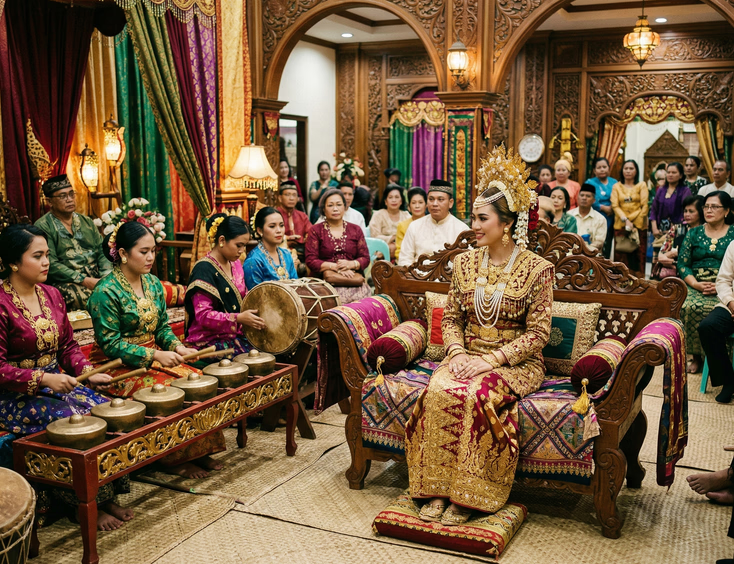
Mindanaoan Weddings: Muslim Traditions in the BARMM
The Bangsamoro Autonomous Region in Muslim Mindanao holds some of the Philippines' most visually distinct and spiritually rich wedding traditions. Maranao, Maguindanao, Tausug, and Sama weddings differ from each other and from the Christian traditions that dominate the rest of the country.
Maranao Weddings: The Kandori and Kakar
The Maranao people of Lanao del Sur and Lanao del Norte center their weddings on the kandori, a feast that opens the celebration. Before the couple formally unites, families negotiate the mahar, the groom's gift to the bride stipulated in Islamic law. The mahar is not symbolic. It is property that belongs exclusively to the bride, and its value reflects the groom's sincerity and capacity.
Maranao weddings feature the kulintang ensemble, a row of brass gongs played by women, alongside agung and dabakan drums. The music does not pause. It runs continuously through the ceremony and the feast.
The bride wears malong in gold and crimson with okir patterns, the curved geometric designs that identify Maranao aesthetic tradition. Her hands and feet are decorated with henna applied by older women in the family the night before. The groom wears a kris, the traditional wavy dagger, at his hip as a symbol of manhood and family lineage.
Maguindanao Weddings: The Nikah
The wedding ceremony in Maguindanao follows the Islamic nikah structure, conducted by an imam. The groom speaks the ijab, the formal offer, and the bride's guardian speaks the qabul, the acceptance, on her behalf. Two witnesses from each side must be present. The nikah itself takes minutes. The celebration around it takes days.
Families in Cotabato City and the municipalities of Maguindanao del Norte prepare piyanggang manok, a chicken dish blackened with burnt coconut, tiula itum, a dark beef soup, and glutinous rice cakes wrapped in banana leaves. These dishes appear specifically at weddings and not in ordinary daily meals.
Tausug Weddings in Sulu
Tausug weddings from Jolo, Bongao, and the Sulu archipelago involve a pagkawin, the formal giving-away of the bride. The ceremony happens in the family home, witnessed by community elders. The pandita, a religious official, reads from the Quran and guides the vows.
Tausug brides wear the pis syabit, a hand-woven cloth, alongside gold jewelry accumulated from both families. The amount of gold on display during the wedding signals family wealth and social standing. Families pass gold pieces down specifically for this occasion, and wearing them is a form of public accounting.
The kalangan, a form of poetic verbal exchange between the two families, occurs during the wedding feast. Older family members compose and deliver verses that recount the families' histories, honor the couple, and playfully challenge the other side. Young people at the wedding memorize these exchanges.
Sama Dilaut Weddings at Sea
The Sama Dilaut, also called Bajau, traditionally conducted weddings on houseboats called lepa. Some communities in Tawi-Tawi and Zamboanga del Sur continue this practice. The imam boards the groom's boat, the bride's boat draws alongside, and the ceremony happens on the water. After the nikah, the two boats are lashed together for the feast, and guests move between them.
The pangalay, a hand and arm dance performed by women with curved fingernails, appears at Sama celebrations including weddings. Dancers keep their feet nearly still while their fingers and wrists move through positions that mimic the movements of sea creatures.
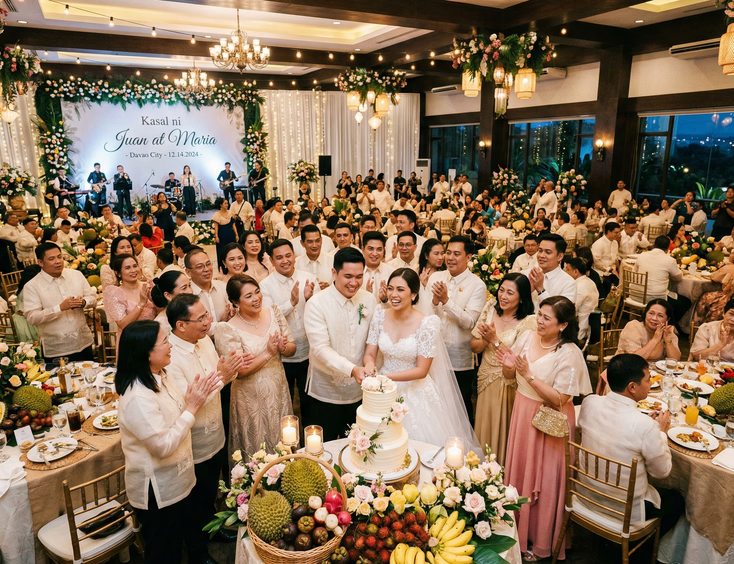
Mindanaoan Christian Weddings: Davao and Surrounding Regions
Davao Region, Caraga, and Northern Mindanao hold large Christian populations with wedding traditions shaped by migration from the Visayas and Luzon, mixed with local Lumad influences and the pioneer spirit of communities built over the last century.
The Davao Wedding Style
Davao City couples tend to plan weddings that blend contemporary styling with provincial scale. Families from Davao del Sur and Davao Occidental bring Visayan-rooted customs like the veil and cord ceremony, but the reception scales up to match Davao's current prosperity. Fruit platters featuring durian, pomelo, and mangosteen appear at Davao wedding receptions with the same pride that lechon appears in Cebu.
Bukidnon Lumad Wedding Customs
The Bukidnon people of the interior highlands observe wedding customs tied to ancestral spirits and tribal law. A datu, a tribal chieftain, officiates or blesses the union. The families exchange gifts that carry specific symbolic meanings, including traditional woven textiles called inabal, hand-woven cloth with patterns that identify the family's tribal lineage.
The couple drinks from the same cup of pangasi, fermented rice wine, as part of the ceremony. This shared cup binds them before the community. Elders consider the pangasi ritual as binding as any document.
The T'boli Wedding in South Cotabato
T'boli couples from Lake Sebu undergo a wedding process involving the mopo, a formal agreement between families negotiated over multiple visits. The bride's family sets the requirements for the union, including specific textiles, tools, and animals the groom's family must provide. The negotiation is its own ceremony, conducted by respected elders from both sides.
T'boli brides wear brass ornaments, beaded accessories, and the t'nalak, a hand-woven abaca textile with designs the weaver receives in dreams. The t'nalak is not a commercial product. It is a sacred cloth, and wearing it at a wedding connects the bride to the spiritual lineage of the women who wove it before her.
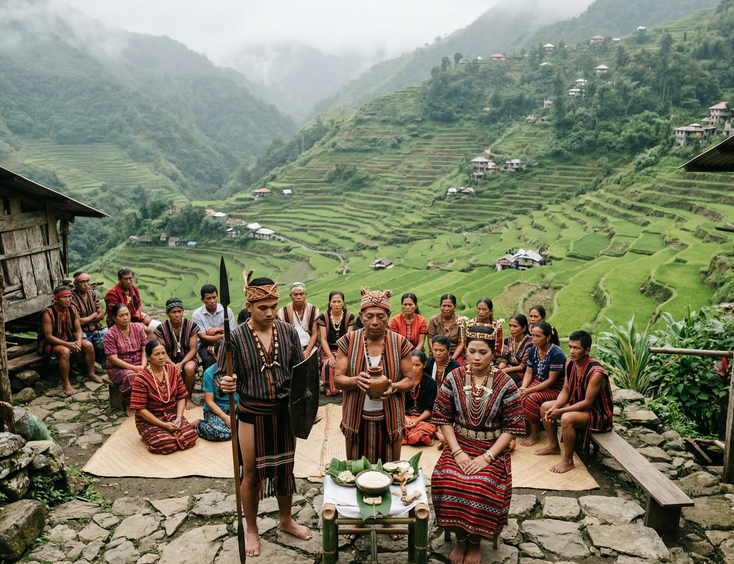
Cordillera Weddings: Above the Clouds
The peoples of the Cordillera Administrative Region, including the Igorot, Kalinga, Bontoc, Ifugao, and Apayao, maintain wedding traditions rooted in indigenous governance and ancestral land.
Kalinga Weddings and the Bodong
Among the Kalinga of Kalinga Province, marriage carries implications for the entire community because of the bodong, a peace pact system between tribal groups. A marriage between members of different ili (villages) can strengthen or complicate existing bodong agreements. Elders from both communities consult before approving the union. The couple does not decide independently.
The wedding feast in Kalinga involves the slaughter of pigs and cattle, with the number of animals sacrificed reflecting the families' prestige. Elders butcher the animals according to ritual requirements and read omens from the organs before the feast begins. A poor omen from the pig's bile sac can postpone the ceremony.
Ifugao Weddings: Ritual and the Mumbaki
Ifugao weddings in Banaue, Kiangan, and Hungduan involve the mumbaki, a ritual priest who communicates with anito (ancestral spirits). The mumbaki performs baki, a series of chants and offerings that invite the ancestors to witness and bless the union. The couple cannot proceed without this blessing.
Ifugao weddings traditionally happen in the family home rather than a church, even when the couple is baptized Catholic. Many Ifugao families hold a church ceremony in the morning and a baki ceremony in the family home in the afternoon. The two ceremonies coexist without conflict in most communities.
Tapuy, rice wine fermented in clay jars, circulates at Ifugao weddings. Elders drink first, then the couple, then the guests. The rice wine is not casual refreshment. It is part of the ritual structure.
Bontoc and Ibaloi Customs
Bontoc weddings in Mountain Province traditionally involved a period of courtship in the olog, a dormitory where young unmarried women slept communally. Young men would visit, and couples who formed attachments in this setting eventually formalized their union through family negotiations. The olog system has largely ended, but older Bontoc residents remember it.
Ibaloi families in Benguet negotiate the patong, a bride price paid in gold, blankets, and livestock. The patong amount reflects the bride's social standing and the groom's sincerity. Families remember patong amounts across generations.
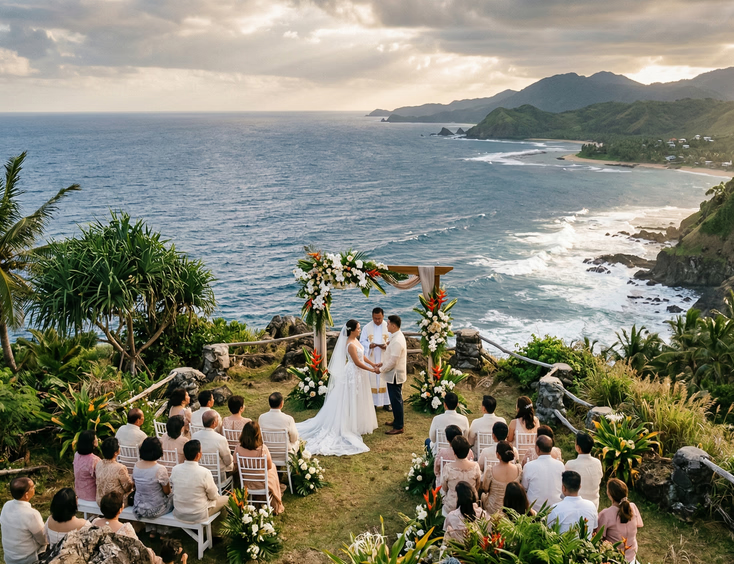
Bicolano Coastal Weddings: Catanduanes and Masbate
The island provinces of Catanduanes and Masbate hold weddings shaped by both Bicolano tradition and island geography.
Catanduanes: The Storm Island Wedding
Catanduanes, frequently in the path of typhoons, has families that build wedding dates around the weather calendar with a seriousness that mainland couples don't match. Families with means hold wedding receptions inside reinforced halls. Outdoor ceremonies happen in the brief weather windows between July and October. The local church in Virac and the surrounding municipalities have seen weddings interrupted by sudden rain, and families plan for this without complaint.
Masbate Rodeo Wedding Influence
Masbate is cattle country, and the annual rodeo festival shapes local identity. Weddings in Masbate City sometimes incorporate cowboy aesthetic elements in styling, from leather accessories to rustic venue decoration that nods to the rodeo culture. This is not a traditional custom in the ceremonial sense, but it is a genuine expression of local identity that photographers and stylists from outside the province sometimes misread as a theme choice rather than a cultural statement.
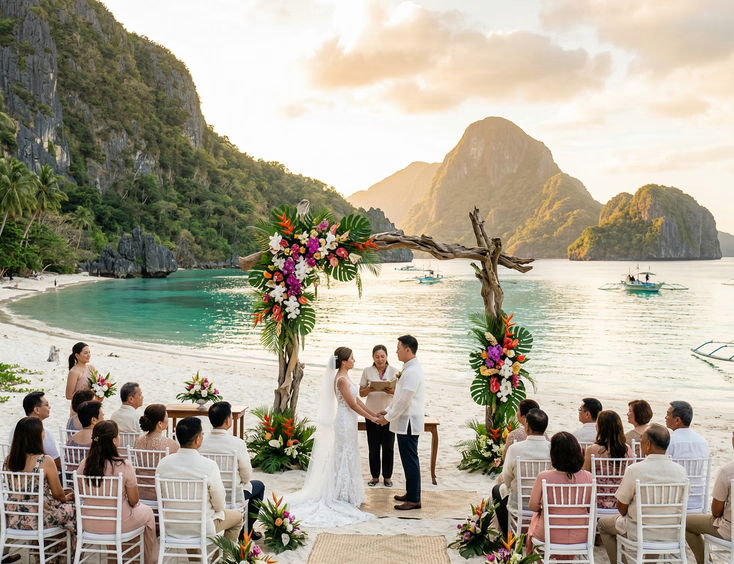
Mindoro and Palawan: Frontier Wedding Country
Oriental and Occidental Mindoro, and the long island province of Palawan, hold weddings in some of the country's most geographically isolated settings.
Mangyan Wedding Traditions in Mindoro
The Mangyan peoples of Mindoro, including the Hanunuo, Buhid, Alangan, and Tadyawan groups, conduct weddings within indigenous governance structures. The Hanunuo Mangyan use the ambahan, a poetic form written on bamboo in their own script, to communicate courtship intentions. A young man writes ambahan verses and passes them to the woman he intends to court. If she responds in kind, courtship advances.
Hanunuo Mangyan weddings involve the exchange of woven goods and the blessing of elders. The community witnesses the union publicly, and the couple's obligations to their families and community are spelled out by elder speakers during the ceremony.
Palawan and the Pala'wan People
The Pala'wan indigenous people of southern Palawan observe wedding customs involving the batak, a formal arrangement between the groom and the bride's family. The groom provides labor and gifts to the bride's family for a period before and after the wedding. This service, called bride service in anthropological terms, integrates the groom into the wife's family network through demonstrated commitment rather than a single exchange.
Puerto Princesa and El Nido Wedding Tourism
Palawan's dramatic landscape has attracted destination wedding couples from Metro Manila and overseas Filipino communities. Puerto Princesa and El Nido have developed venue infrastructure around this demand. However, local Palawan families from towns like Roxas, Taytay, and Brooke's Point hold weddings in parish churches and barangay halls with no interest in the destination wedding market. The two wedding cultures coexist on the same island.
Zamboanga and the Chavacano Wedding Tradition
Zamboanga City's unique Chavacano language, a Spanish-based creole, shapes a wedding culture distinct from both the Tagalog Catholic mainstream and the Muslim traditions of the BARMM.
The Misa de Gallo Wedding Preparation
Zamboangueño Catholic families often attend the misa de gallo novena masses in December together as a family in the months leading up to a wedding planned for the following year. Attending all nine dawn masses is considered a form of prayer for the marriage's blessing. Missing them without reason is noticed.
The Chavacano Reception Program
Zamboanga City receptions feature Spanish-influenced formalities, including a formal toast in Chavacano where the lead sponsor addresses both families. The blend of Spanish syntax and local vocabulary in these toasts is specific to the city and unintelligible to Tagalog or Bisaya speakers unfamiliar with the creole. Local guests receive this as a marker of shared identity.
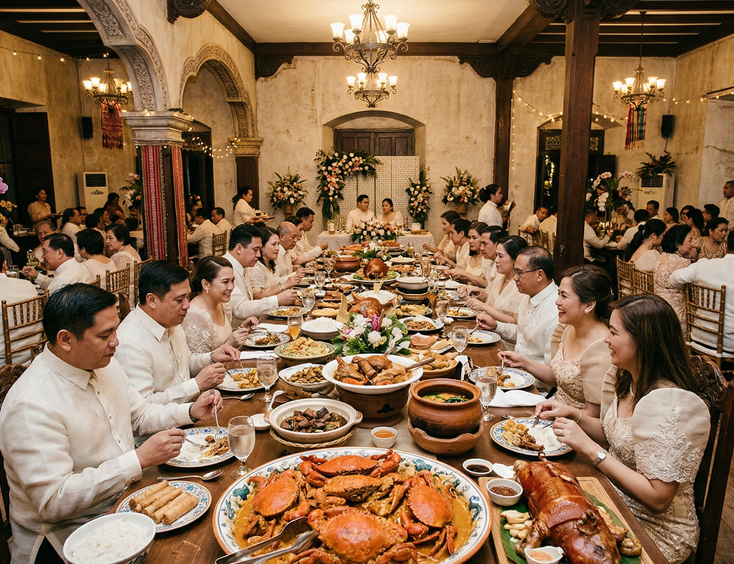
Curacha, the local spanner crab unique to Zamboanga waters, appears at high-status receptions prepared in alavar sauce, a rich coconut and spice preparation developed by a family restaurant that has been serving Zamboanga weddings for decades.
What Ties These Traditions Together
Across every region, Filipino weddings share three consistent structures.
First, the wedding is a family event before it is a couple's event. Parents, grandparents, aunts, uncles, and community elders hold decision-making authority that the couple navigates rather than overrides. A couple who excludes family from decisions about venue, food, or guest list creates conflict that outlasts the wedding day.
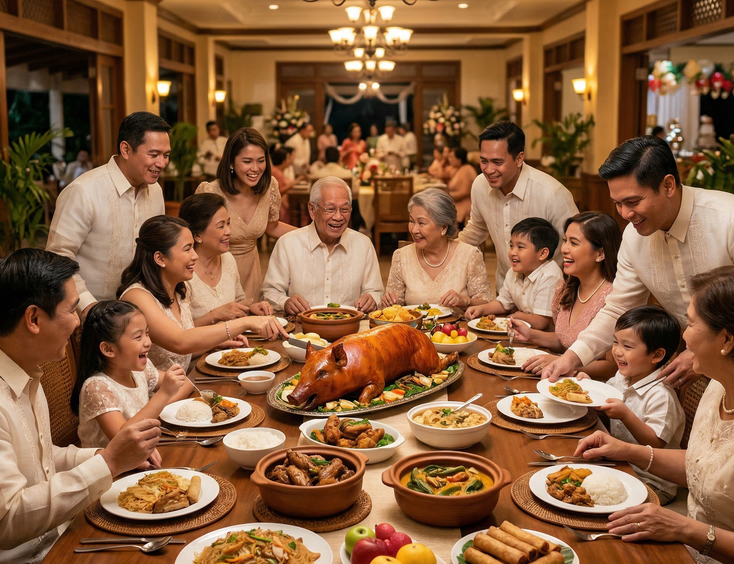
Second, food carries the ceremony's emotional weight. The lechon, the pancit, the kare-kare, the piyanggang, the tapuy. These dishes are not catering choices. They are arguments about identity, love, and belonging made in the language of taste and smell. Families negotiate the menu the same way they negotiate the guest list.
Third, community witnesses matter more than documentation. The barangay neighbors who saw the vows, the elders who tasted the rice wine, the cousins who danced the cotillion. Their presence makes the wedding real in a way that no marriage certificate replicates. Filipino weddings are not private events. They are public declarations made to a community that then holds the couple accountable to what they promised.
Suppliers who understand this can serve couples across regions with genuine respect. Photographers who know about the kandori don't walk into a Maranao feast and behave like they're covering a Tagalog reception. Caterers who understand the T'boli's relationship to t'nalak don't offer a generic wedding package to a Lake Sebu couple. Florists who recognize the Ifugao baki don't suggest moving the ceremony to a garden venue with better light.
Regional wedding traditions are not decoration. They are the architecture of how families understand themselves. Knowing them is not optional for suppliers who want to work with respect across the Philippines.
Still Searching for a Right Match?
Find Your Perfect Wedding Supplier Today!
Discover trusted wedding suppliers across the Philippines in our complete directory. Compare services and connect with the ones that fit your dream celebration.
Browse Wedding SuppliersFeatured Posts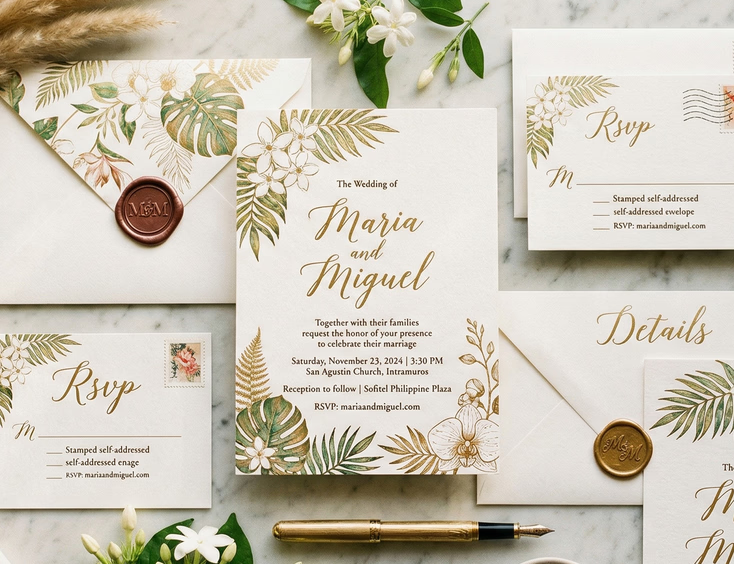
The Complete Guide to Filipino Wedding Invitations: From Traditional Customs to Modern Trends
12 mins readThe Complete Filipino Couple's Guide to Wedding Rings & Bands in the Philippines: Traditions, Styles, Budgets & Where to Buy
22 mins read