

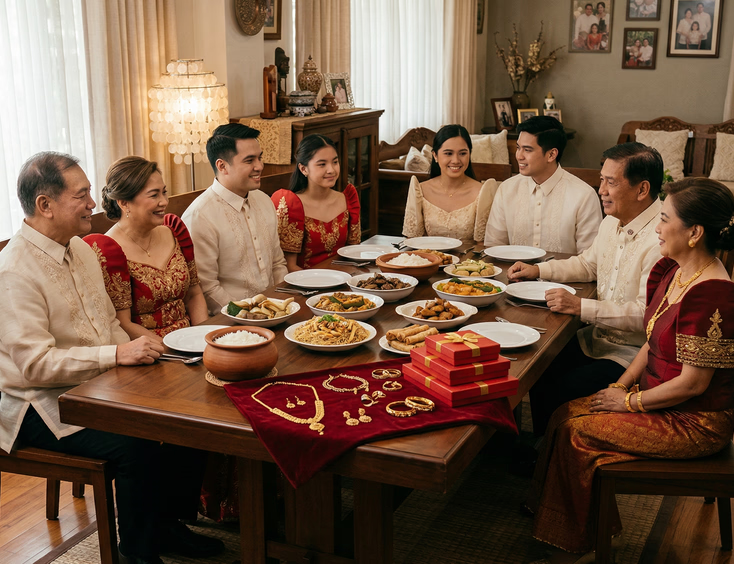
Muslim Wedding Requirements in the Philippines vs Civil Wedding by a Judge
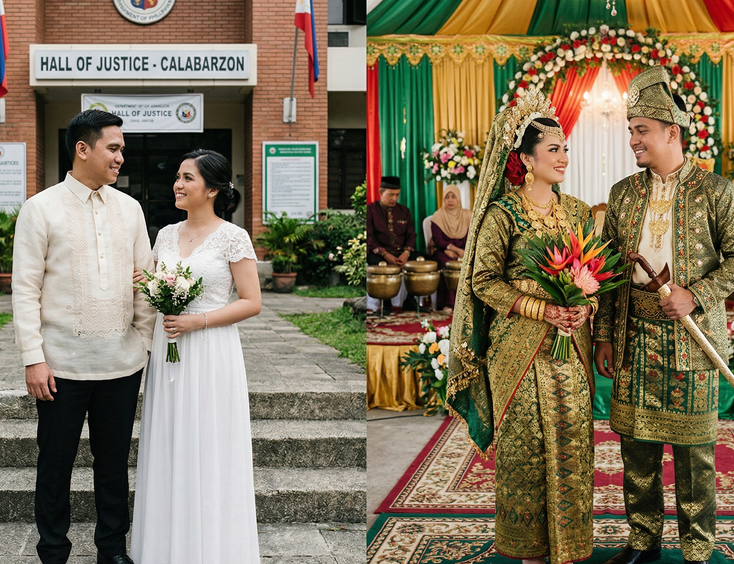
Two legal paths exist for getting married in the Philippines outside of a church wedding. A civil wedding solemnized by a judge falls under the Family Code. A Muslim wedding follows the Code of Muslim Personal Laws, also known as Presidential Decree 1083. Both produce a legally recognized marriage. The requirements, solemnizing officers, and governing laws are different.
Who Each System Covers
The Code of Muslim Personal Laws applies to Muslims in the Philippines. Both parties do not need to be Muslim in all cases, but the law was designed for Filipino Muslims and is administered through the Shari'a court system. A Shari'a Circuit Court judge or an authorized religious official called a wali or imam solemnizes Muslim marriages.
A civil wedding by a judge falls under the Family Code of the Philippines and applies to all Filipino citizens regardless of religion. A Regional Trial Court judge, Metropolitan Trial Court judge, or a judge of any court within the legal hierarchy can solemnize a civil marriage. Municipal mayors also hold this authority.
If you want a general overview of what a civil wedding by a judge involves from start to finish, the complete guide to judge wedding requirements in the Philippines covers the full process.
Requirements for a Civil Wedding by a Judge
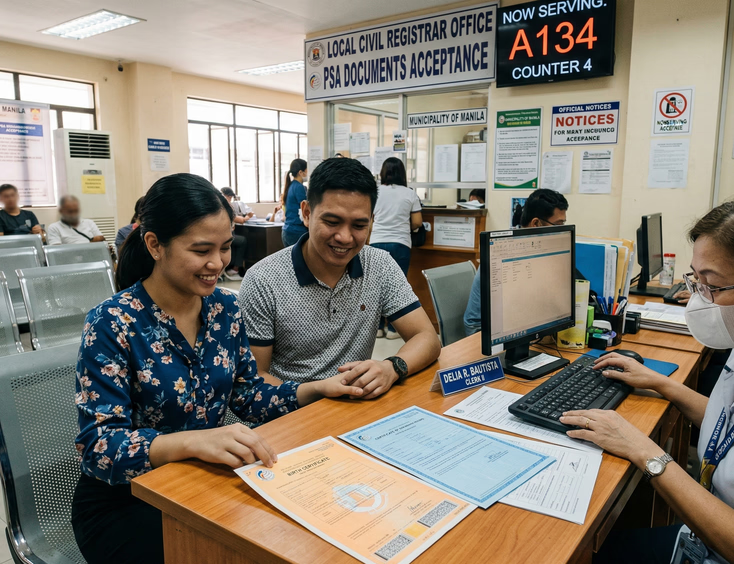
The standard civil wedding requirements under the Family Code:
- PSA-authenticated birth certificates for both parties
- Certificate of No Marriage (CENOMAR) from the PSA for both parties
- Valid government-issued identification for both parties
- Accomplished marriage license application form
- Certificate of attendance at a pre-marriage counseling seminar
- Two witnesses of legal age
- Marriage license issued by the local civil registrar after the ten-day posting period
If either party was previously married, additional documents apply. Read civil wedding requirements for annulled or widowed Filipinos for the specific documents each situation requires.
Requirements for a Muslim Wedding
A Muslim wedding under PD 1083 has a distinct set of legal and religious requirements. The marriage must satisfy both the legal elements under the Code and the religious requirements of Islamic law.
The legal requirements:
- Both parties must be of legal age or have parental consent if below 18
- The wali, or male guardian of the bride, must give consent under Islamic tradition
- At least two Muslim witnesses must be present
- Payment of mahr, a mandatory gift from the groom to the bride, must be agreed upon and declared
- The ijab and qabul, the offer and acceptance of marriage, must be performed in the presence of the solemnizing officer and witnesses
Documents required for registration:
- Birth certificates or proof of age for both parties
- Proof of Muslim faith, which can take the form of a certificate from an imam or Muslim community leader
- Parental consent documents if either party is a minor
- The completed marriage contract, which the solemnizing officer accomplishes and submits to the Shari'a Circuit Court or the local civil registrar
Muslim marriages must be registered with the Shari'a Circuit Court in areas where the court operates, or with the local civil registrar in areas outside the Shari'a court's jurisdiction.
Key Differences Between the Two
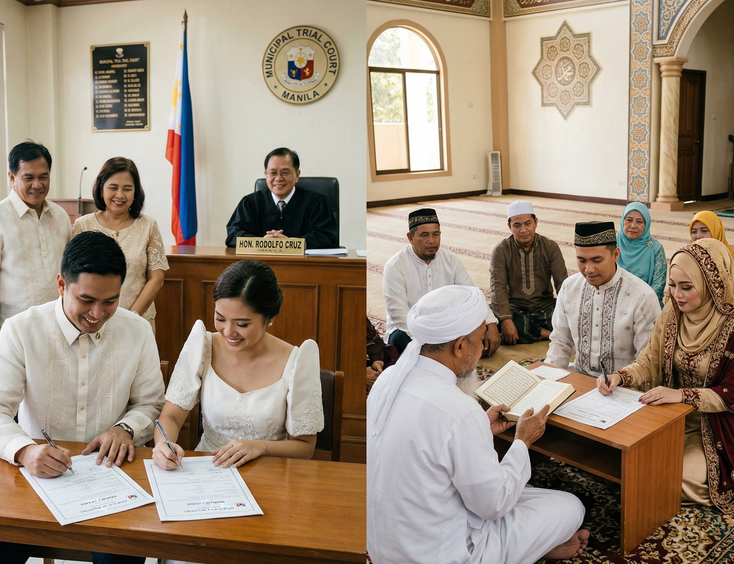
Solemnizing officer. A civil judge or mayor solemnizes a civil wedding. A Shari'a judge, imam, or other authorized religious official solemnizes a Muslim wedding.
Governing law. The Family Code governs civil weddings. PD 1083 governs Muslim marriages. The two codes differ significantly on matters like polygamy, divorce, and inheritance. PD 1083 permits a Muslim man to marry up to four wives under specific conditions. The Family Code does not permit polygamy.
Divorce. Muslim couples can dissolve their marriage through talaq or other forms of Islamic divorce recognized under PD 1083. Couples married under the Family Code do not have access to divorce under Philippine law. They can pursue annulment or legal separation, but not divorce.
Mahr. A civil wedding has no equivalent to mahr. It is a requirement specific to Islamic marriage and must be declared at the time of the contract.
Witness requirements. A civil wedding requires two witnesses of legal age. A Muslim wedding requires two Muslim witnesses.
Pre-marriage counseling. Civil wedding applicants must complete a pre-marriage counseling seminar at the local civil registrar. Muslim weddings do not carry this same administrative requirement, though Islamic guidance before marriage is a common practice.
Registration After a Muslim Wedding
The solemnizing officer or an authorized representative submits the marriage contract to the Shari'a Circuit Court or local civil registrar within fifteen days of the ceremony. The couple should follow up to confirm the marriage was registered. Delays in registration create problems when requesting PSA-authenticated copies later.
Once registered and forwarded to the PSA, the couple can request a PSA-authenticated marriage certificate the same way any married couple would. The timeline from registration to PSA availability typically runs four to six months under standard processing.
If One Party Is a Non-Muslim
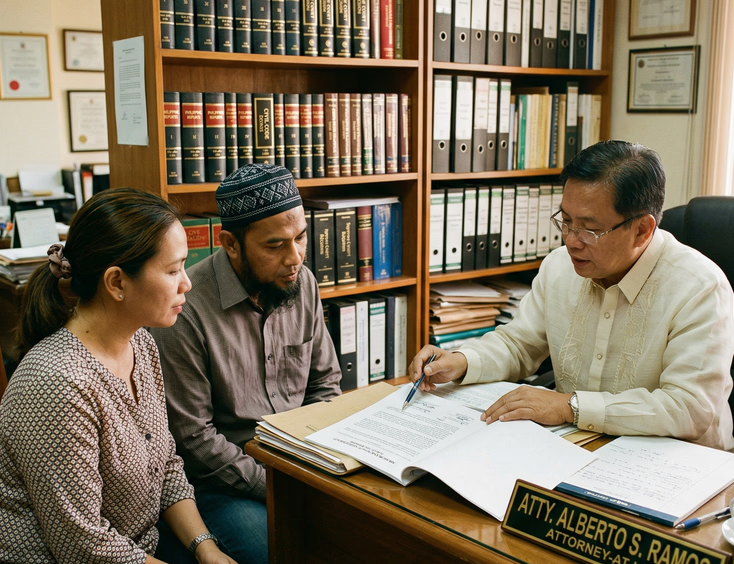
A non-Muslim marrying a Muslim in the Philippines enters a situation that requires careful legal review. PD 1083 has specific provisions on interfaith marriages. In some cases, the non-Muslim party may need to meet additional requirements or the couple may choose to solemnize the marriage under the Family Code instead, depending on their circumstances.
Consult a lawyer familiar with both the Family Code and PD 1083 before you proceed. The choice of which law governs your marriage has long-term implications on property rights, inheritance, and legal remedies if the marriage ends.
Planning the Ceremony
Muslim weddings carry distinct cultural traditions alongside the legal requirements. The ceremony format, attire, reception customs, and family protocols differ from a civil wedding. A coordinator familiar with Muslim wedding traditions handles the logistics without overstepping cultural boundaries.
Browse wedding planners and coordinators in the Philippines who have experience with both Muslim and civil weddings. Coordinating between religious requirements, legal registration, and reception logistics is easier with someone who has done it before.
If you are comparing costs between a Muslim wedding and a civil judge wedding, how much a judge wedding costs in the Philippines gives you a baseline for the civil wedding side.
Still Searching for a Right Match?
Find Your Perfect Wedding Supplier Today!
Discover trusted wedding suppliers across the Philippines in our complete directory. Compare services and connect with the ones that fit your dream celebration.
Browse Wedding SuppliersFeatured Posts
Regional Wedding Customs Every Filipino Couple Should Know
23 mins readThe Complete Guide to Filipino Wedding Invitations: From Traditional Customs to Modern Trends
12 mins readThe Complete Filipino Couple's Guide to Wedding Rings & Bands in the Philippines: Traditions, Styles, Budgets & Where to Buy
22 mins read