

How to Plan an Intimate Judge Wedding in the Philippines
An intimate judge wedding does not happen by accident. Couples who walk away from their civil ceremony feeling like it was one of the best days of their lives planned it that way. They made deliberate choices about who was in the room, what the space looked like, how the day flowed, and what happened after the ceremony ended.
This guide covers every planning decision for an intimate judge wedding in the Philippines, from the legal groundwork to the details that make the day feel personal.
Start with the Legal Requirements
No amount of styling or planning covers a missing document on your wedding day. Before you think about flowers, venues, or attire, get the paperwork moving.
You need PSA birth certificates and CENOMARs for both parties, a marriage license from the Local Civil Registrar, pre-marriage counseling and family planning certificates, valid government IDs, and two witnesses. The marriage license application triggers a mandatory ten-day posting period that you cannot shorten. From the day you start gathering documents to your wedding day, budget four to six weeks at minimum.
The complete guide to judge wedding requirements in the Philippines covers every document, every step, and every deadline in full detail. Read it before you book anything else.
For the week-by-week breakdown of how long each stage takes, read how long it takes to process all judge wedding requirements.
Define What Intimate Means to You
Intimate means different things to different couples. For some, it means ten guests at a garden ceremony followed by lunch at a restaurant. For others, it means the two of them, their witnesses, and nobody else. For others still, it means thirty close family members in a well-styled function room.
Settle this with your partner before you make any other decision. Your guest count determines your venue options, your catering approach, your styling budget, and the overall tone of the day. Every other planning decision flows from this one.
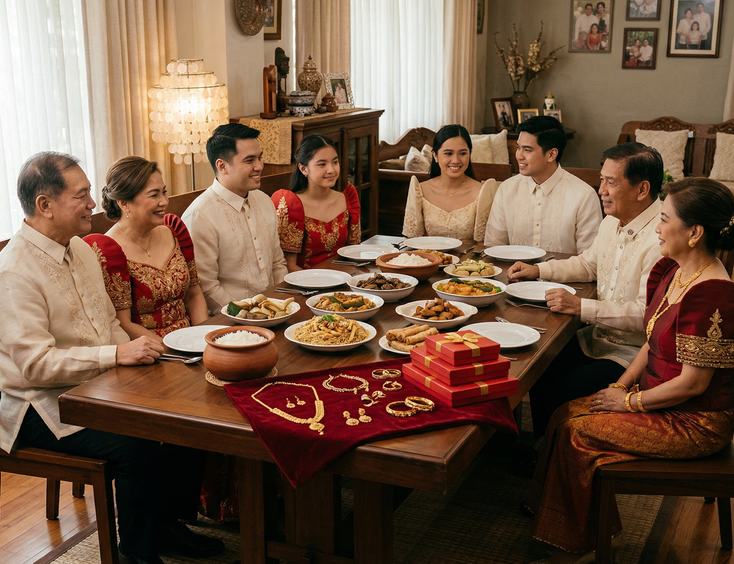
A Filipino family brings its own expectations to a wedding, including pressure to invite extended relatives, ninong and ninang, and family friends. An intimate wedding requires a clear guest list decision made early and communicated directly to both families. The longer you wait to set the boundary, the harder it becomes to hold.
Choose Your Ceremony Venue
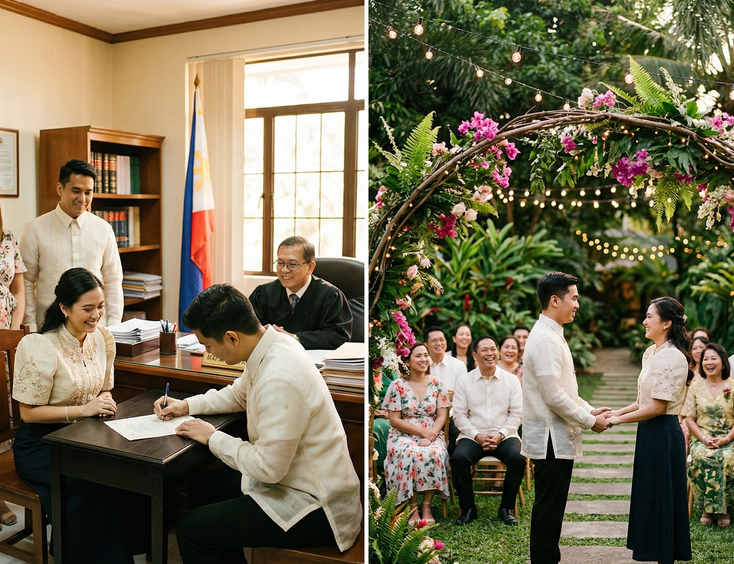
A judge wedding can happen inside the judge's chambers or courtroom, or at an outside venue of your choosing, subject to the judge's approval and availability. This flexibility is one of the strongest practical advantages of a civil wedding over a church wedding.
In-Court Ceremony
The courthouse is functional and brief. The ceremony happens in the judge's chambers or a designated courtroom. The space is what it is: a government office. Couples who choose this option typically focus their effort and budget on the reception that follows rather than the ceremony space itself.
Outside Venue Ceremony
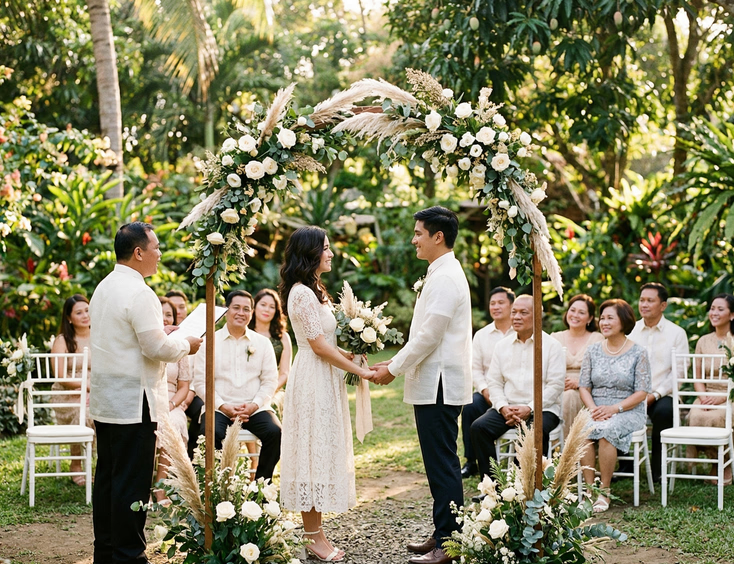
Judges who agree to officiate outside the court open up a wide range of setting possibilities. Garden venues, function rooms, private residences, beachfront spaces, and rooftop settings all work for an intimate civil wedding. Outside venue ceremonies require more coordination. You need to confirm the judge's agreement early, understand that the solemnization fee will be higher, and plan the logistics of the space.
For outside venues, popular choices among Filipino couples planning intimate judge weddings include:
- Private garden venues in Tagaytay, Batangas, Laguna, and the Cebu highlands
- Boutique function rooms in heritage buildings or restored houses in Manila, Iloilo, and Vigan
- Hotel garden spaces or pool areas available for small event bookings
- Private residences with landscaped outdoor areas
Book the venue after you confirm the judge's availability for that date, not before. Locking a venue on a date the judge cannot accommodate wastes your booking fee.
Set the Guest List and Stick to It
An intimate wedding with fifty guests is not intimate. Pick a number that reflects your actual intention and build the rest of the plan around it.
For a courthouse ceremony, the space may limit your guest count anyway. Judges' chambers and courtrooms have limited standing room. Confirm with the clerk of court how many guests the space can accommodate before you send any invitations.
For an outside venue, the space capacity gives you more flexibility, but the intimacy of the experience decreases as the guest count rises. A table of ten feels different from six tables of eight.
The witness requirement is separate from your guest count. You need two legal witnesses who sign the marriage certificate. They can be family members, close friends, or both.
Plan the Ceremony Details
Even a fifteen-minute civil ceremony has details worth thinking through. Couples who leave these decisions to the last minute end up with a ceremony that feels rushed and generic.
The Vows
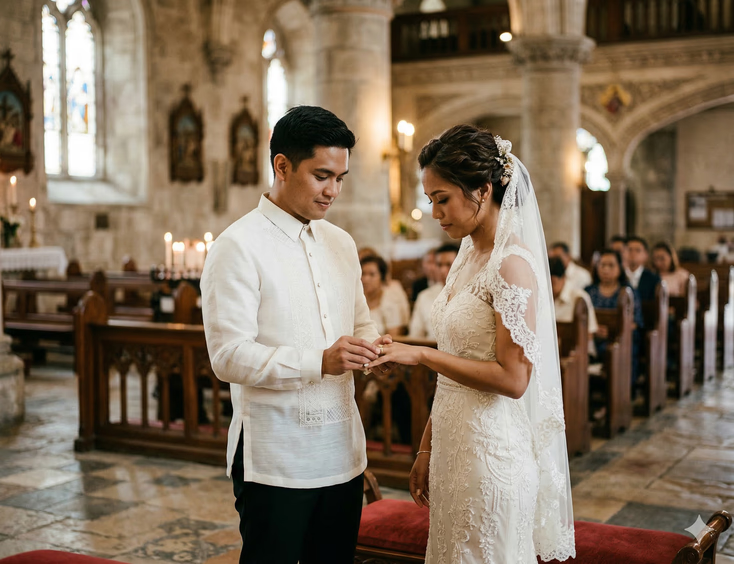
The judge reads the legal provisions for a valid marriage and asks both parties to affirm their consent. You can also exchange personal vows after the legal portion. Confirm with the judge whether personal vows are welcome during the ceremony. Most judges accommodate this without issue.
Write your vows in advance. A personal statement of two to three sentences carries more weight than a longer prepared speech. Practice saying it aloud before the day.
The Order of Events
A typical intimate judge wedding ceremony runs in this order: arrival and seating of guests, entrance of the couple, opening remarks by the judge, exchange of vows, signing of the marriage certificate, and post-ceremony photographs. If you include personal vows, music, or a cord and veil ceremony, add those into the sequence and communicate the order to everyone involved.
Music
A civil ceremony does not require music, but background music during the entrance and the signing adds atmosphere. A Bluetooth speaker and a curated playlist costs nothing beyond preparation time. A live acoustic musician charges between Php 3,000 and Php 8,000 for a brief ceremony set.
Style the Space
An intimate wedding styled with intention looks and feels nothing like a bare courthouse transaction. You do not need a large budget. You need clarity about the atmosphere you want and a focused set of choices that support it.
Florals
A bridal bouquet and a small ceremony arrangement set the visual tone without requiring a full florist setup. A simple bouquet of white roses, pampas grass, or dried blooms costs between Php 800 and Php 3,000. A small floral centerpiece or an arrangement for the signing table adds another Php 1,500 to Php 4,000.
For couples using an outside venue, a single floral arch or a backdrop panel behind the ceremony spot creates a focal point for photographs. Arch setups with soft florals and draped fabric run between Php 5,000 and Php 15,000 depending on the supplier and scale.
Color Palette
Pick two colors and use them consistently across your florals, attire, and table settings. A cohesive palette makes a small, simple space look intentional. Neutral palettes with white, ivory, sage, or dusty rose photograph well in both natural light and indoor settings.
The Signing Table
The signing of the marriage certificate is the visual centerpiece of a civil wedding ceremony. Style this table deliberately. A clean tablecloth, a small floral arrangement, and good quality pens make the moment feel considered rather than administrative.
Choose Your Attire Thoughtfully
A civil wedding does not require a full bridal gown, but it does not prohibit one either. The right attire for a judge wedding depends on the venue, the tone you want, and your personal style.
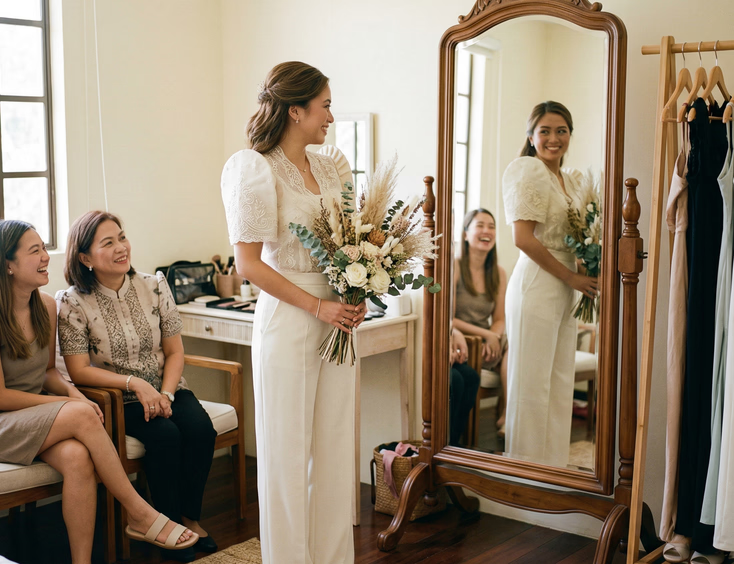
For courthouse ceremonies, most Filipino brides choose a cocktail dress, a midi dress, or a coordinated separates set in white or ivory. Filipiniana pieces in jusi, piña, or organza work well for couples who want a cultural reference without the full formal weight of a traditional Maria Clara gown.
For outside venues, the range widens. A full bridal gown with a cathedral train is appropriate for a garden ceremony. A sundress with floral details works for a beachfront setting. The key is matching the scale of the attire to the scale of the venue.
Grooms at judge weddings typically wear a white or ivory barong Tagalog. A linen blazer with tailored trousers is another practical choice for outdoor ceremonies in warm weather.
For a full range of outfit ideas suited to different judge wedding settings, read civil wedding outfit ideas for Filipino brides.
Hire a Photographer
Photography is the one supplier investment that pays back the longest. The ceremony lasts thirty minutes. The photographs last the rest of your lives.
For an intimate judge wedding, a two to four hour photography package covers the getting-ready portion, the ceremony, the certificate signing, and post-ceremony portraits. Rates for civil wedding photography in the Philippines start at around Php 5,000 for basic coverage and run up to Php 25,000 for more experienced photographers with full deliverable packages.
Brief the photographer on the ceremony schedule, the signing table setup, and any specific moments you want captured. The judge's signature on the certificate, the first look as a married couple, and candid moments with close family are worth flagging in advance.
Plan the Post-Ceremony Celebration
Most Filipino couples follow a judge wedding ceremony with a meal. The scale ranges from a small family lunch at a favorite restaurant to a styled dinner reception at a private venue.
For a guest count under twenty, a restaurant private room or a semi-private dining area works well. For thirty to fifty guests, a function room or a garden venue with catering gives you more control over the atmosphere.
Filipino wedding receptions, even intimate ones, typically include a program with a host, music, toasts, and a meal. Keep the program tight for a small gathering. An hour of program followed by open dining and conversation serves an intimate crowd better than a full three-hour production.
For detailed planning ideas across different budget levels, read how to plan a reception after a judge wedding.
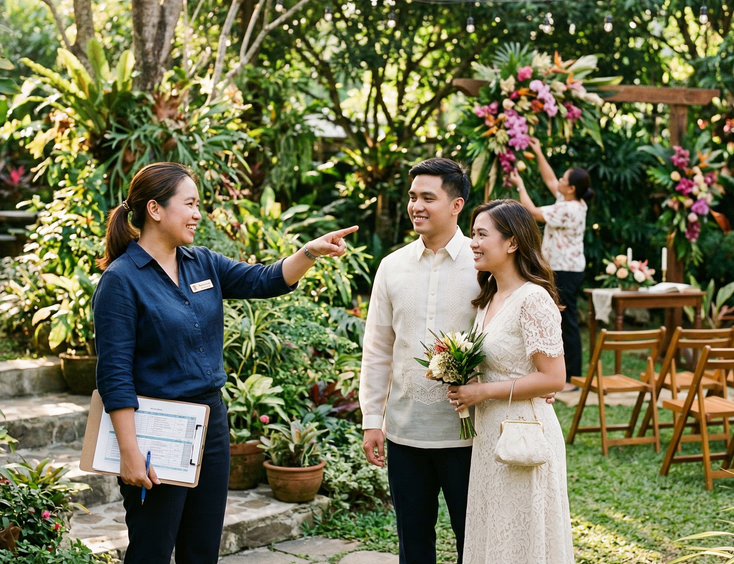
Work with a Coordinator
An intimate wedding has fewer moving parts than a large celebration, but the parts it does have still need someone managing them. Document deadlines, vendor confirmation, ceremony timing, and on-the-day logistics all require attention on a day when your focus belongs on getting married.
A wedding coordinator in the Philippines who handles civil weddings manages the timeline from document submission through the ceremony and into the reception. For an intimate wedding with a venue, a photographer, and a catering setup, on-the-day coordination keeps the experience smooth without requiring you to manage every detail yourself.
A Practical Planning Timeline
| Timeframe Before Wedding | Action |
|---|---|
| 6 to 8 weeks out | Order PSA documents, research LCR requirements, book venue |
| 5 to 6 weeks out | File marriage license application, attend required seminars |
| 4 to 5 weeks out | Contact clerk of court, confirm judge availability, book photographer |
| 3 to 4 weeks out | Book coordinator, finalize guest list, order florals |
| 2 to 3 weeks out | Pick up marriage license, confirm wedding date with court, finalize attire |
| 1 week out | Confirm all suppliers, prepare document folder for wedding day, brief witnesses |
| Wedding day | Arrive with complete documents, enjoy the ceremony |
What Makes an Intimate Wedding Work
The couples who look back on their judge wedding as a highlight rather than just a legal transaction made one consistent choice: they treated it as a real event, not a formality. They dressed for it, styled it, fed their guests well, and chose the people in the room with care.
A judge wedding gives you more control over your ceremony than almost any other wedding format in the Philippines. The venue, the guest list, the atmosphere, and the flow are yours to define. The paperwork is fixed. Everything else is a decision.
Still Searching for a Right Match?
Find Your Perfect Wedding Supplier Today!
Discover trusted wedding suppliers across the Philippines in our complete directory. Compare services and connect with the ones that fit your dream celebration.
Browse Wedding SuppliersFeatured Posts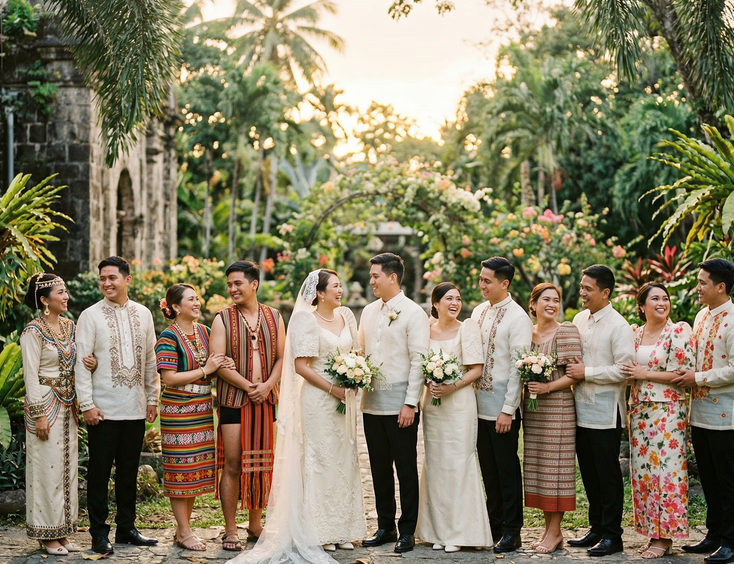
Regional Wedding Customs Every Filipino Couple Should Know
23 mins readThe Complete Guide to Filipino Wedding Invitations: From Traditional Customs to Modern Trends
12 mins readThe Complete Filipino Couple's Guide to Wedding Rings & Bands in the Philippines: Traditions, Styles, Budgets & Where to Buy
22 mins read