

How to Plan a Chinoy Wedding on a Budget Without Skipping the Important Traditions
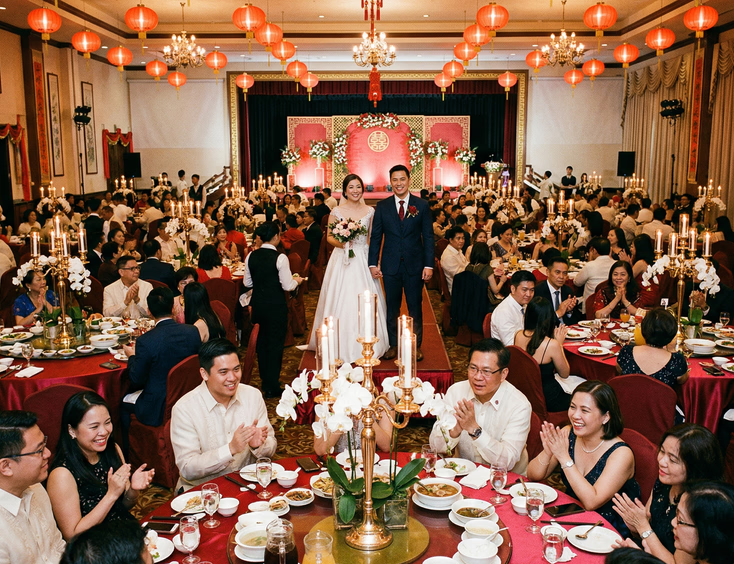
A Chinoy wedding carries a reputation for being expensive, and that reputation has a basis. The 12-course banquet, the gold jewelry exchanged at the tea ceremony, the qipao, the lechon presentation, the red and gold decor across a large ballroom, and a guest list that grows with every family discussion all push costs upward. But couples plan meaningful Chinoy weddings at a fraction of the premium tier cost by understanding where spending produces a visible result and where it disappears into the background.
The key is knowing which traditions carry genuine cultural weight and which elements are aesthetic choices that can scale up or down without anyone noticing.
Understand What You Cannot Skip
Before you start cutting, identify the traditions that hold real meaning for your family. These are not negotiable in the sense that compromising them changes the nature of the wedding, not just its appearance.
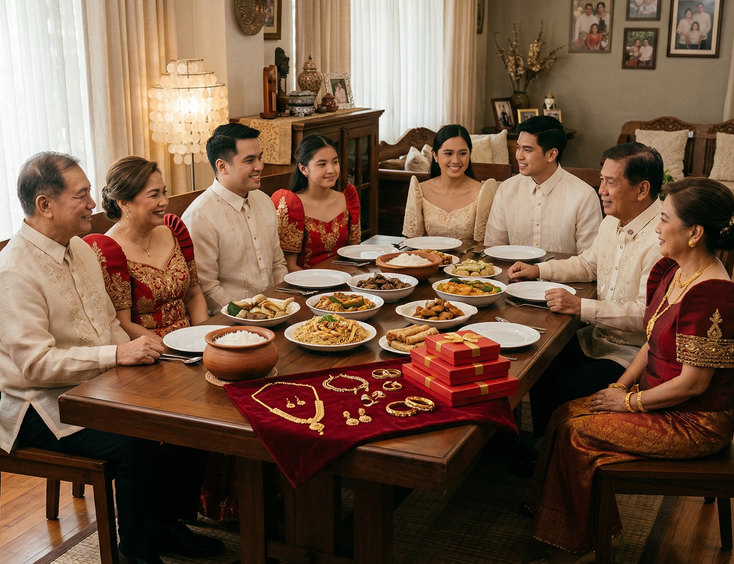
The tea ceremony is non-negotiable. It does not require an expensive setup. It requires a red tablecloth, a tea set, cushions, the right tea, and the presence of the right people. The ceremony's power comes from the act itself, not from the room it happens in.
The ang pao system is non-negotiable. Guests bring ang pao. The couple receives it. This is the economic and cultural backbone of a Chinoy reception, and it requires nothing beyond a collection box near the entrance.
The 12-course banquet structure is important enough that removing it changes what the reception is. You can scale the quality of individual courses up or down depending on your budget, but a Chinoy reception that serves a buffet instead of a seated 12-course banquet is not a Chinoy banquet reception in the traditional sense. Keep the structure and adjust the menu tier.
The lechon presentation can be simplified but not erased entirely if your family observes it. A smaller pig, a less ceremonial presentation, or a Chinese-style roast pig served without a formal procession still honors the tradition at a lower cost.
For a full explanation of which traditions carry the most cultural significance, read the complete guide to a Chinoy wedding in the Philippines.
Set the Guest List Before You Set the Budget
Every additional table at a Chinoy reception multiplies costs across catering, decor, seating, and service. A guest list of one hundred and eighty people costs significantly more than a guest list of one hundred and twenty, and the difference is not just catering. It is table linens, centerpieces, service staff ratios, venue size, and the tier of venue needed to fit the room comfortably.
Chinoy families face genuine social pressure to invite broadly. Business associates, clan association members, and distant relatives all expect an invitation. The couple and both families need to align on the guest list ceiling before any other budget decision is made, because every subsequent cost calculates from that number.
Once you set the ceiling, hold it. Adding tables late in the planning process after the venue and catering are contracted triggers surcharges that erode budget you planned to spend elsewhere.
Where to Spend Without Compromise
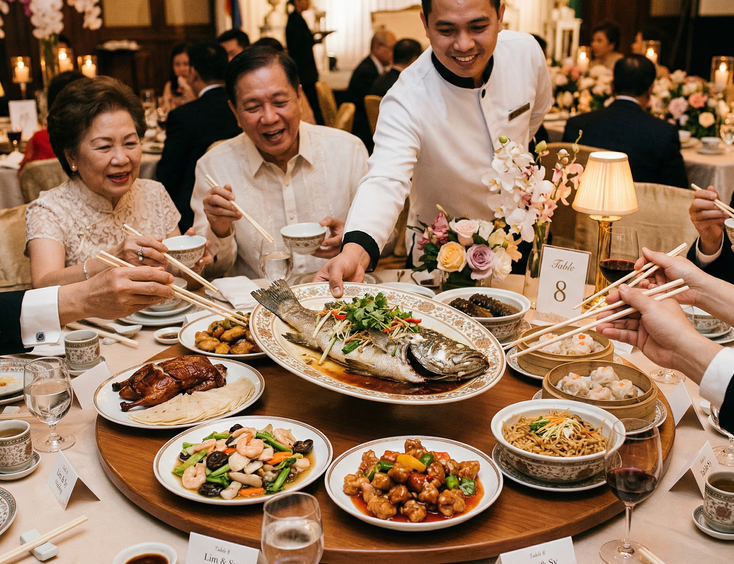
The food is where your spending produces the most return. Guests who attend Chinoy weddings regularly know what a well-executed banquet tastes like, and a kitchen that sends out a weak 12-course meal produces a reception that guests discuss for the wrong reasons. Allocate the majority of your catering budget to course quality rather than course count.
Within the 12 courses, the premium ingredients make the most difference in the soup course, the abalone or premium seafood course, and the whole fish. A genuine shark's fin soup costs significantly more than a thick seafood or crab starch soup alternative, and most modern Chinoy couples opt for the alternative on both ethical and cost grounds without any loss of reception quality. A quality seafood soup served in beautiful porcelain performs well. A whole live garoupa or lapu-lapu steamed properly tastes as good as a more expensive fish and impresses the table.
The tea ceremony gold is a family investment, not a wedding cost in the traditional budget sense. The jewelry the couple receives at the tea ceremony comes from the elders who attend. The couple does not purchase it. What the couple does purchase is the tea set, the tablecloth, the cushions, and possibly the qipao. None of these need to be expensive to be appropriate.
Where to Spend Less Without Anyone Noticing
Floral arrangements disappear into the background at large receptions. Guests sitting at a round table for three to four hours look at the person across from them, not at the centerpiece. A tall gold candelabra with fresh white orchids costs far less than an elaborate floral tower and reads equally formal in a ballroom setting.
Table linens are another area where couples overspend. Deep red or burgundy satin tablecloths with gold napkins read correctly for a Chinoy reception without requiring custom-made or imported fabric. Local rental companies in Manila and Cebu carry these at reasonable rates.
Printed stationery, including physical invitations with multiple inserts, ribbon closures, and custom envelope liners, absorbs budget that guests spend thirty seconds with before setting aside. A clean, well-designed digital invitation or a single-card printed invitation delivers the same information at a fraction of the cost. For guests who expect a physical invitation, a single well-printed card in red and gold does the job.
Wedding favors are widely accepted as an optional element. Many Chinoy receptions skip them entirely. Those that include them often give small practical items in red packaging. No guest has ever remembered a wedding by the favor they took home.
The Venue Decision and Budget
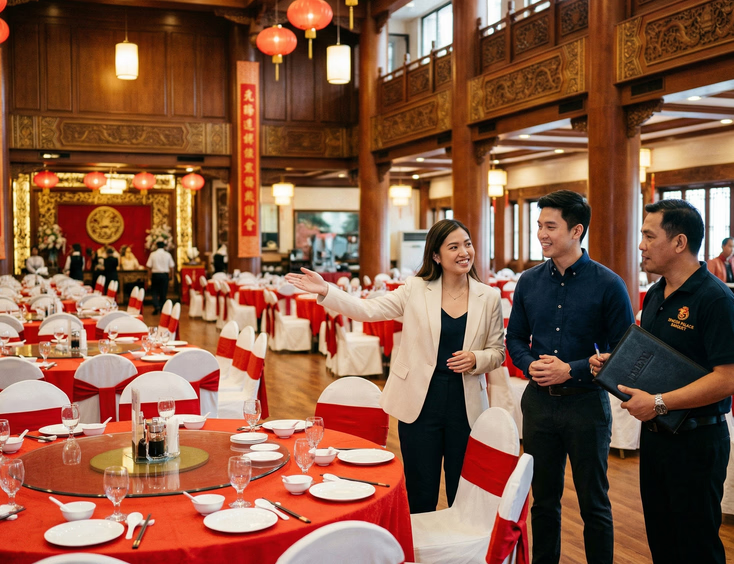
A hotel ballroom in a five-star Metro Manila property commands a premium that a four-star or boutique hotel ballroom does not. For many Chinoy weddings, the four-star or well-maintained boutique ballroom delivers the same round table configuration, the same kitchen capacity, and the same accessible parking at a meaningfully lower room rate.
The key criteria for a Chinoy venue are round table capacity, kitchen experience with Chinese banquets, a private space for the tea ceremony, and proximity to your church. None of these require a luxury hotel address.
Chinese restaurant banquet halls in Binondo, Greenhills, and similar community areas often provide better Chinese banquet kitchen execution than hotel ballrooms because their kitchens specifically run Chinese banquet service. The room may be less glamorous but the food performs better, and at a Chinoy reception the food is the event.
For the full checklist of what to look for before you book, read the Chinoy wedding venue guide: what to look for in a banquet hall or restaurant in the Philippines.
The Qipao on a Budget
A custom-made qipao from a well-known atelier carries a significant price tag. A rented qipao from a reputable Chinoy bridal rental shop delivers a comparable look for the tea ceremony at a fraction of the cost.
Qipao rental shops in Manila concentrate in the Binondo area and along Ongpin Street. Shops in Greenhills carry options as well. Book your rental early because the best pieces in popular sizes reserve out months ahead, particularly for dates during peak wedding season.
If you want to own rather than rent, ordering a custom qipao from a Chinese tailor in Binondo who works regularly with Chinoy brides produces a quality result at a lower price than a fashion atelier. Bring reference images, allow enough lead time for fittings, and confirm the embroidery quality before you commit.
For more on how Chinoy brides approach the qipao alongside the other outfit changes on the wedding day, read Chinoy bridal style: how Filipino Chinese brides blend the qipao and the wedding gown.
The Lucky Date and Its Budget Implications
Auspicious dates with strong numerological digits and favorable almanac ratings command premium rates at venues because demand for them is high. A date with multiple 8s on a Saturday in a non-restricted month costs more at every supplier than a Tuesday in a quieter month.
Couples willing to hold their wedding on a Friday or a Sunday rather than a Saturday often find that auspicious dates on those days are available at lower venue rates. The almanac does not favor Saturdays over Fridays. A Friday with a strong almanac rating and good numerological digits is as auspicious as a Saturday with the same profile, and significantly less competitive.
Couples who can schedule their wedding during the cooler months between October and February outside of Ghost Month, the Lent period, and Chinese New Year will find a wider selection of available auspicious dates to choose from.
For a full guide on how to identify and select your auspicious date, read how to choose a lucky wedding date for a Chinoy wedding using the Chinese almanac.
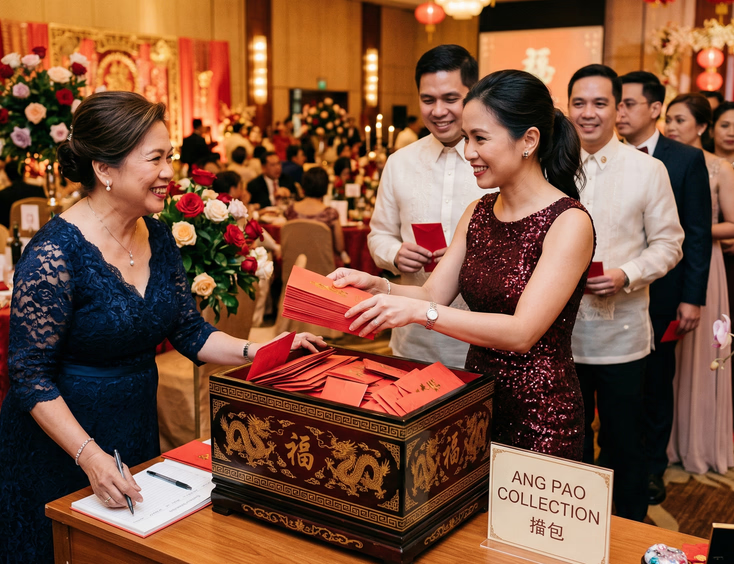
Ang Pao as a Budget Reality
The ang pao the couple receives at the reception offsets a meaningful portion of the wedding cost for many Chinoy families. A well-attended Chinoy reception with a guest list of one hundred and fifty to two hundred guests produces a substantial ang pao collection that experienced Chinoy families factor into their overall wedding budget picture.
This does not mean planning your entire budget around expected ang pao income, which varies and cannot be guaranteed. It means understanding that the reception is not purely an expenditure. The tradition of ang pao giving exists partly because Chinese culture views a wedding as a community investment in the couple's future, and the community shows up accordingly.
Couples who want to track this realistically can estimate conservatively based on their guest list composition and the standard giving tiers within their community. A coordinator with Chinoy wedding experience can help calibrate this estimate based on what they have observed across similar guest lists.
Working with a Coordinator on a Budget
A wedding coordinator may seem like a cost to cut when you are managing a tight budget. For a Chinoy wedding, a coordinator is more often a cost-saving tool. A coordinator who works regularly with Filipino-Chinese couples knows which venues deliver the best Chinese banquet at each price tier, which suppliers provide good value for the traditions that matter, and where couples consistently overspend without improving the result.
The coordinator's supplier relationships often provide access to rates that an unrepresented couple cannot negotiate independently. The planning time the coordinator saves also has a real value when both partners are working full-time through the engagement period.
Browse the wedding planners and coordinators directory to find coordinators with Chinoy wedding experience who understand how to build a meaningful celebration at the budget level that works for your family.
The Budget Chinoy Wedding Still Looks Like a Chinoy Wedding
Scaling back does not mean stripping away. A Chinoy wedding with a focused guest list, a well-chosen banquet hall in Binondo, a rented qipao, a quality 12-course menu that prioritizes the right courses, and a tea ceremony conducted with care delivers everything the tradition requires.
Guests who attend a Chinoy wedding remember whether the food was good, whether the tea ceremony felt genuine, and whether the family welcomed them warmly. They do not leave discussing the centerpiece budget. Build around what they will remember and let the rest scale to what your finances allow.
Still Searching for a Right Match?
Find Your Perfect Wedding Supplier Today!
Discover trusted wedding suppliers across the Philippines in our complete directory. Compare services and connect with the ones that fit your dream celebration.
Browse Wedding SuppliersFeatured Posts
Regional Wedding Customs Every Filipino Couple Should Know
23 mins readThe Complete Guide to Filipino Wedding Invitations: From Traditional Customs to Modern Trends
12 mins readThe Complete Filipino Couple's Guide to Wedding Rings & Bands in the Philippines: Traditions, Styles, Budgets & Where to Buy
22 mins read