

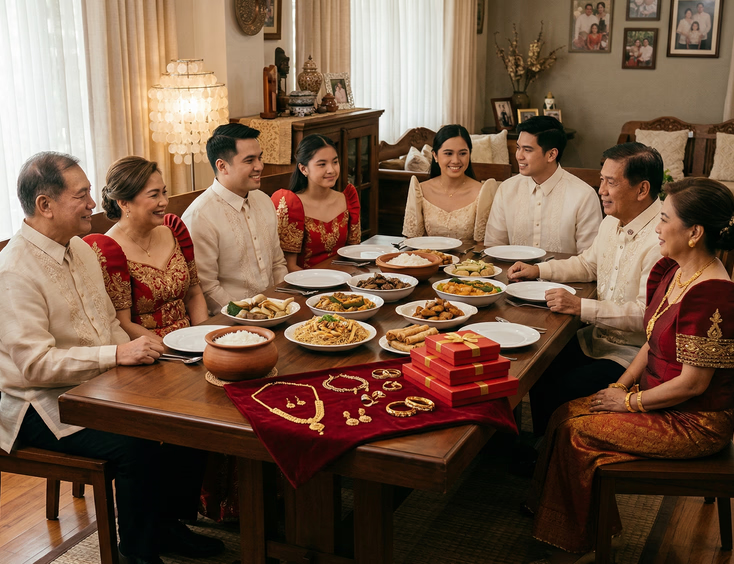
How to Choose a Lucky Wedding Date for a Chinoy Wedding Using the Chinese Almanac

Picking a wedding date for a Chinoy wedding is not a matter of checking venue availability and choosing the most convenient Saturday. The date carries meaning. A day marked favorable in the Chinese almanac brings a different energy to the celebration than a day selected purely for logistics. Most Chinoy families consult the almanac before they book anything, and the date they land on shapes every other planning decision that follows.
What the Chinese Almanac Is
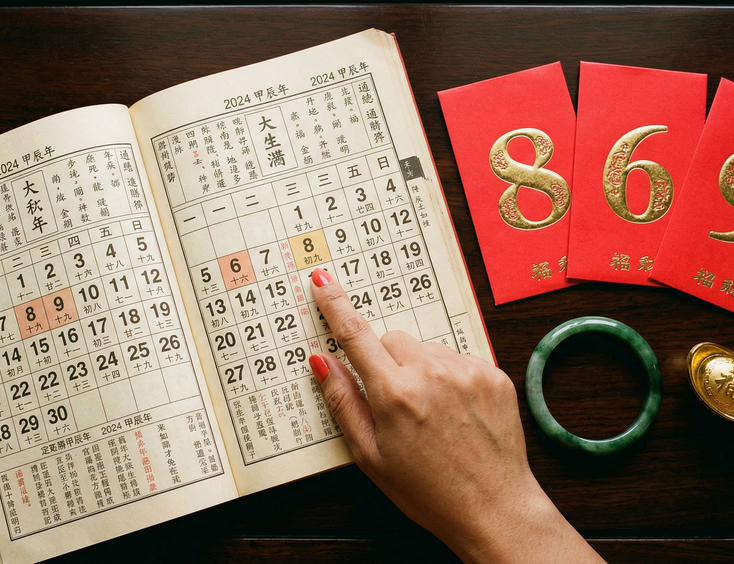
The Chinese almanac, called the Tong Shu in Cantonese or the Huang Li in Mandarin, is a reference text that assigns each day of the year a set of activities it favors and a set it prohibits. Compiled according to the Chinese lunar calendar and a system of celestial stems and earthly branches, the Tong Shu has been used by Chinese families across generations to time significant life events.
Each day in the Tong Shu carries a quality rating and a list of suitable activities. A day rated favorable for marriage will have marriage listed under its auspicious activities column. A day rated unfavorable for marriage may carry prohibitions against starting new commitments, making major decisions, or gathering large groups. Families who take the almanac seriously will not book a wedding on a day where marriage appears under the inauspicious column regardless of how perfect the date looks on paper.
The Tong Shu is published annually and is available in print at Chinese bookshops in Binondo and Ongpin Street. Digital versions and apps exist in both Chinese and English, making it accessible to Chinoy couples who do not read Chinese characters.
How the Lunar Calendar Differs from the Gregorian Calendar
The Chinese lunar calendar operates on a cycle tied to the phases of the moon rather than the solar year. Each lunar month begins with a new moon and ends before the next. A lunar year contains twelve or thirteen months depending on whether a leap month falls within that cycle.
This means that auspicious dates in the Tong Shu correspond to specific lunar dates, which shift each year when converted to the Gregorian calendar dates most Filipinos use for planning. A date that falls on the eighth day of the eighth lunar month in one year falls on a completely different Gregorian date the following year.
Chinoy couples planning their wedding need to identify the favorable lunar dates first and then convert them to Gregorian dates to work with venues and suppliers. Most almanac apps and websites provide this conversion automatically, but understanding why the dates shift each year prevents confusion when families compare notes across different calendar systems.
Lucky Numbers and What They Mean
Numbers matter significantly when a Chinoy couple selects a wedding date. The digits in the date itself carry meaning beyond the almanac's daily rating.
The number 8 is the most sought-after digit. In Hokkien and Cantonese, 8 sounds like the word for prosperity and wealth. A date with multiple 8s, such as the eighth day of the eighth lunar month, is considered doubly auspicious. Dates where the Gregorian equivalent also contains 8s carry additional appeal for Chinoy families who want both calendar systems to align favorably.
The number 6 signals smooth progress. A date containing 6 suggests the marriage will proceed without obstacles. The number 9 represents longevity. Dates with 9 in the Gregorian equivalent, particularly those that also read favorably in the Tong Shu, attract couples who want to emphasize a long life together.
The number 4 is avoided. In several Chinese dialects, 4 sounds like the word for death. Dates where the day or month falls on the fourth, or where the Gregorian date contains multiple 4s, are passed over regardless of how convenient the logistics might be.
Dates ending in 2 are generally avoided at weddings for a different reason: 2 can suggest division or separation when paired with the context of a couple's union. Families with stricter numerological preferences avoid any date where the digits reduce to an unfavorable combination.
The Role of a Feng Shui Master
Many Chinoy families consult a feng shui master in addition to checking the Tong Shu. The feng shui master provides a personalized reading based on the birth charts of both the bride and groom. This reading considers each person's year, month, day, and hour of birth and identifies dates where the couple's elemental energies align rather than conflict.
Chinese metaphysics assigns each person an elemental profile based on the five elements: wood, fire, earth, metal, and water. A couple where one partner is a strong fire element and the other a strong water element may conflict on certain dates when those elements are dominant. The feng shui master identifies dates where the elemental balance favors both and avoids dates where one partner's energy is weakened or directly opposed.
The master also checks the couple's birth dates against the date of the wedding to confirm neither partner's sign clashes with the day's energy. Certain animal signs in the Chinese zodiac conflict with certain days. A bride born in the year of the tiger, for instance, may want to avoid a day ruled by the monkey, as tiger and monkey are traditionally opposing signs.
This level of specificity is why Chinoy couples often begin their date search a year or more before the target wedding period. The intersection of an almanac-favorable date, numerologically strong digits, and elemental compatibility between the couple narrows the calendar significantly.
Dates and Periods to Avoid
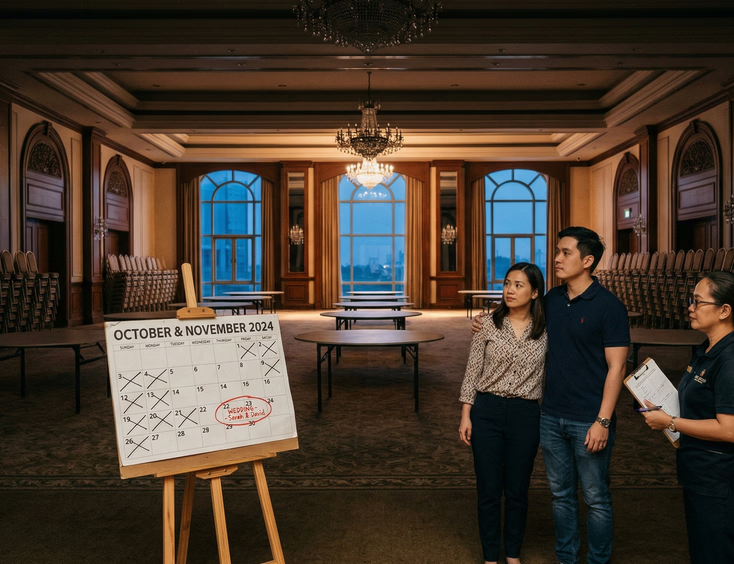
Beyond specific unfavorable days, the Chinese calendar contains entire periods that Chinoy families avoid for weddings.
The seventh lunar month, known as Ghost Month or the Hungry Ghost Festival period, is the most significant period to avoid. During this month, which typically falls between late July and late August in Gregorian terms, the gates of the spirit world are believed to open and wandering spirits roam freely. Chinoy families consider this an unfavorable time to begin a marriage. Venues in areas with large Filipino-Chinese communities see a sharp drop in wedding bookings during this period.
The first lunar month immediately following Chinese New Year is also avoided by some families, particularly the first two weeks. The reasoning varies across families, but the general view is that the New Year period belongs to family reunion and new beginnings of a different kind, and layering a wedding on top of this time can create competing energies.
Dates that fall on the death anniversary of a close family member are typically avoided out of respect, even if the almanac rates the day favorably. This is a family decision rather than a cosmological one.
How Philippine Catholic Considerations Factor In
Most Chinoy couples plan both a Catholic church ceremony and a Chinese banquet reception, which means the date selection must also work within the Philippine Catholic calendar.
The Catholic Church in the Philippines prohibits or discourages weddings during certain liturgical periods. Lent, particularly Holy Week, is the most significant restricted period. Most parishes do not solemnize weddings during Lent, and many Chinoy families observe this restriction alongside their Chinese almanac requirements.
Advent, the four-week period before Christmas, carries a similar restriction in many parishes, though individual priests and dioceses handle this differently. Couples should confirm their parish's specific calendar before finalizing any date.
This creates a double-filter situation. The ideal Chinoy wedding date must appear favorable in the Tong Shu, carry strong numerological digits, align with the couple's birth charts, fall outside Ghost Month, and sit within a period the Catholic Church permits for weddings. The dates that meet all these conditions book out far in advance.
How Far in Advance to Start
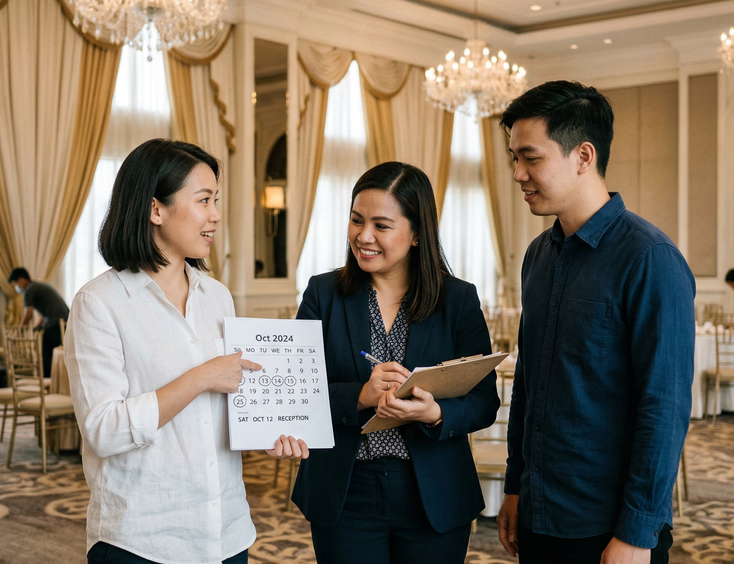
Start at least eighteen months before your target wedding season. This is not overcautious. It reflects the reality of how fast favorable dates disappear in Metro Manila and Cebu, where the Chinoy community is concentrated.
Hotel ballrooms in Makati, Quezon City, and Mandaluyong that cater to large Chinese banquet receptions fill their best dates within weeks of opening a new calendar year. Dates with repeating 8s or strong numerological combinations go first.
If your preferred date is unavailable at your first-choice venue, consult your Tong Shu for the next favorable date within the same period. Working from a shortlist of three to five acceptable dates gives you flexibility when venues and key suppliers are already booked.
Working with a Coordinator on Date Selection
A wedding coordinator experienced in Chinoy weddings understands that date selection is not an afterthought. The coordinator helps the couple navigate the Tong Shu, cross-reference favorable dates with venue availability, and identify any conflicts in the Catholic calendar before the couple commits.
Some coordinators maintain relationships with feng shui masters they can recommend to couples who want a personalized reading. This saves couples the time of finding a reputable master on their own and ensures the consultation happens early enough to inform the venue search.
Browse the wedding planners and coordinators directory to find coordinators who work regularly with Filipino-Chinese couples and understand the full scope of Chinoy wedding planning.
For everything else that goes into planning a Chinoy wedding beyond the date, read the complete guide to a Chinoy wedding in the Philippines.
Venue selection follows directly from the date. Once you have your confirmed auspicious date, read the Chinoy wedding venue guide: what to look for in a banquet hall or restaurant in the Philippines to move the planning forward without losing momentum.
For couples managing a tighter budget alongside all these date and venue considerations, how to plan a Chinoy wedding on a budget without skipping the important traditions addresses where to be flexible and where to hold firm.
Still Searching for a Right Match?
Find Your Perfect Wedding Supplier Today!
Discover trusted wedding suppliers across the Philippines in our complete directory. Compare services and connect with the ones that fit your dream celebration.
Browse Wedding SuppliersFeatured Posts

Regional Wedding Customs Every Filipino Couple Should Know
23 mins readThe Complete Guide to Filipino Wedding Invitations: From Traditional Customs to Modern Trends
12 mins readThe Complete Filipino Couple's Guide to Wedding Rings & Bands in the Philippines: Traditions, Styles, Budgets & Where to Buy
22 mins read