

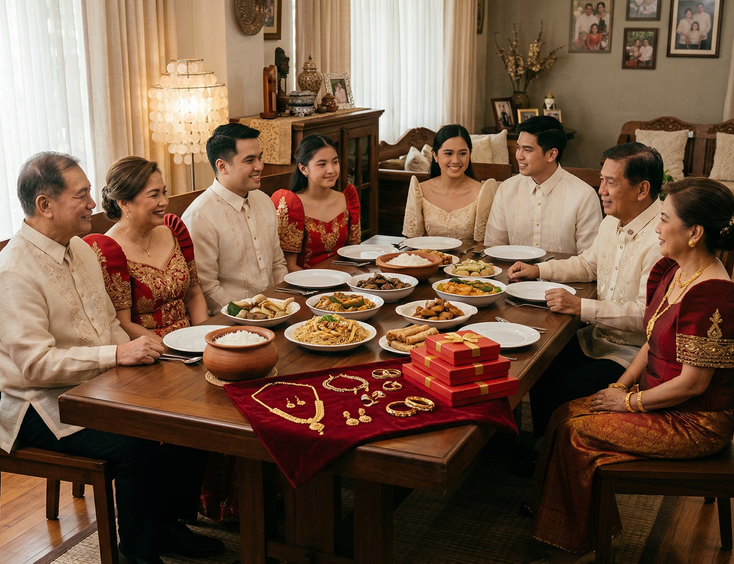
How Modern Filipino Couples Are Reinventing the Tinghun for Today's Generation
The tinghun has not disappeared. It has changed. Couples across the Philippines are holding ceremonies that their grandparents would recognize in spirit but not always in form. The traditions that survived did so because families found ways to carry them forward without treating every detail as fixed.
If you want to understand the full traditional ceremony before seeing how it is shifting, read Tinghun: The Complete Guide to the Traditional Filipino Engagement Ceremony.
The Shift Happening in Filipino Families Right Now
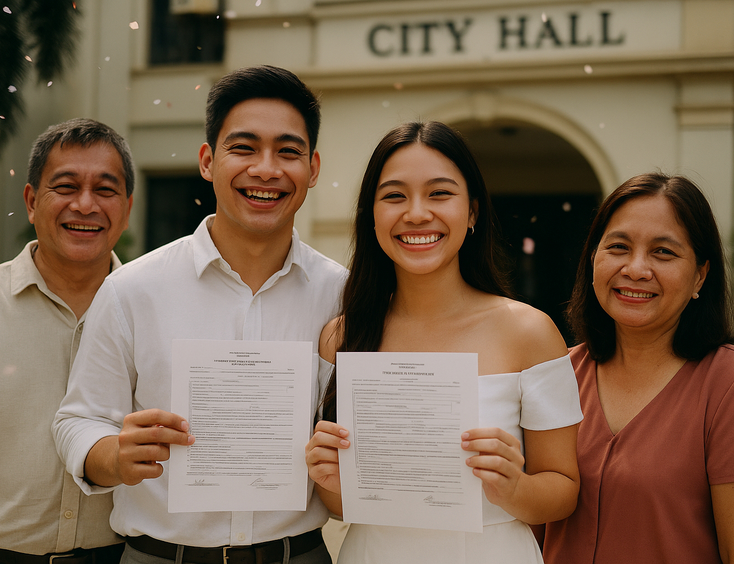
Younger Filipino couples are not rejecting the tinghun. They are editing it. They keep the elements that carry meaning for their families and replace the ones that do not fit their circumstances, budgets, or relationships with tradition.
This is not a generational rebellion. It is the same thing every generation does with inherited customs. The couples holding tinghun ceremonies today grew up watching their parents do it. They want to continue it. They want it to feel like theirs.
Smaller Guest Lists, Closer Relationships
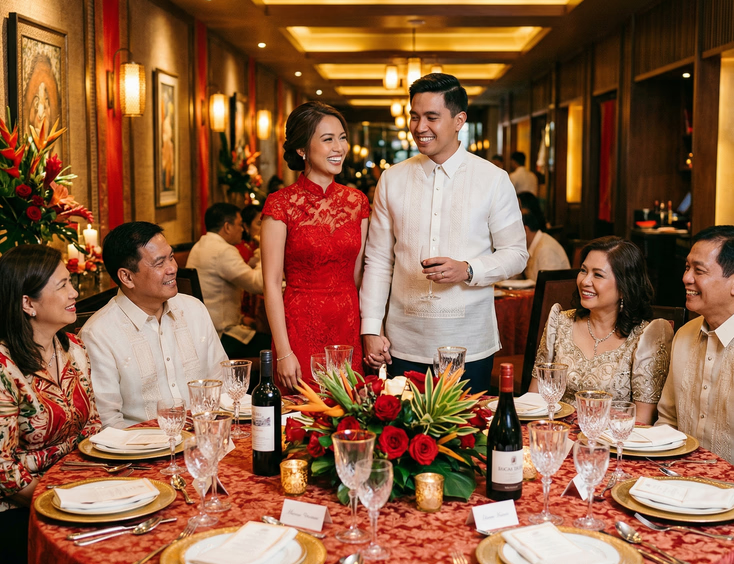
The traditional tinghun brought together extended family networks, family friends, and in some cases, community figures. Modern couples are scaling this down significantly. Thirty people in a private dining room has replaced a hundred people in a rented hall for many families.
The reasoning is practical and personal. A smaller gathering allows both families to actually meet each other rather than spend the evening moving through a crowd of relatives they barely know. The introductions feel real. The conversations go deeper. The couple spends the evening with people who matter to them rather than managing a room full of obligations.
For guidance on how to structure a guest list that fits this approach, read Who Should Be Invited to the Tinghun and How to Handle the Guest List.
Venues Beyond the Family Home
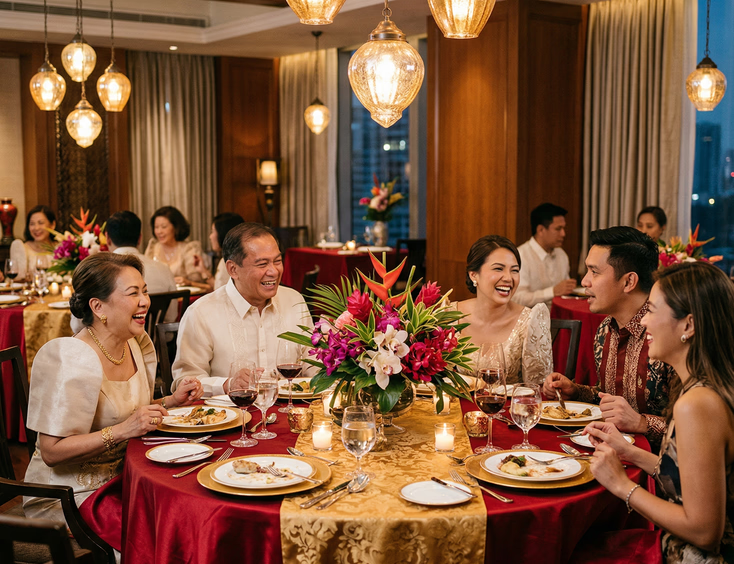
Holding the tinghun in the bride's family home remains the traditional norm. Many modern couples still choose this, particularly when the family home is large enough and the parents prefer it. But the venue options have expanded considerably.
Private dining rooms in hotels, function spaces in restaurants, and garden venues now host tinghun ceremonies regularly. These spaces offer catering, setup, and a neutral ground that can ease the pressure on either family. When the family home is too small, too far for guests to travel to, or simply not available, a private venue handles the logistics without compromising the ceremony's intimacy.
For a broader look at venue options suited to this ceremony, read Tinghun Venue Ideas in the Philippines: From Intimate Homes to Private Dining.
Contemporary Dress With Traditional Grounding
The cheongsam and barong tagalog remain common choices, but modern couples are no longer treating them as mandatory. Many brides-to-be wear a contemporary formal gown in red, blush, or champagne. Grooms pair a slim-fit barong with tailored trousers. Both families coordinate on a color palette rather than a specific dress code.
What stays consistent is the intention. Couples still dress to signal respect for the occasion and their families. The silhouette changes. The formality does not.
Gift Presentations Adapted for Real Circumstances
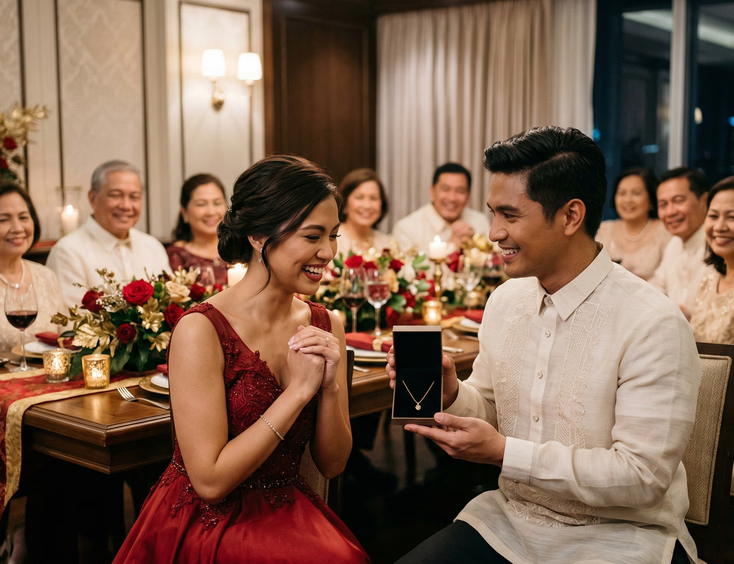
The traditional gift presentation involves specific items, quantities, and in Filipino-Chinese families, jewelry of significant value. Modern couples adapt this based on what is genuinely affordable and agreed upon by both sides.
Some couples present a single piece of meaningful jewelry rather than a full set. Others fold the gift exchange into a private moment the evening before rather than a formal presentation in front of assembled relatives. What matters is that the exchange happens with intention, not that it follows every historical specification.
Couples navigating this adjustment should read The Symbolic Gifts in a Tinghun and What Each One Represents before deciding what to keep and what to modify.
A Program That Reflects Both Families
Traditional tinghun programs follow a set sequence: arrival of the groom's family, formal introductions, gift presentation, exchange of blessings, and a shared meal. Modern couples keep this structure but adjust the tone and pacing.
Some add a short speech from the couple. Others incorporate a brief video or photo display of their relationship. Bilingual programs that mix Filipino, English, and in some families, Hokkien or Mandarin, reflect the couple's actual world rather than a prescribed cultural script.
The core sequence stays because it works. The couple introduces their families to each other, gifts are exchanged with meaning, and a meal seals the gathering. Modern touches sit inside that structure rather than replacing it.
Blending the Tinghun With Western Engagement Elements
Some couples hold a tinghun and a Western-style engagement party as two separate events. Others combine them into a single celebration that moves between formats. The formal ceremony happens first, gifts are presented, families are introduced, and then the gathering shifts into a more relaxed celebration with a contemporary feel.
This approach works when both families are aligned on what the event is and how it flows. It stops working when guests are confused about which part is ceremonial and which is social, or when the two formats compete for tone rather than complement each other.
For a detailed look at how to combine both traditions without diluting either, read How to Blend Tinghun Traditions with a Western Engagement Party.
How Couples Handle the Auspicious Date Question
In Filipino-Chinese families, the ceremony date traditionally comes from a fortune teller or Chinese almanac consultation. Modern couples approach this differently depending on how strongly their families observe it.
Some follow it without question because it matters deeply to their parents or grandparents. Others select a date that works logistically and present it to the family for informal blessing. A smaller number skip the consultation entirely and encounter varying degrees of pushback.
The practical position most couples land on is this: if one set of parents observes the tradition, factor it into the planning. The cost of alignment is low. The cost of ignoring it is often a tension that carries into the wedding itself.
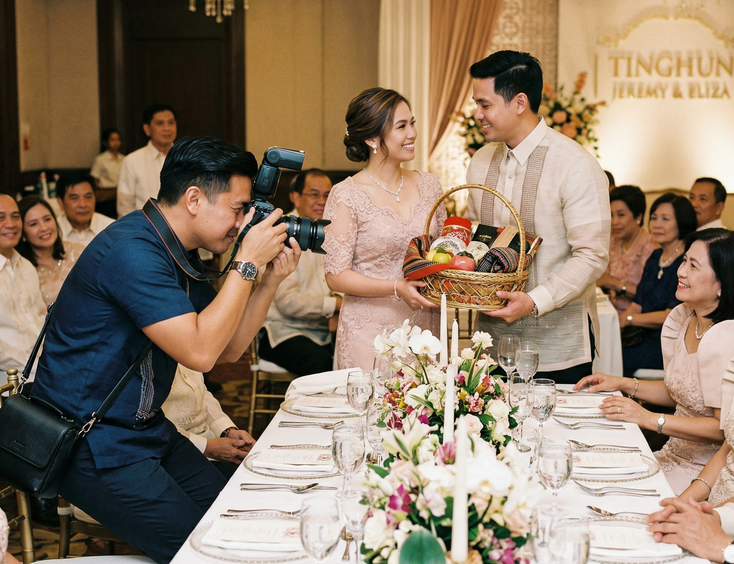
The Role of Social Media in Modern Tinghun Ceremonies
Modern tinghun ceremonies get documented and shared in ways that were not part of the tradition two generations ago. Couples hire photographers for the ceremony, share highlights on social media, and create content around the experience.
This changes the atmosphere of the event in ways some families welcome and others find intrusive. A professional photographer captures the ceremony without disrupting it. Guest phones during the formal portions are a different matter.
Couples who want the event documented well set the expectation in advance. A note in the invitation asking guests to keep phones away during the ceremony is enough. The couple and their families get the photos. The ceremony keeps its focus.
What Stays No Matter How the Form Changes
Modern Filipino couples adapt the tinghun in many directions. The element that stays consistent across all of them is the intent: two families formally recognizing a commitment and beginning the process of becoming one extended family.
The ceremony's staying power comes from that intent, not from any specific gift or dress code or venue. Couples who hold a tinghun that genuinely reflects both families, even in a modern form, produce something more meaningful than a technically correct ceremony that nobody in the room felt connected to.
Working with a wedding coordinator who understands the tinghun helps modern couples find that balance. A coordinator with experience across both traditional and contemporary ceremonies can tell you which elements families tend to care about most and where other couples have successfully made changes. That knowledge saves you the conversation you were not sure how to start.
Still Searching for a Right Match?
Find Your Perfect Wedding Supplier Today!
Discover trusted wedding suppliers across the Philippines in our complete directory. Compare services and connect with the ones that fit your dream celebration.
Browse Wedding SuppliersFeatured Posts
Regional Wedding Customs Every Filipino Couple Should Know
23 mins readThe Complete Guide to Filipino Wedding Invitations: From Traditional Customs to Modern Trends
12 mins readThe Complete Filipino Couple's Guide to Wedding Rings & Bands in the Philippines: Traditions, Styles, Budgets & Where to Buy
22 mins read