


How Filipino Couples Are Using LED Walls and Video Screens at Modern Wedding Receptions
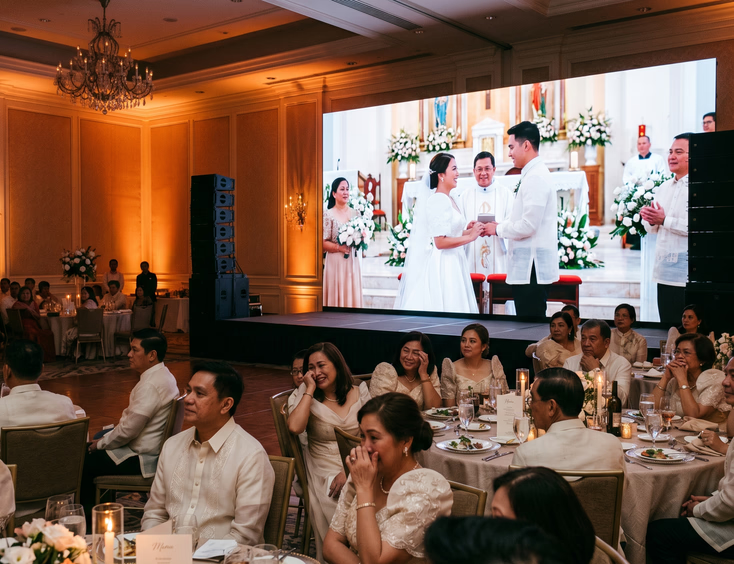
Five years ago, a projector and a white screen were enough. Your videographer handed a USB drive to the sound technician, the lights went down, and your prenuptial video played on a wobbly screen behind the head table. Half the guests in the back squinted at a washed-out image.
LED walls changed that. A bright, sharp, color-accurate display that works in any lighting condition. Filipino couples now use LED walls for far more than AVP playback. They've become digital backdrops, live broadcast screens, interactive guest displays, and ambient lighting sources that reshape the entire feel of a reception.
Why LED Walls Replaced Projectors at Filipino Receptions
Projectors need darkness to produce a visible image. A 3,000-lumen projector in a dim hotel ballroom delivers decent quality. That same projector in a venue with floor-to-ceiling windows, garden views, or afternoon sunlight produces a faded, barely readable picture.
LED walls generate their own light. Each pixel is an independent LED, so brightness stays consistent regardless of room conditions. A P3 or P4 LED wall at full brightness competes with direct sunlight. Your guests see crisp video during a daytime garden reception or a well-lit ballroom dinner.
LED walls also scale. A projector is limited by throw distance and screen size. An LED wall is modular. Your supplier adds panels to increase the display area. A 6-foot by 8-foot wall works for 100 guests. A 10-foot by 16-foot wall covers a 300-guest ballroom. Some couples install two walls, one behind the head table and a second facing the back rows so every guest has a clear view.
Rental costs reflect the size and resolution difference. A small LED wall starts around ₱10,000 per event. Large walls at P3 pixel pitch run ₱30,000 to ₱50,000. Projector rental costs ₱3,000 to ₱8,000, but the visual quality gap is significant in most venue conditions.
How Couples Use LED Walls During the Reception
Filipino couples have found at least six distinct uses for LED walls at their receptions. Most couples combine three or four of these throughout the program.
Prenuptial AVP and Love Story Montage
The classic use. Your videographer produces a three to five minute video telling your love story. The LED wall plays it during the early portion of the reception while guests settle into their seats. The large, bright display gives the video a cinematic quality that a projector cannot match.
Same-Day Edit Video
Your videographer shoots the ceremony and preparations in the morning, edits the footage during the afternoon, and delivers a finished four to six minute film for playback at the reception that evening. The same-day edit is one of the most anticipated moments at a Filipino wedding. Guests watch the ceremony they attended just hours ago, recut with music, slow motion, and emotional highlights.
A same-day edit demands high display quality. The video includes close-up shots of faces, details of the dress and rings, and sweeping venue shots. Pixelation or color inaccuracy on a low-resolution screen undercuts the impact. A P3 LED wall at 1920x1080 resolution or higher preserves the quality your videographer intended.
Live Camera Feed
A camera operator films the reception in real time. A video switcher routes the feed to the LED wall. Guests at the back of a large ballroom see the couple's expressions during the toast, the ring bearer's walk, and the bouquet toss at full screen size.
Live feeds require additional equipment beyond the LED wall itself. You need at least one camera (two for multi-angle switching), a video switcher, a preview monitor for the operator, and SDI or HDMI cabling to connect everything. Your supplier provides this gear as part of a full production package or as an add-on to the LED wall rental.
Digital Backdrop for the Head Table
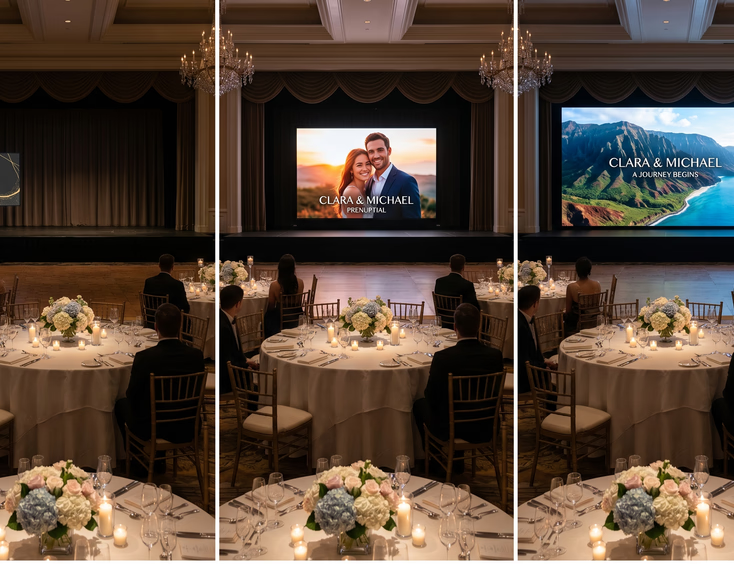
Some couples skip the traditional fabric or floral backdrop and use the LED wall itself as their head table background. The wall displays a static image, animated graphic, or rotating slideshow that matches the wedding motif. A tropical theme gets slow-moving palm frond animations. A minimalist theme gets a clean white display with the couple's monogram in gold.
The digital backdrop changes throughout the reception. During dinner, it shows a calm, warm-toned image. During the party segment, it shifts to dynamic visuals synced with the music. Your lighting technician coordinates the wall content with the venue uplighting and moving heads to create a unified look.
Photo and Video Slideshow
Between program segments, the LED wall cycles through photos of the couple, their families, and their journey together. Childhood photos, travel snapshots, engagement session shots, and behind-the-scenes preparation images keep guests entertained during transitions.
Some couples crowdsource content by asking guests to upload photos to a shared album during the event. The photos appear on the LED wall in near real time. This turns the wall into an interactive element that involves your guests in the visual experience.
Sponsor and Dedication Displays
In Filipino wedding culture, sponsors (ninongs and ninangs) play a significant role. Couples use the LED wall to display sponsor names, dedication messages, and thank-you graphics during the appropriate program segment. The display replaces printed tarpaulins and gives each sponsor a moment of recognition on a large, polished screen.
LED Wall Sizes and What They Cover
Choosing the right wall size depends on your guest count and venue dimensions. Undersizing the wall means guests at the back cannot read text or see facial details. Oversizing wastes budget on display area that exceeds your sightlines.
4 feet by 6 feet (small). Suitable for intimate receptions with 50 to 80 guests. Works as a head table backdrop or AVP screen in a small indoor venue. Guests should be seated within 10 meters of the wall.
6 feet by 10 feet (medium). Covers 100 to 200 guest receptions. Provides clear visibility from the back of most hotel function rooms. This is the most common size Filipino couples book.
8 feet by 14 feet (large). Designed for 200 to 400 guest ballroom receptions. Fills the stage area behind the head table and serves as the primary visual element of the room.
10 feet by 16 feet or larger (extra large). For grand receptions with 400 or more guests, premium hotel ballrooms, or venues with deep floor plans. Some setups use two walls, one primary and one secondary facing the opposite direction.
Pixel pitch matters alongside size. P2 walls offer the sharpest image quality and work for close viewing distances. P3 walls balance quality and cost for most wedding applications. P4 walls are acceptable for large venues where guests view the wall from 5 meters or more.
What an LED Wall Setup Requires
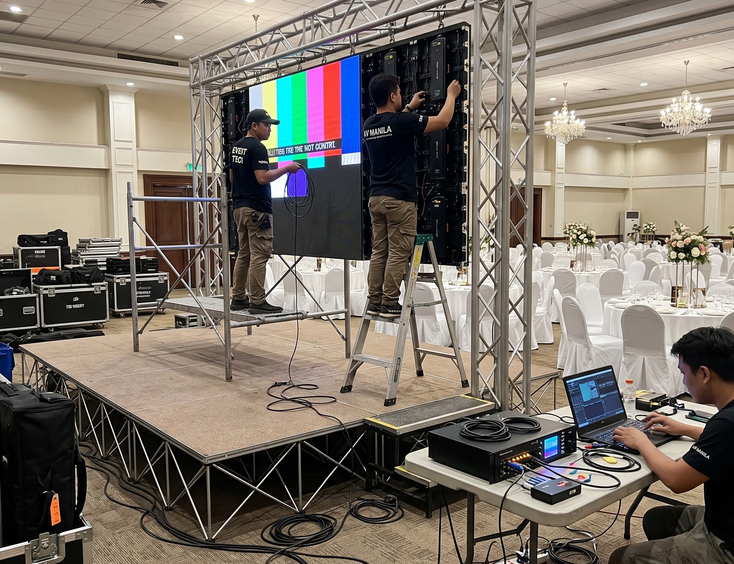
The wall itself is one piece of a larger production chain. Filipino couples often underestimate the supporting equipment and crew needed to run the wall throughout a six to eight hour reception.
Hardware beyond the wall panels:
- A video processor to scale and format incoming signals
- A laptop or media player loaded with your AVP, slideshow, and graphics files
- A video switcher if you're running a live camera feed
- One to two cameras with tripods or stabilizers for live feeds
- SDI or HDMI cables running from the source to the processor
- A backup laptop and cables in case of technical failure
Crew:
- A video technician to operate the switcher and manage playback
- A camera operator for live feeds (optional if no live feed is planned)
- A setup crew to assemble and calibrate the wall panels before the event
Power:
- LED walls draw significant electricity. A 6-by-10-foot wall at full brightness can pull 2,000 to 3,000 watts. Your venue needs dedicated circuits or a generator to handle the wall alongside the sound system and lighting rig.
Setup time:
- Allow three to four hours for wall assembly, calibration, and testing. Your supplier needs venue access well before the event starts. Coordinate the setup schedule with your venue and other vendors.
Cost Breakdown for LED Wall Rentals
LED wall pricing in the Philippines varies by size, resolution, and supplier. Additional fees stack on top of the base wall rental.
| Item | Typical Range |
|---|---|
| Small LED wall (4x6 ft, P4) | ₱10,000 to ₱15,000 |
| Medium LED wall (6x10 ft, P3) | ₱18,000 to ₱30,000 |
| Large LED wall (8x14 ft, P3) | ₱30,000 to ₱45,000 |
| Extra large LED wall (10x16 ft, P3) | ₱40,000 to ₱55,000 |
| Video switcher and camera setup | ₱5,000 to ₱15,000 |
| Additional camera operator | ₱3,000 to ₱5,000 |
| Delivery and setup (Metro Manila) | Often included in rental |
| Delivery and setup (provincial) | ₱3,000 to ₱10,000 travel fee |
| Overtime per hour | ₱1,500 to ₱3,000 |
Some suppliers bundle the LED wall into a full production package that includes sound, lighting, and effects. Others rent the wall as a standalone item. Compare both approaches to find the better value for your total setup.
Common Mistakes with LED Wall Bookings
Ordering a wall without checking the venue's power capacity. A large LED wall on a circuit shared with the kitchen air conditioning and the band's amplifiers trips breakers. Your supplier should assess the venue's electrical load during the site inspection.
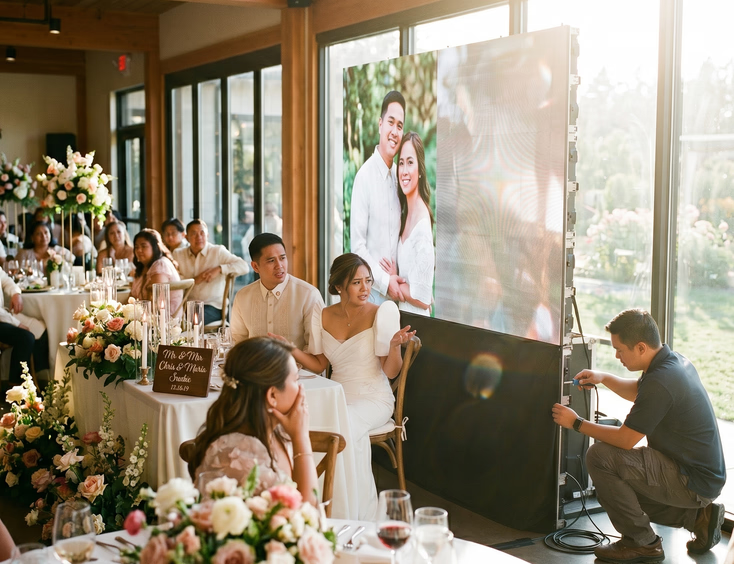
Placing the wall where sunlight hits it directly. LED walls handle ambient light well, but direct sunlight on the panel surface at certain angles washes out sections of the image. Position the wall away from windows or schedule video playback for the evening portion of the program.
Sending video files on the day of the event. Your supplier needs your AVP, slideshow, and graphics files at least three days before the wedding. Last-minute file transfers on a slow USB drive at the venue create unnecessary stress. Send files early. Send backup copies.
Skipping the technical rehearsal. A five-minute test of your AVP on the actual wall catches resolution mismatches, audio sync issues, and color calibration problems before your guests arrive. Ask your supplier to schedule a test run during setup.
Forgetting about sightlines. A wall placed behind a tall floral centerpiece on the head table blocks the view for guests at certain angles. Map out your table layout, centerpiece heights, and wall position together. Your coordinator, stylist, and lights and sounds supplier should align on the floor plan.
Questions to Ask Your LED Wall Supplier
- What pixel pitch do you offer, and which do you recommend for my venue size?
- How many panels make up the wall, and what is the total resolution?
- Does the rental include a video processor, laptop, and playback technician?
- Can you handle a live camera feed, and what additional equipment does that require?
- How many hours does setup take, and when do you need venue access?
- What is the power draw of the wall, and have you confirmed my venue can handle it?
- Do you bring backup panels in case one fails during the event?
- What file formats and resolutions should my videographer deliver for the AVP?
Get the answers in writing. Include them in your contract alongside the wall size, pixel pitch, service hours, and overtime rates.
For a broader view of how LED walls fit into your total lights and sounds setup, read our complete guide to wedding lights and sound in the Philippines.
Ready to compare providers? Browse lights and sounds suppliers in the Philippines and include your preferred wall size and venue details in your inquiry.
You might also want to explore the biggest wedding lighting trends at Philippine receptions right now and understand the difference between an AVP package, sound system, and full production setup before finalizing your booking.
Still Searching for a Right Match?
Find Your Perfect Wedding Supplier Today!
Discover trusted wedding suppliers across the Philippines in our complete directory. Compare services and connect with the ones that fit your dream celebration.
Browse Wedding SuppliersFeatured Blog Posts

Filipino Wedding Entourage - Roles, Order of March, and Modern Etiquette
6 mins readCivil Weddings in the Philippines - Requirements, Costs, and Step-by-Step Process
9 mins readCivil Wedding Requirements in the Philippines - Complete Checklist
6 mins readCost of Wedding in the Philippines - 5 Essential Things You Need to Know
7 mins readPrincipal Sponsors (Ninong/Ninang) - How Many, How to Ask, What They Really Do
4 mins readVeil, Cord, Candle & Coins - Roles, Options, and When They Happen
4 mins readEntourage for a Traditional Pinoy Wedding - Complete Roles and Guide
6 mins readComplete List of Civil Wedding Requirements in the Philippines
8 mins readHow to Choose Wedding Ninongs and Ninangs - Ask Yourself These 3 Important Questions
5 mins read