


Hiring a Host or Emcee for Your Debut: What to Look For
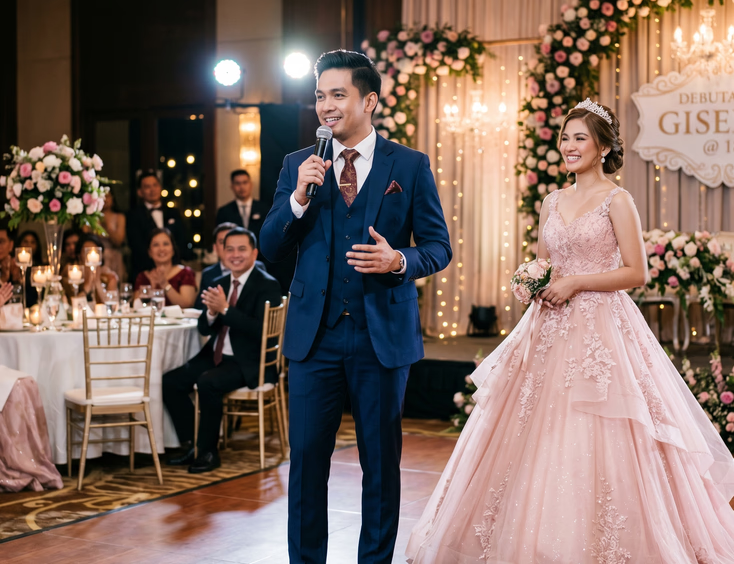
The host runs your debut. Not the coordinator, not the photographer, not even you. From the moment guests sit down to the last dance, the host controls the pace, the energy, and the emotional beats of every program segment.
A great host makes your debut feel effortless. Guests laugh during the 18 Roses, cry during the speeches, and dance during the last set without ever noticing the transitions. A weak host leaves dead air between segments, mispronounces your titos' names, and turns your father's speech into an awkward silence.
This guide walks you through what separates a great debut host from a forgettable one.
Understand What a Debut Host Actually Does
The host's job goes deeper than reading names from a script. A professional debut emcee:
- Opens the program and sets the energy
- Introduces every segment with the right tone (playful for cotillion, solemn for speeches, romantic for the father-daughter dance)
- Pronounces names correctly, including hard-to-pronounce Filipino names and titles
- Manages timing so the program doesn't run 90 minutes over
- Handles unexpected delays (a missing rose, a microphone that cuts out, a guest who arrived late)
- Engages guests during long pauses (food service delays, AVP loading, performer setup)
- Coordinates with the band or DJ on music cues
- Reads the room and adjusts (cuts a joke if the audience isn't responsive, extends a beat if a moment lands well)
- Closes the program with warmth, not exhaustion
The host is the one supplier who is "on" the entire night. The photographer disappears between shots. The caterer disappears after dinner. The host stays in front of the room from start to finish.
Decide on the Host Style You Want
Hosts come in different styles, and the right one depends on your theme, your program flow, and your personality.
The four main styles:
Formal and polished Classic event emcee voice. Measured pacing, precise diction, traditional program flow. Works for grand ballroom debuts, hotel venues, and family-focused celebrations with older guests.
Warm and conversational A friendly, sister-vibe energy. Less scripted, more spontaneous, with light banter and emotional sensitivity. Works for intimate debuts and themes that lean romantic or garden-style.
Comedic and high-energy A stand-up-comedy approach. Heavy on jokes, audience engagement, and crowd work. Works for younger crowds, party-focused debuts, and themes where the program leans entertainment-heavy.
Bilingual or Taglish-fluent Blends English with conversational Filipino. Adjusts language based on audience composition. Works for mixed-age guest lists where lolos and lolas need Filipino while younger guests vibe with English.
Most professional hosts blend two of these styles. A skilled emcee shifts from comedic during the cotillion to solemn during the father-daughter dance without it feeling jarring.
Match the Host to Your Theme
The host's energy reinforces the theme.
- Fairytale or grand themes → formal, polished hosts with strong narrative delivery
- Garden or romantic themes → warm, conversational hosts who handle quiet moments well
- Korean-inspired or party-focused themes → high-energy hosts who keep momentum during dance breaks
- Minimalist or intimate themes → conversational hosts who feel like a friend, not a presenter
- Traditional family-focused debuts → bilingual hosts who address older guests in Filipino
For broader theme direction, browse our roundup of trending debut theme ideas.
Set the Budget
Debut hosts charge based on experience, name recognition, and program complexity. Expect:
- P8,000 to P15,000 for newer or semi-pro hosts with limited debut experience
- P15,000 to P30,000 for established event hosts with regular debut bookings
- P30,000 to P60,000 for senior emcees with strong name recognition in the events scene
- P60,000 plus for TV personalities, radio hosts, and celebrity emcees
Most debuts fall in the P15,000 to P30,000 range. The mid-tier hosts have enough experience to handle the program smoothly without the celebrity premium.
For the full budget picture, see our debut cost breakdown.
Watch Videos Before You Inquire
Portfolio videos tell you more than a pitch deck or a referral ever can. Watch the host work an actual event.
Look for:
- Voice quality — clear, well-modulated, easy on the ears for three to four straight hours
- Pacing — does the host rush through segments or let key moments breathe
- Crowd engagement — do guests laugh, respond, lean in
- Transition handling — how the host moves from one segment to the next (smooth or jerky?)
- Improvisation — when something goes wrong on camera, how does the host recover
- Bilingual switching — if hosting bilingually, do the language shifts feel natural
Most professional hosts post clips on social media and event highlight reels. Ask for two or three full-event recordings, not just curated reels.
If a host can't or won't share full event footage, that's a red flag. The reel hides weaknesses. The full event shows them.
Ask About Their Debut-Specific Experience
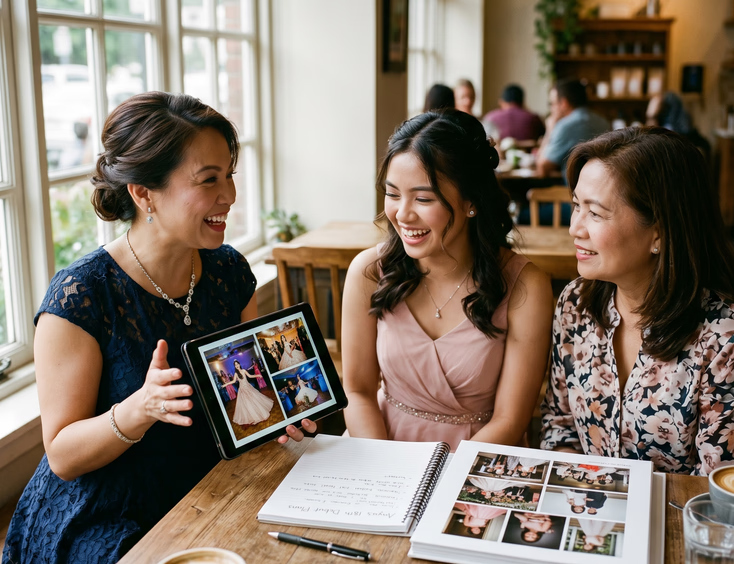
Wedding emcees, corporate hosts, and debut hosts pull from overlapping skill sets but work different programs. A great wedding host doesn't automatically translate to a great debut host.
Debut-specific moments that require experience:
- Calling 18 roses one by one without dragging the pacing
- Hosting 18 candles speeches while managing emotional reactions from the debutante and parents
- Introducing 18 treasures with the right balance of humor and sentiment
- Hyping the cotillion entrance without overshadowing the dance itself
- Setting up the father-daughter dance with the right emotional tone
- Working with an AVP and SDE crew (cueing the screen, managing transitions)
- Coordinating with the band or DJ on song cues for each segment
Ask the host:
- How many debuts have you hosted in the last 12 months?
- What's your favorite debut moment to host?
- How do you handle a debutante who gets emotional and needs a pause mid-program?
- What's your script process and how much do I get to review in advance?
A host who can speak fluently about debut-specific moments has the experience. One who keeps redirecting to wedding stories may not.
For the full picture of program flow, see our sample debut program flow.
Discuss the Script Process
Professional hosts work from a script they customize for each event. The script includes:
- Name pronunciations (especially for Spanish-origin Filipino names, regional names, and foreign relatives)
- Specific stories or anecdotes the debutante wants mentioned
- Family relationships (so the host doesn't accidentally call your tito your uncle in the wrong context)
- Program flow with timing per segment
- Cue points for music, lights, AVP, and SDE
- Backup lines for unexpected delays
Get a draft of the script two weeks before the event. Review with your parents. Flag pronunciations, correct any wrong information, and add personal touches the host wouldn't know.
Some hosts welcome heavy customization. Others prefer to keep the script tight and improvise the rest. Match the host's preferred workflow to your comfort level.
Plan the Pre-Event Briefing
A pre-event briefing one to two weeks before the debut aligns the host with your full program team. Include:
- The debutante (you)
- Your parents
- Your event coordinator
- The host
- Ideally, the AVP and SDE crew if they're separate suppliers
During the briefing, walk through:
- Final program flow with exact timing
- Names and pronunciations for all 18 roses, 18 candles, 18 treasures speakers
- Family member introductions and special mentions
- Songs and music cues
- Surprise elements (a flashmob, a hidden video tribute, an unexpected guest performer)
- Backup plans for technical issues
The host who shows up to your debut without a pre-event briefing is winging it. Skip them.
Check Coordination With Your Other Suppliers
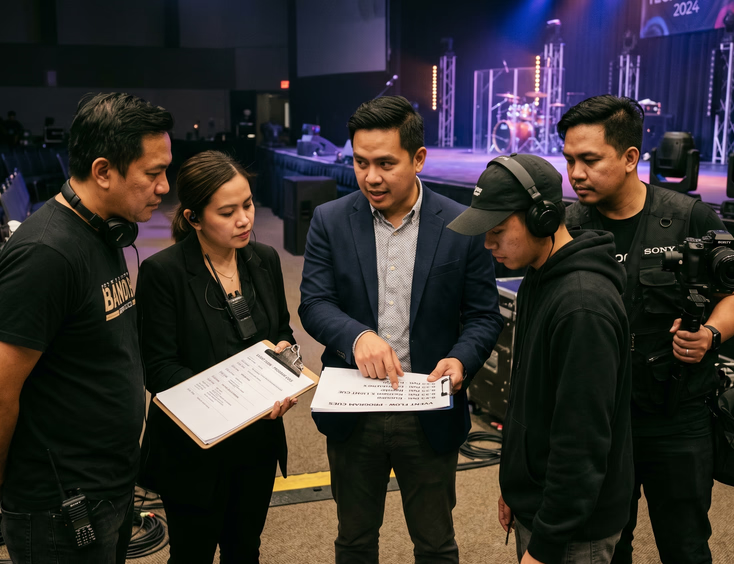
Hosts coordinate with several suppliers throughout the program. Ask how the host typically works with:
- The band or DJ — for song cues, music ducking during speeches, dance set timing
- The AVP and SDE crew — for screen cues, video transitions, SDE reveal
- The photographer and videographer — for advance notice on key shots (cake cutting, candle blowing, dance moments)
- The coordinator — for behind-the-scenes timing adjustments
- The lights and sounds technician — for mic checks, ambient lighting cues, spotlight calls
A host who works alone disrupts the rhythm. A host who treats the supplier team as collaborators makes the whole program tighter.
For how all your suppliers fit together, see our guide to essential debut suppliers to book early.
Confirm Coverage Hours and Backup
Standard host coverage runs four to six hours. Confirm:
- Call time — when does the host arrive (usually one hour before guests for ocular and final briefing)
- Coverage hours — does the rate cover the full program plus the after-party dance set, or only the formal program
- Overtime rate — per hour, billed on the spot or invoiced later
- Backup host — who steps in if the booked host gets sick, has an emergency, or loses their voice mid-program
Most professional hosts have a backup network. A solo host with no contingency plan is a risk.
Decide on One Host or Two
Most debuts run with one host. Some larger productions use two for variety, banter, and energy management.
Two hosts work well when:
- The guest count exceeds 250
- The program runs longer than five hours
- The format includes multiple performance segments (band, dance crew, guest performers)
- You want a male-female dynamic for the program tone
Two hosts cost roughly 1.5x to 2x the rate of one. Budget accordingly.
Walk Through the Contract
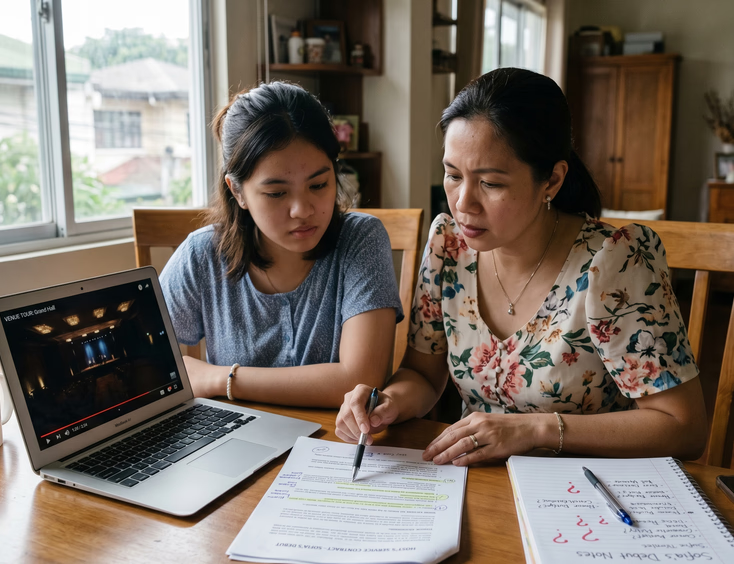
Before signing, confirm:
- Date, venue, call time, and coverage hours
- Host's name (not the agency's name, the actual person who will host)
- Program flow attached as an appendix
- Script customization process and review timeline
- Pre-event briefing scheduled in writing
- Total package cost and payment schedule (typical: 30-50% reservation, balance on event day)
- Overtime rates
- Cancellation, rescheduling, and no-show policy
- Backup host arrangement if the lead can't perform
Get the specific host's name in the contract. Agencies sometimes assign different hosts to different events under the same brand. Lock the name.
Red Flags to Skip
Walk away from a host who:
- Won't share full-event video footage
- Can't speak specifically about recent debut experiences
- Refuses to do a pre-event briefing
- Doesn't customize the script for each event
- Has consistent recent reviews mentioning late arrivals, mispronounced names, or dead air during the program
- Pushes you to book without a discovery call or initial meeting
- Has no backup plan if they can't perform on the day
- Treats the inquiry like a transaction rather than a collaboration
How the host communicates during the booking phase predicts how they'll communicate on the day.
Your Pre-Booking Checklist
Before you sign anything, confirm:
- Host style matches your theme and program tone
- Full-event videos reviewed, not just curated reels
- Debut-specific experience confirmed with recent bookings
- Script customization and review process clarified
- Pre-event briefing scheduled in writing
- Coordination with band, DJ, AVP, SDE, and coordinator confirmed
- Coverage hours and overtime rates specified
- Backup host arrangement documented
- The specific host's name (not the agency) is in the contract
- Total cost fits your budget
- Contract terms and cancellation policy reviewed
The host carries your program from the opening line to the closing toast. Pick someone who treats your debut like their own family's celebration, not a calendar slot.
For how your host fits into the broader debut planning picture, return to our pillar guide on planning an unforgettable Filipino debut celebration.
Still Searching for a Right Match?
Find Your Perfect Wedding Supplier Today!
Discover trusted wedding suppliers across the Philippines in our complete directory. Compare services and connect with the ones that fit your dream celebration.
Browse Wedding SuppliersFeatured Blog Posts

Filipino Wedding Entourage - Roles, Order of March, and Modern Etiquette
6 mins readCivil Weddings in the Philippines - Requirements, Costs, and Step-by-Step Process
9 mins readCivil Wedding Requirements in the Philippines - Complete Checklist
6 mins readCost of Wedding in the Philippines - 5 Essential Things You Need to Know
7 mins readPrincipal Sponsors (Ninong/Ninang) - How Many, How to Ask, What They Really Do
4 mins readVeil, Cord, Candle & Coins - Roles, Options, and When They Happen
4 mins readEntourage for a Traditional Pinoy Wedding - Complete Roles and Guide
6 mins readComplete List of Civil Wedding Requirements in the Philippines
8 mins readHow to Choose Wedding Ninongs and Ninangs - Ask Yourself These 3 Important Questions
5 mins read