

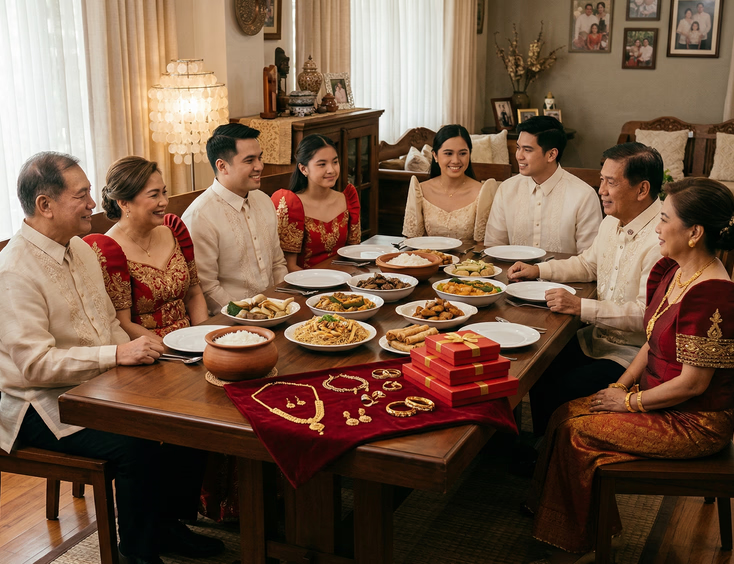
Common Tinghun Mistakes Families Make and How to Avoid Them
Most tinghun problems do not come from bad intentions. They come from two families assuming they share the same expectations without ever checking. By the time the difference surfaces, the ceremony is days away and both sides are already managing hurt feelings.
For a full picture of what the tinghun ceremony involves and what both families are preparing for, start with Tinghun: The Complete Guide to the Traditional Filipino Engagement Ceremony.
Assuming Both Families Know the Same Version of the Tradition
The tinghun has roots in Filipino-Chinese culture, but families practice it differently depending on region, generation, and how strictly they follow tradition. One family may expect a formal ceremony with specific gifts presented in a specific order. The other may picture a casual dinner with an exchange of well-wishes.
Neither version is wrong. The problem is when neither family asks the other what they expect.
The couple carries the responsibility for bridging this gap. Before any planning begins, both families need a direct conversation about what format, formality, and customs each side follows. That conversation prevents the most common source of tension at the event itself.
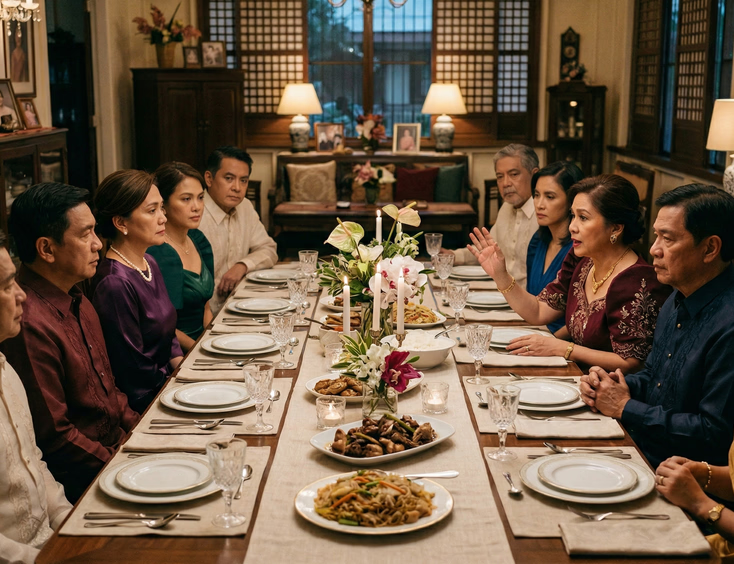
Leaving the Couple Out of the Planning
Some parents take over the tinghun entirely, treating it as a family production rather than a ceremony centered on the couple. The couple ends up attending their own engagement ceremony with no input on the guest list, the program, or the gifts being presented on their behalf.
The tinghun belongs to the couple first. Parents guide the process, particularly where tradition and family relationships are involved, but the couple should understand and agree to every element before the day. Surprises during a tinghun, however well-meaning, put the couple in the uncomfortable position of reacting publicly to decisions they did not make.
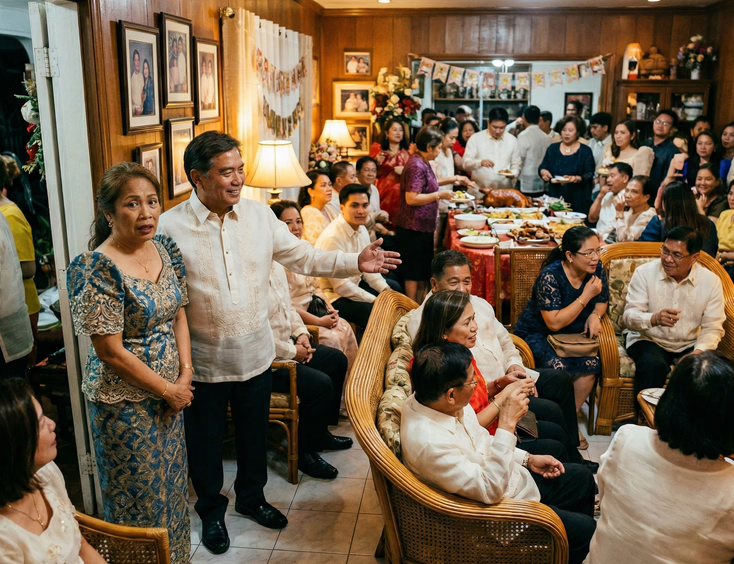
Inviting Too Many People Without Consulting Both Families
The tinghun is a family ceremony, not a pre-wedding reception. Some families treat the guest list as an opportunity to include every relative, family friend, and business associate they want to impress. The other family then faces a room full of strangers during a ceremony designed around intimate family introductions.
Both sides agree on the guest list before invitations go out. If one family wants a larger gathering and the other prefers something small, that conversation happens between the couple and their parents, not after the invitations are sent.
For guidance on how to structure that list properly, read Who Should Be Invited to the Tinghun and How to Handle the Guest List.
Skipping the Budget Conversation Between Families
The tinghun involves gifts, food, venue, and in some cases, jewelry of significant value. Families who do not establish a clear budget agreement early end up making unilateral spending decisions that leave the other side feeling outpaced or pressured to match.
Set the budget before anyone books a venue or orders food. Both families need to know what is expected of them financially and who is responsible for each element. An uncomfortable conversation about money before the event is easier to manage than resentment during it.
Read Who Pays for the Tinghun? Understanding Financial Responsibilities Between Families for a full breakdown of how families typically divide these costs.
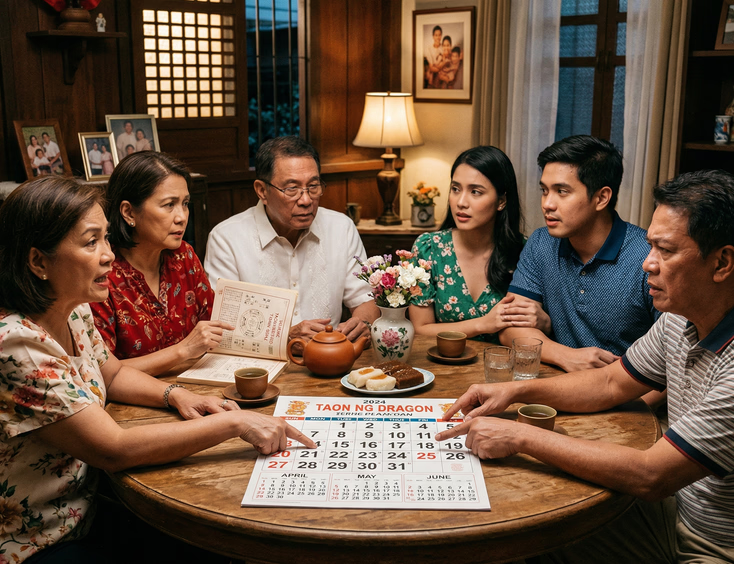
Choosing the Wrong Date Without Checking Both Families
Some families, particularly those with Filipino-Chinese heritage, choose an auspicious date through a fortune teller or Chinese calendar consultation. Others set a date based purely on venue availability or personal schedule. When one family has assigned meaning to the date and the other chose it for convenience, friction follows.
Both families should agree on how the date gets chosen before anyone consults a calendar. If one side follows the Chinese tradition of selecting an auspicious date, the other side needs to know that before they block off their schedules.
Presenting Gifts Without Agreeing on Them First
The gifts presented during a tinghun carry symbolic meaning, and in Filipino-Chinese tradition, specific items are expected. Families that prepare gifts without discussing them with the other side risk presenting items that do not align with expectations or, in some cases, carry the wrong symbolism.
The groom's family and the bride's family should agree on the gift categories, quantities, and where applicable, the value of the jewelry being presented. The bride-to-be should know what to expect so she is not caught off guard in front of both families.
For a complete breakdown of traditional tinghun gifts and their meanings, read The Symbolic Gifts in a Tinghun and What Each One Represents.
Failing to Brief Guests on Basic Etiquette
Guests who do not understand the ceremony disrupt it. They arrive late, wear the wrong colors, start eating before the hosts invite them to the table, or treat the gift presentation as background noise while they catch up with relatives they have not seen in months.
The couple and their parents can prevent most of this with a short note sent alongside the invitation. Two or three sentences covering dress code, arrival time, and basic ceremony etiquette is enough. Guests who know what to expect behave accordingly.
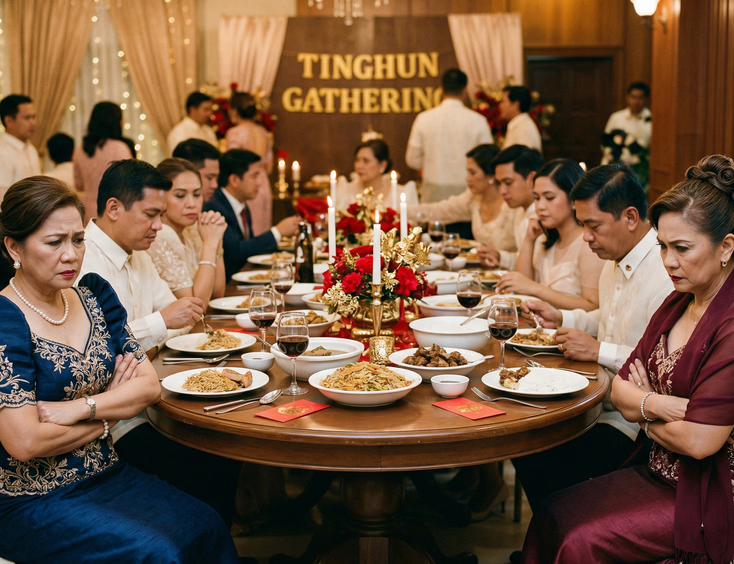
Letting Family Politics Play Out at the Event
Every family carries some internal tension. The tinghun is not the place to resolve it. Parents who use the ceremony to score points against a sibling, relatives who treat the event as an opportunity to air unresolved grievances, and family members who make pointed comments about the match create an atmosphere that the couple carries long after the day is over.
If there are known friction points between specific family members, the couple should address them before the event, not hope they stay quiet on the day. Assign seating thoughtfully. Brief key people in advance. A coordinator can help manage room dynamics without involving the couple directly.
Treating the Food as an Afterthought
Food at a tinghun is not purely practical. Specific dishes carry meaning, and the selection reflects how seriously the hosting family takes the occasion. Families that order generic catering without considering the traditional dishes associated with the tinghun miss a layer of the ceremony that older relatives will notice.
This does not require an elaborate menu. A few well-chosen traditional dishes alongside the rest of the spread shows awareness of what the occasion represents.
Skipping a Coordinator Because the Event Feels Small
A tinghun with thirty people and a simple program still involves two families, ceremonial gifts, specific sequencing, and a meal that needs to run at the right pace. Families that manage all of this themselves while also being present as participants end up distracted throughout the event.
A wedding coordinator who has handled tinghun ceremonies keeps the program moving, manages the room, and handles the small logistical problems before the couple notices them. The couple and both families stay in the moment instead of managing the event from inside it.
The Pattern Behind the Mistakes
Most of these mistakes share the same root. Two families make separate assumptions about a shared event without confirming them with each other. The couple delays a direct conversation to avoid conflict and ends up managing a larger one on the day itself.
The fix is consistent: decide early, communicate directly, and confirm that both families are working from the same understanding. The tinghun is a beginning. How both families handle the planning is the first real signal of how they will handle everything that follows.
Still Searching for a Right Match?
Find Your Perfect Wedding Supplier Today!
Discover trusted wedding suppliers across the Philippines in our complete directory. Compare services and connect with the ones that fit your dream celebration.
Browse Wedding SuppliersFeatured Posts
Regional Wedding Customs Every Filipino Couple Should Know
23 mins readThe Complete Guide to Filipino Wedding Invitations: From Traditional Customs to Modern Trends
12 mins readThe Complete Filipino Couple's Guide to Wedding Rings & Bands in the Philippines: Traditions, Styles, Budgets & Where to Buy
22 mins read