

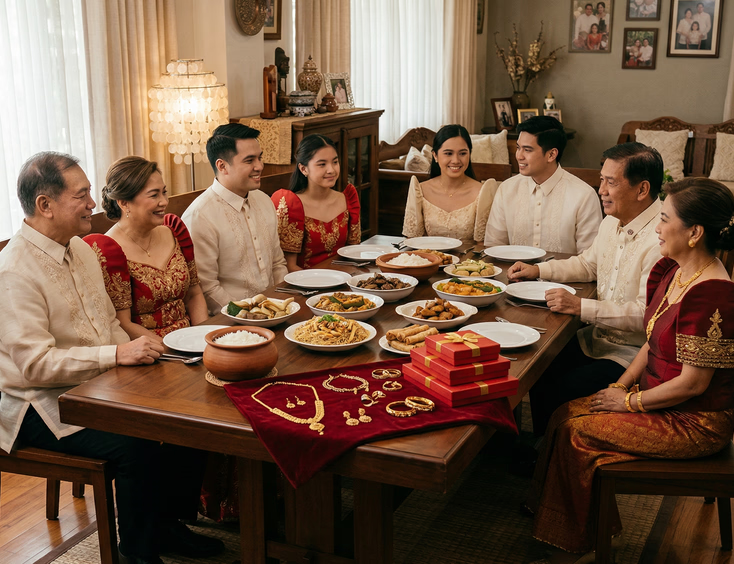
Chinoy Wedding Venue Guide: What to Look for in a Banquet Hall or Restaurant in the Philippines
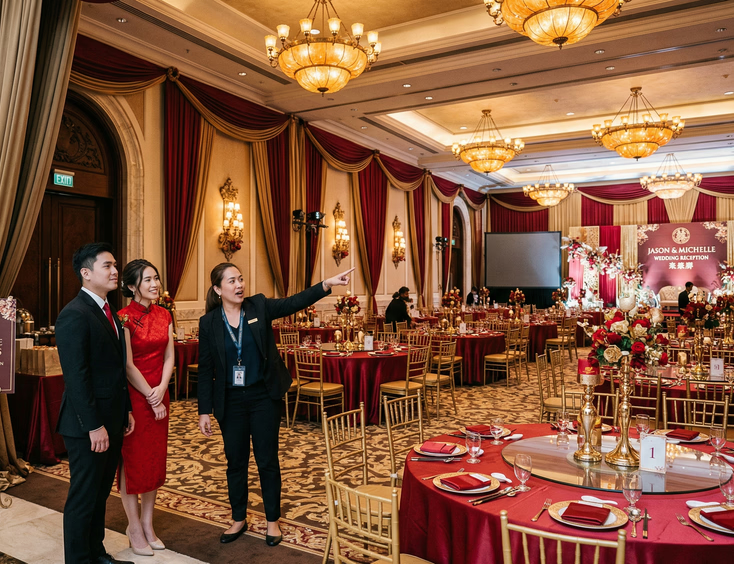
The venue decision at a Chinoy wedding carries more weight than it does at most other receptions. The 12-course banquet format, the round table requirement, the tea ceremony setup, the lechon presentation, and the size of a typical Filipino-Chinese guest list all place specific demands on a space that a garden venue or a beach resort simply cannot meet. Knowing what to look for before you tour a single ballroom saves you from booking a venue that cannot support the wedding you are planning.
Why the Venue Choice Matters More at a Chinoy Wedding
A standard Filipino wedding reception can adapt to many venue types. A Chinoy wedding reception cannot. The Chinese banquet format requires a specific physical setup: round tables, full table service across multiple courses, a kitchen capable of running a high-volume Chinese menu, and enough space for ceremonial moments like the lechon presentation and the tea ceremony.
Couples who book a venue without checking these requirements often discover the problem too late. The kitchen cannot produce a 12-course Chinese banquet. The room fits rectangular tables but not enough round ones. There is no side room for the tea ceremony. The ceiling is too low for the couple's planned entrance setup. Each of these issues forces a compromise that affects the experience of the day.
Start the venue search with the right checklist and you avoid all of it.
For a full picture of everything a Chinoy wedding involves before you commit to a venue, read the complete guide to a Chinoy wedding in the Philippines.
Round Tables and Why They Are Non-Negotiable
The round table is the defining feature of a Chinese banquet. Every Chinoy wedding reception runs on round tables, and this is not a stylistic preference. Round tables reflect the Chinese value of equality among guests. There is no head of the table, no foot of the table, and no position that places one guest above another. Everyone faces the center. Everyone shares from the same lazy Susan rotating in the middle.
The lazy Susan itself is essential. A Chinese banquet serves dishes to the entire table simultaneously, and guests serve themselves from shared platters placed at the center. A venue that provides rectangular tables with no lazy Susan capability cannot run this format correctly.
When you visit a venue, confirm that their round tables accommodate the standard Chinoy banquet configuration: typically ten guests per table with enough center space for a full rotating lazy Susan and multiple serving dishes at once. Cramped tables force the service staff to remove dishes before the table has finished eating, which disrupts the pacing of a 12-course meal.
Kitchen Capacity and Chinese Banquet Experience
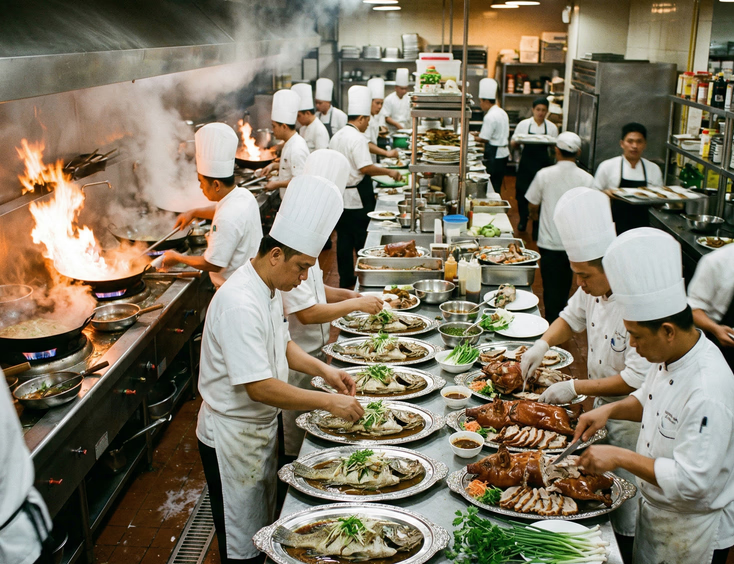
The kitchen is where most venue decisions succeed or fail for a Chinoy wedding. A 12-course Chinese banquet requires a kitchen team with specific experience in Chinese banquet cooking and a production system capable of sending out the same course to every table in the room simultaneously.
Ask the venue directly whether their kitchen has produced a Chinese banquet before. Ask for references from previous Chinoy wedding clients. A venue that primarily caters Filipino buffet receptions may not have the woks, the volume capacity, or the trained cooks to execute a proper Chinese banquet.
Couples who want a banquet menu from a specific Chinese restaurant can sometimes negotiate an arrangement where the restaurant caters to a hotel ballroom the couple has booked separately. This setup requires coordination between the venue's kitchen team and the outside caterer, and not all venues permit it. Confirm the venue's external catering policy before assuming this option is available.
The food at a Chinoy wedding reception is the most noticed element of the day. Guests who attend regularly know what a well-executed 12-course banquet tastes and feels like. Cutting corners on the kitchen produces results that the room notices immediately.
For a full breakdown of each course and what it should include, read the 12-course Chinoy wedding banquet: every dish explained and why it matters.
Guest Capacity and Table Count
Chinoy wedding guest lists tend to run large. Filipino-Chinese families maintain wide social networks across business communities, clan associations, alumni groups, and church communities, and the expectation that everyone significant gets invited is deeply embedded in the culture. A couple who expects two hundred guests should plan for two hundred and fifty.
Venue capacity at a Chinoy wedding is calculated in tables, not individual seats. A room that holds twenty tables of ten comfortably seats two hundred guests. A room that fits twenty tables but requires them to be packed tightly creates problems for the service staff moving between tables during a 12-course dinner service.
Ask the venue for their comfortable capacity at round tables of ten, not their maximum fire-code capacity. These two numbers differ significantly, and the comfortable figure is the one that determines whether your guests and your service team can move through the room without difficulty.
Table count also carries symbolic meaning for some Chinoy families. The number of tables at a wedding reception reflects the couple's social standing and the family's generosity. Families who can host more tables often do, even when the exact guest count does not require it. Confirm the venue can accommodate the target table count with room to spare.
A Private Space for the Tea Ceremony
The tea ceremony is an intimate family ritual. It belongs to the family circle, not to the full guest list. A venue that can provide a private or semi-private room adjacent to the main ballroom gives the couple a dedicated space for the tea ceremony without requiring guests to watch or wait.
A hotel suite on the same floor as the ballroom works well. A function room directly connected to the main hall works even better because it reduces the transition time between the tea ceremony and the start of the reception program.
Venues that cannot offer any private space for the tea ceremony force the couple to either hold it in a cordoned section of the main ballroom with guests present or to schedule it at a different location entirely before arriving at the reception venue. Both options create logistical complications. A venue with a connected private room eliminates this problem.
Confirm the dimensions of the private room. The tea ceremony setup requires a rectangular table, two chairs for the elders being served, kneeling cushions in front of the table, and enough circulation space for family members to move in and out of the room in sequence. A room that fits this comfortably without crowding handles the ceremony well.
Proximity to a Catholic Church
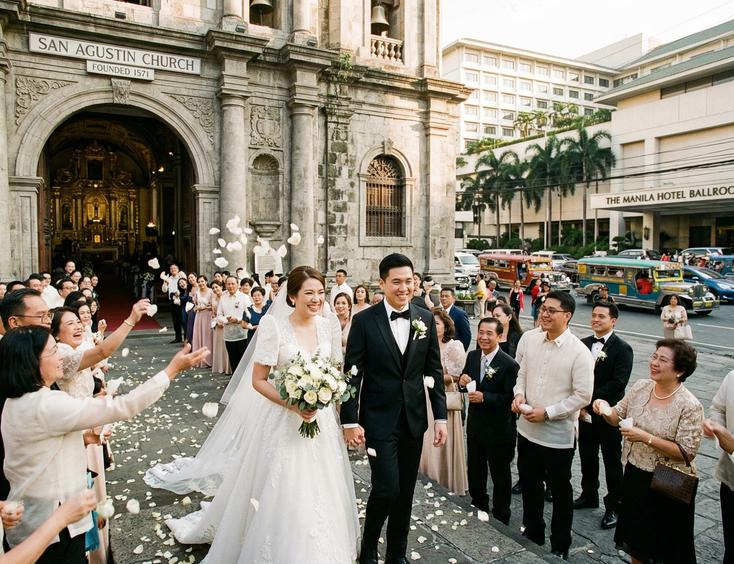
Most Chinoy couples hold a Catholic church ceremony before the reception. The distance between the church and the reception venue affects the flow of the entire day. A venue close to the ceremony church reduces travel time for guests and gives the couple more flexibility in their post-ceremony photo schedule.
In Metro Manila, couples often book churches and venues in the same district. Couples who marry at a church in Ortigas benefit from venues in the Ortigas corridor. Couples who marry in Makati look at ballrooms within the Makati CBD. Binondo, the historic center of Manila's Chinese community, has churches and restaurant venues in close proximity, which makes it a natural fit for Chinoy couples who want minimal travel between ceremony and reception.
Ask the venue about their standard arrival time policy. Some venues charge extra for early guest arrival during cocktail hour. If your church ceremony runs long, you want to know whether guests can enter the reception hall before the couple arrives without triggering additional charges.
Location and Community Clusters
The Filipino-Chinese community concentrates in specific areas of Metro Manila and key cities across the Philippines. Chinoy wedding venues cluster in the same areas.
In Metro Manila, Binondo and the surrounding Divisoria area hold a concentration of Chinese restaurant banquet halls that have served Chinoy weddings for decades. Greenhills in San Juan houses hotel and restaurant venues popular with Chinoy families from the north and east of the metro. Makati and BGC serve couples who prioritize hotel ballrooms with international-standard facilities. Quezon City, particularly the Timog and Tomas Morato corridors and the Eastwood area, holds options for families based in the north.
In Cebu, the Chinoy community centers around the Fuente Osmena area and Carbon Market district. Hotel ballrooms along the Cebu IT Park corridor and in the Capitol area serve the city's Filipino-Chinese wedding market.
Couples in Davao, Iloilo, and Pampanga will find smaller but established Chinese restaurant venues that cater to their local Chinoy communities.
Parking and Guest Logistics
A guest list of two hundred or more people arriving at a single venue within a thirty-minute window requires serious parking capacity. Hotel venues with dedicated multi-level parking handle this better than standalone restaurant venues with street parking only.
For venues with limited parking, couples typically arrange a shuttle service from a designated parking area nearby. This adds a coordination layer to the day but keeps the arrival experience smooth for guests. Confirm the venue's parking situation during your site visit rather than assuming it is handled.
Accessibility matters as well. Chinoy weddings draw guests across a wide age range, including elderly grandparents and great-grandparents who are central to the tea ceremony. A venue with step-free access, elevator service to the ballroom floor, and accessible restrooms accommodates elderly guests without difficulty. A venue with stairs and no elevator creates a problem for the most senior members of the family on the most important day.
Ambiance and Decor Compatibility
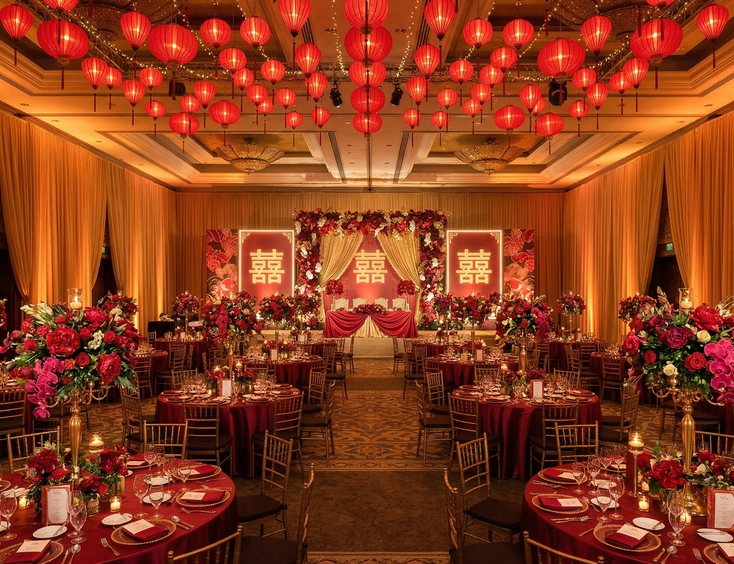
The visual language of a Chinoy wedding reception runs on red, gold, and the symbolic motifs of Chinese celebration: double happiness characters, dragon and phoenix imagery, peonies, and lanterns. A ballroom with a neutral interior accommodates this decor direction without conflict.
Venues with strong existing color schemes, themed interiors, or fixed decorative elements that clash with red and gold present a challenge. Ask whether the venue permits draping, lighting changes, and the installation of Chinese decorative elements like hanging lanterns and fabric panels. Some venues have restrictions on ceiling rigging or open flame candles that limit what a decorator can do with the space.
Also confirm the venue's lighting system. Warm amber lighting flatters the red and gold palette of a Chinoy reception. Cold white fluorescent lighting does not. A venue with a full programmable lighting system gives the couple and their decorator control over the ambiance at each point of the evening.
Signing the Contract
Once you identify a venue that meets these requirements, move quickly. Auspicious dates on the Chinese almanac with strong numerological digits book out far in advance, particularly in Metro Manila and Cebu. A venue that is available on your preferred date may not remain available by the time you finish deliberating.
Review the contract for the specific items included in the package: the number of round tables, the lazy Susan provision, the hours of use, the overtime rate if the reception runs long, kitchen exclusivity terms, the use of the private room for the tea ceremony, and the parking arrangement. Get every verbal agreement into the contract before you sign.
For help selecting a date before you start the venue search, read how to choose a lucky wedding date for a Chinoy wedding using the Chinese almanac. Confirming your date first prevents the situation where you fall in love with a venue only to find the date is unavailable.
A wedding coordinator who works regularly with Chinoy couples knows which venues in your city have delivered strong Chinoy receptions before. Their venue recommendations come with firsthand knowledge of kitchen performance, service quality, and the specific logistics of running a Chinese banquet in that space. Browse the wedding planners and coordinators directory to find coordinators with Filipino-Chinese wedding experience who can guide your venue search from the start.
Still Searching for a Right Match?
Find Your Perfect Wedding Supplier Today!
Discover trusted wedding suppliers across the Philippines in our complete directory. Compare services and connect with the ones that fit your dream celebration.
Browse Wedding SuppliersFeatured Posts
Regional Wedding Customs Every Filipino Couple Should Know
23 mins readThe Complete Guide to Filipino Wedding Invitations: From Traditional Customs to Modern Trends
12 mins readThe Complete Filipino Couple's Guide to Wedding Rings & Bands in the Philippines: Traditions, Styles, Budgets & Where to Buy
22 mins read