


Best Debut Cake Designs and How to Choose a Baker
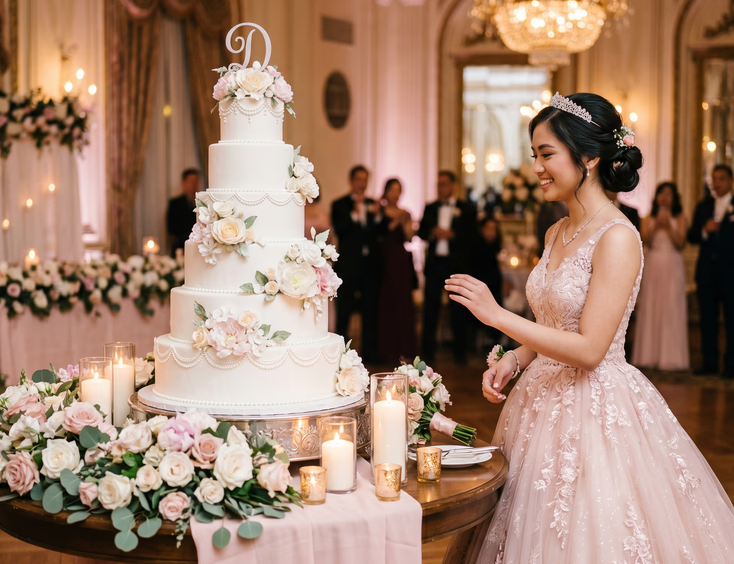
Your debut cake gets one of the most photographed moments of the night. The cake-cutting shot lands in your album, your reels, your parents' framed prints, and every relative's group chat for weeks. Pick a cake that photographs flat and your highlight reel suffers. Pick a baker who delivers a leaning, melting, or under-decorated cake and the centerpiece moment falls apart.
This guide walks you through cake styles, design choices, sizing, baker selection, and the practical details most first-time debutantes miss until it's too late.
Decide on the Cake's Role in Your Debut
Before picking a design, decide what job the cake does at your debut. The role shapes the size, the placement, and the budget.
The three main roles:
Display centerpiece The cake sits on its own table, lit and styled as part of the venue decor. Tall, ornate, often with multiple tiers. Photographed extensively before the cutting moment. Most of the cake gets served to guests as dessert or take-home boxes.
Cutting cake only A smaller, photogenic cake exists purely for the cutting moment. Sheet cakes or cupcakes handle actual guest servings. Works for budget-conscious debuts where the styled cake costs more per slice than a separate dessert budget would.
Dessert program centerpiece The cake anchors a larger dessert spread with macarons, mini tarts, cake pops, and styled sweets. Common for grand debuts and dessert-bar-themed celebrations.
Lock the role first. Then size, design, and baker choices follow.
Match the Design to Your Theme
The cake reinforces the theme without competing with it. A heavily styled cake at a minimalist debut clashes. A plain cake at a fairytale ballroom debut looks underdressed.
Common pairings that work:
Fairytale or grand themes Tall 4 to 6 tier cakes with sugar flowers, gold leaf accents, pearl detailing, draped fondant, and elaborate cake toppers. Pastel palettes or classic white with metallic accents.
Garden or romantic themes Buttercream finishes with fresh florals, soft watercolor effects, pressed-flower details, and natural greenery. Three to four tiers with organic, less-structured styling.
Minimalist themes Two to three tier cakes with smooth fondant or buttercream, monochromatic palettes, geometric accents, and a single statement element (a sugar sculpture, a sculpted topper, or a clean text element).
Korean-inspired themes Lambeth-style piping, pastel colors, cute character toppers, lettering cakes with personalized messages, or hangul-inspired details. Often single or two-tier cakes with heavy detail.
Modern or editorial themes Sculptural cakes with abstract textures, deconstructed tiers, painted effects, or fault-line designs revealing colored interiors.
For deeper theme direction, browse our roundup of trending debut theme ideas.
Choose the Right Cake Style
Beyond the theme, the cake style itself matters.
Tiered fondant cakes The classic debut format. Smooth, structured, holds heavy decoration well. Travels reliably. Slightly less popular for flavor since the fondant layer is often skipped during eating.
Buttercream cakes Softer finish, fresher taste, popular for modern and garden themes. More vulnerable to heat and humidity. Needs careful transport and venue temperature control.
Naked or semi-naked cakes Exposed cake layers with minimal frosting. Garden, rustic, and intimate debut staple. Photographs beautifully but limits design complexity.
Lambeth-style cakes Heavily piped buttercream with intricate borders, ruffles, and scrollwork. Vintage and Korean-inspired debuts love this style. Requires a baker with strong piping skills.
Painted or hand-illustrated cakes Edible art on smooth fondant or buttercream. Floral patterns, abstract designs, or scenic illustrations. Works for editorial and concept-driven debuts.
Sculpted or character cakes Cakes shaped into specific objects, characters, or scenes. Best as accent cakes alongside a traditional tier cake, not as the main centerpiece.
Plan the Cake Size
A cake that's too small looks lost on the cake table. A cake that's too large wastes money and overwhelms the venue.
Sizing rules of thumb:
- For display only — 4 to 6 tiers, regardless of guest count, sized for visual impact
- For display and serving — sized based on guest count, with separate sheet cakes if needed for extra servings
- For cutting only — 1 to 2 tiers, photogenic but compact
Serving estimates per tier diameter:
- 6-inch tier → 8 to 12 servings
- 8-inch tier → 15 to 25 servings
- 10-inch tier → 30 to 40 servings
- 12-inch tier → 50 to 60 servings
- 14-inch tier → 75 to 90 servings
A four-tier cake (6, 8, 10, 12 inches) serves roughly 100 to 130 guests. For 150-plus guest debuts, add sheet cakes in the same flavor for back-of-house slicing.
Some bakers create "dummy tiers" using styrofoam covered in fondant. These look identical to real cake but cost less. Useful for adding visual height without paying for cake you won't eat. Confirm with your baker if dummy tiers are an option.
Pick Flavors Filipino Guests Actually Eat
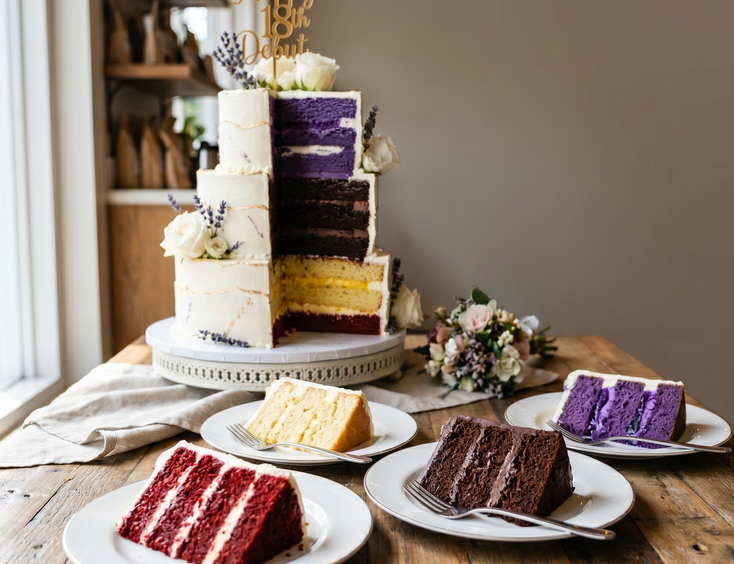
Trendy flavors photograph well but sometimes flop at the dessert table. Filipino guests have favorites that move faster than experimental flavors.
Reliable flavor combinations:
- Chocolate cake with chocolate buttercream or mocha filling
- Vanilla chiffon with mango or strawberry filling
- Red velvet with cream cheese frosting
- Ube cake with macapuno or coconut filling
- Mocha cake with cookies and cream filling
- Lemon chiffon with raspberry or passionfruit filling
For tier cakes, vary the flavor per tier so guests can choose. A typical four-tier setup:
- Top tier (keepsake) — your favorite flavor, often saved for the family or first-anniversary tradition
- Second tier — chocolate (universal favorite)
- Third tier — fruit-forward option (mango, strawberry, or ube)
- Bottom tier — vanilla or red velvet
Schedule a tasting before finalizing flavors. Tastings reveal whether the cake is dry, the filling is overly sweet, or the buttercream sits heavy on the palate.
Set the Cake Budget
Debut cakes run a wide range based on size, complexity, and baker reputation.
Expect:
- P5,000 to P10,000 for simple two-tier cakes from home-based bakers
- P10,000 to P20,000 for three-tier cakes with moderate detailing
- P20,000 to P40,000 for four-tier cakes with sugar flowers, fondant work, and styled toppers
- P40,000 to P80,000 for five-plus tier cakes from established bakers with editorial-level designs
- P80,000 plus for top-tier bakers with celebrity client lists and museum-level cake artistry
Add costs for:
- Cake delivery and setup (P1,500 to P5,000 depending on distance)
- Custom toppers (P500 to P3,000)
- Edible gold leaf, sugar pearls, or specialty decor (varies)
- Sheet cakes for extra servings (P2,500 to P5,000 per sheet)
- Cake stand rental (P1,500 to P5,000)
For where the cake fits in the bigger budget picture, see our debut cost breakdown.
Find the Right Baker
Three reliable sources for shortlisting:
- Wedding and event directories — filter by location, style, and price range
- Past debutantes and brides — ask friends and cousins who recently had styled cakes
- Social media — search hashtags and tagged locations of bakers in your area
Build a list of five to seven bakers. Narrow to two or three for serious inquiry and tasting.
Review Real Cake Photos, Not Just Styled Shots
Curated portfolios show the baker's best work under perfect studio lighting. Real event photos show how cakes look at actual venues, in actual lighting, after several hours sitting on a cake table.
Ask each baker for:
- Five to ten recent event photos (not portfolio shots)
- A close-up of fondant or buttercream finish to check for smoothness and clean edges
- Sugar flower or piping detail shots
- A photo of one of their cakes being cut, to check internal layers and filling consistency
A baker who hides real event photos is hiding inconsistency.
Test the Taste
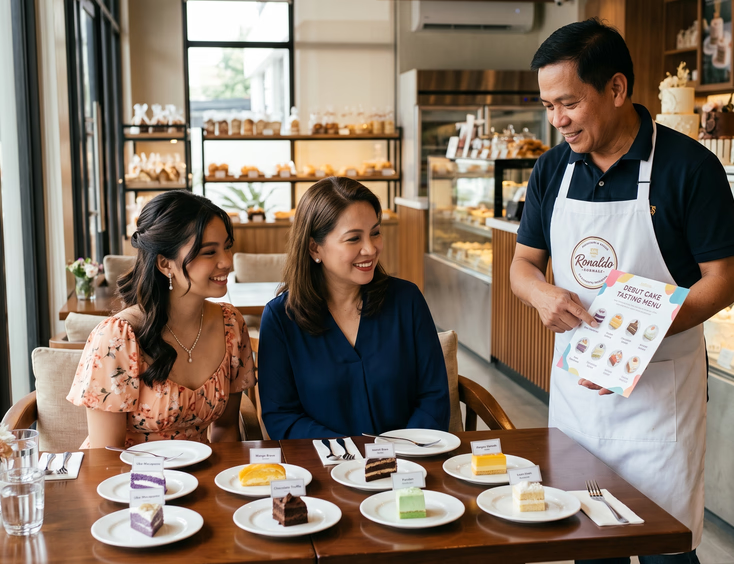
Schedule a tasting before booking. Most established bakers offer tastings free or for a small fee credited toward the order.
During the tasting, evaluate:
- Cake texture — moist, not dry or crumbly
- Filling consistency — flavorful, not overly sweet, holds shape between layers
- Frosting quality — smooth, not grainy, doesn't sit heavy on the palate
- Flavor balance — does the cake, filling, and frosting work together
- Aftertaste — clean finish, no chemical or artificial flavor lingering
Bring one or two decision-makers. Take photos and notes. Tastings happen months before the event, and memory blurs.
Confirm Delivery and Setup
Cake transport is where many disasters happen. A perfect cake leaves the baker's kitchen, then arrives at the venue cracked, leaning, or melted.
Confirm with the baker:
- Delivery time — arrives at the venue at least two hours before guests
- Transport method — temperature-controlled vehicle, secured cake boxes, anti-slip platforms
- On-site setup — does the baker assemble tiered cakes at the venue (most do for 3-plus tier cakes)
- Touch-up kit — does the baker bring extra fondant, piping bags, and tools for last-minute repairs
- Photography window — does the baker stay long enough for stylized cake shots before guests arrive
For outdoor or garden debuts, ask specifically about heat protocols. Buttercream and fresh florals melt fast in Philippine afternoon heat. Some bakers refuse outdoor placements without aircon coverage.
Coordinate With Your Stylist and Photographer
The cake table is its own micro-styled scene. Loop your baker into the supplier chat group two months before the event so they coordinate with:
- Your stylist — for cake table linens, height of the stand, surrounding florals, lighting placement
- Your photographer — for the angle and timing of cake portraits
- Your venue coordinator — for the cake table location, electrical access for any lit toppers, and proximity to the program stage
- Your host or emcee — for the cake-cutting cue and any pre-cut moments the host calls out
A baker who shows up, drops the cake, and leaves creates problems. A baker who coordinates with the team makes the cake moment shine.
For how all your suppliers fit together, see our guide to essential debut suppliers to book early.
Plan the Cake-Cutting Moment
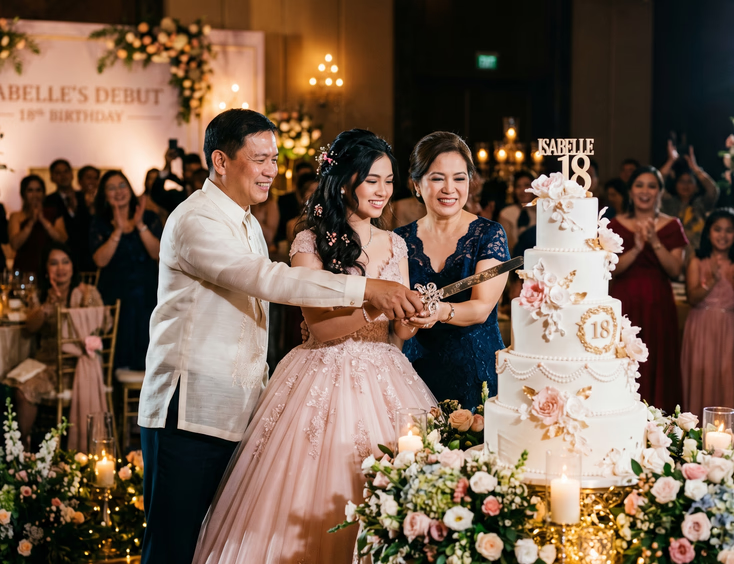
The cake cutting is a program highlight. The host calls you and your parents (or another significant person) to the cake table. You make a wish. You cut the first slice. The photographer captures the shot.
For the moment to go smoothly:
- Confirm with the venue that the cake table is reachable from the stage without weaving through guest tables
- Pre-cut a small notch at the back of the cake so the actual cutting slides easily
- Use a long, thin knife (the baker usually provides one)
- Coordinate with the photographer for the angle they want
- Save the top tier as a keepsake if the tradition matters to you and your family
Some debutantes feed the first bite to a parent or a significant person. Confirm this moment in advance so the host can announce it.
For more on capturing the cake moment, see our guide to must-have shots for your debut photographer to capture.
Walk Through the Contract
Before signing, confirm:
- Event date, venue, and delivery time
- Cake design with attached reference photos or sketches
- Number of tiers, dimensions, and serving estimate
- Flavors per tier and filling specifications
- Delivery, setup, and touch-up inclusion
- Total cost and payment schedule (typical: 50% reservation, balance two weeks before)
- Cancellation and rescheduling policy
- Replacement protocol if the cake is damaged in transit
Lock the design in writing with reference photos attached. "We discussed it" is not a design brief.
Red Flags to Skip
Walk away from a baker who:
- Won't share real event photos, only styled portfolio shots
- Refuses to do a tasting before booking
- Has no clear delivery or setup protocol
- Quotes prices wildly below market without explaining the difference
- Has consistent recent reviews mentioning late delivery, collapsed cakes, or design mismatches from the reference
- Doesn't ask about your theme, venue, or program flow during initial inquiry
- Pushes you to pay the full amount upfront
- Communicates inconsistently during the booking phase
How a baker handles inquiries predicts how they'll handle your cake.
Your Pre-Booking Checklist
Before you sign anything, confirm:
- Cake design matches your theme and venue scale
- Cake size aligns with your guest count and serving plan
- Flavor combinations are tasted and approved
- Real event photos reviewed, not just portfolio shots
- Delivery, setup, and touch-up protocols are clear
- Heat protocols are addressed for outdoor or warm venues
- Coordination with stylist, photographer, and venue is planned
- Cake-cutting moment is scripted with the host
- Total cost fits your dessert budget
- Contract terms, deposits, and cancellation policy are reviewed
The cake holds the most photographed minute of your debut. Pick a baker who treats your design like a portfolio piece, not a Tuesday order.
For how your cake fits into the bigger debut planning picture, return to our pillar guide on planning an unforgettable Filipino debut celebration.
Still Searching for a Right Match?
Find Your Perfect Wedding Supplier Today!
Discover trusted wedding suppliers across the Philippines in our complete directory. Compare services and connect with the ones that fit your dream celebration.
Browse Wedding SuppliersFeatured Blog Posts


Filipino Wedding Entourage - Roles, Order of March, and Modern Etiquette
6 mins readCivil Weddings in the Philippines - Requirements, Costs, and Step-by-Step Process
9 mins readCivil Wedding Requirements in the Philippines - Complete Checklist
6 mins readCost of Wedding in the Philippines - 5 Essential Things You Need to Know
7 mins readPrincipal Sponsors (Ninong/Ninang) - How Many, How to Ask, What They Really Do
4 mins readVeil, Cord, Candle & Coins - Roles, Options, and When They Happen
4 mins readEntourage for a Traditional Pinoy Wedding - Complete Roles and Guide
6 mins readComplete List of Civil Wedding Requirements in the Philippines
8 mins readHow to Choose Wedding Ninongs and Ninangs - Ask Yourself These 3 Important Questions
5 mins read