

Ang Pao Etiquette at a Chinoy Wedding: How Much to Give and What You Need to Know
Showing up to a Chinoy wedding without knowing ang pao etiquette puts you in an awkward position. Give too little and you signal carelessness to a family that takes these gestures seriously. Give an unlucky amount and you make an unintentional cultural misstep. This guide covers what ang pao is, how much to give based on your relationship to the couple, which numbers to use, and what to avoid.
What Ang Pao Is and Why It Matters
Ang pao is the Hokkien term for a red envelope containing a cash gift. At a Chinoy wedding, ang pao is the standard monetary gift from guests to the couple. The red envelope is not just packaging. Red is the color of luck, celebration, and prosperity in Chinese culture. Placing cash inside a red envelope transforms a transaction into a gesture with cultural weight.
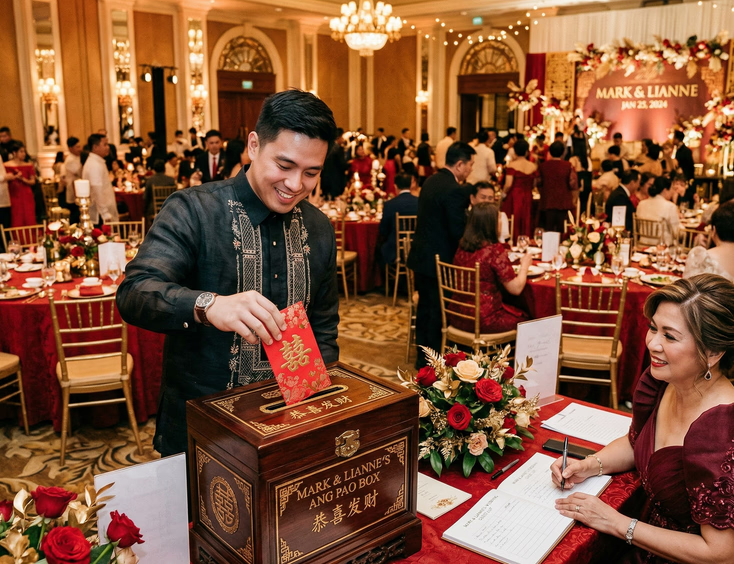
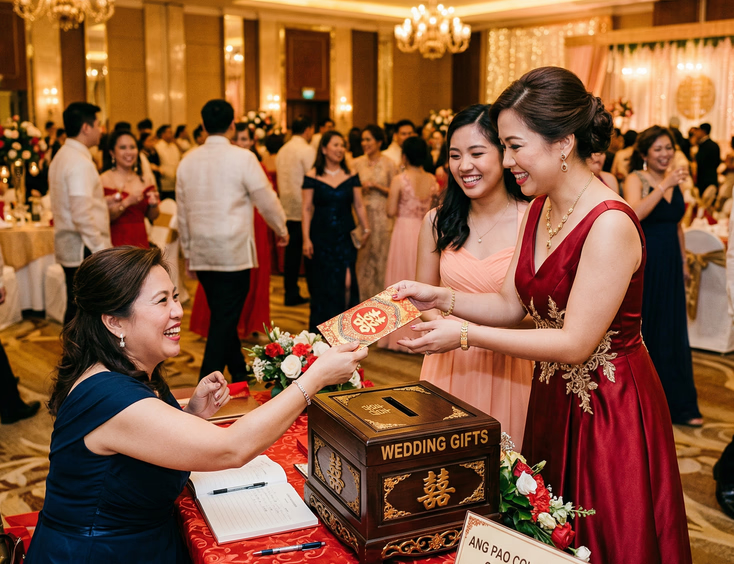
Guests bring their ang pao to the reception and deposit it at a designated table near the entrance, usually managed by a trusted family member. Most Chinoy families set up a wooden or lacquered ang pao box at this table, and guests drop their envelope in as they arrive. Some families assign someone to receive ang pao personally and record who gave what, which helps the couple send thank-you notes and reciprocate appropriately at future celebrations.
The ang pao you give at a wedding stays in the couple's memory longer than you might expect. Chinoy families maintain a mental or written record of gifts received, particularly for close relatives. When that relative holds a future celebration, the couple gives back at the same level or higher.
For a full picture of how ang pao fits within the broader traditions of a Chinoy wedding day, read the complete guide to a Chinoy wedding in the Philippines.
The Numbers That Matter
Chinese numerology shapes ang pao amounts at a Chinoy wedding. Even numbers are favorable. Odd numbers carry associations with mourning and funerals, so guests avoid giving amounts that end in odd figures.
The number 8 is the most auspicious. In Hokkien and Cantonese, the word for 8 sounds like the word for prosperity. Amounts containing multiple 8s carry compounded meaning. Common ang pao amounts at Chinoy weddings include 888, 1,888, 3,888, and 8,888 pesos.
The number 6 also carries positive meaning, associated with smooth progress and good fortune. Amounts like 666 or 1,668 pesos are considered favorable.
The number 4 is the one to avoid. In several Chinese dialects, 4 sounds like the word for death. Amounts ending in 4, or amounts with multiple 4s, signal bad luck. Giving 400, 444, or 1,400 pesos makes an unintentional reference to death at a celebration specifically designed to invoke the opposite.
The number 9 is generally acceptable because it sounds like the word for long-lasting, though it is less commonly used than 8 or 6 in ang pao contexts.
How Much to Give Based on Your Relationship
The amount inside your ang pao reflects your closeness to the couple. There is no single correct amount, but there are clear tiers that Chinoy families recognize.
Immediate Family Members
Parents do not typically give ang pao at their own child's wedding. They contribute to the wedding itself. Siblings of the couple who are not part of the bridal party may give ang pao, and the amount sits at the higher end, usually upward of 3,000 to 5,000 pesos per couple depending on the family's financial standing.
Close Relatives: Aunts, Uncles, Cousins
Close relatives who attend as guests, not as part of the formal bridal party, give ang pao in a range that reflects the closeness of the relationship. An aunt or uncle who has a close relationship with the couple gives more than a distant cousin they see once a year. A reasonable starting point for close relatives is 1,000 to 2,000 pesos per couple, with those in a stronger relationship giving upward of 3,000.
Friends and Colleagues
Friends who are close to the couple and attend as a pair give enough to cover the approximate cost of their seats at the banquet. A 12-course Chinese banquet at a hotel ballroom in Metro Manila costs the couple significantly per head. A common standard among guests is to give an amount that at minimum covers the per-head cost of the dinner. For Metro Manila hotel receptions, this often means a minimum of 1,000 pesos per person attending, so a couple coming as guests should consider 2,000 pesos as a floor, with closer friends giving 2,888 or 3,888 pesos.
Colleagues who are not close to the couple but attend out of courtesy give at the lower end of the range. Between 500 and 1,000 pesos per person is acceptable for a professional acquaintance, though giving at the higher end always reflects better.
Solo Guests
A solo guest follows the same per-person calculation. If you attend alone, your ang pao covers your single seat. Giving 888 or 1,000 pesos as a solo guest attending a hotel banquet sits within an acceptable range for someone who is not a close friend.
The Tea Ceremony Ang Pao Is Different
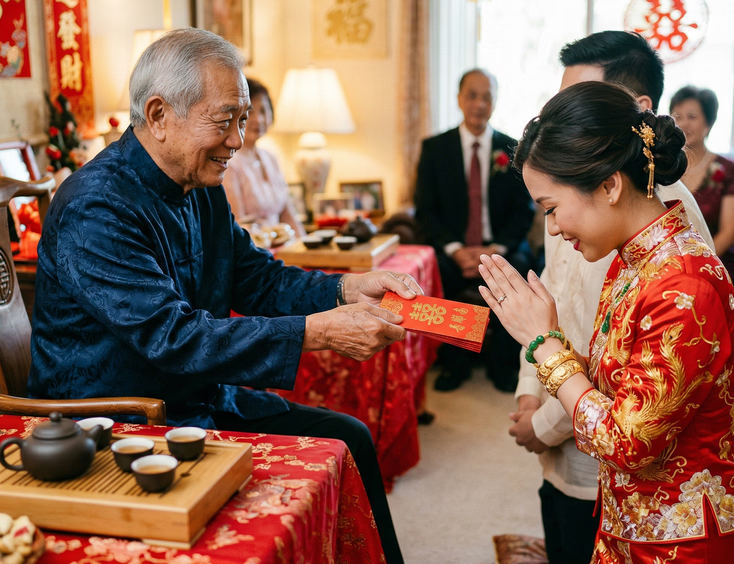
The ang pao given by family elders during the tea ceremony operates on a completely different scale from the guest ang pao at the reception. Parents of the couple, grandparents, and other close senior relatives give significantly larger amounts during the tea ceremony as part of their formal blessing.
Amounts of 8,888, 18,888, and higher are not unusual from grandparents and parents at the tea ceremony. These figures reflect the seriousness of the moment and the family's investment in the couple's future.
If you are a family elder participating in the tea ceremony and you are unsure of the appropriate amount, ask a trusted family member for guidance. The amounts are often discussed among elders beforehand so the family gives at a consistent and appropriate level.
For a full explanation of how the tea ceremony works and what elders give beyond the ang pao, read the Chinoy tea ceremony explained: what it means and how it works.
What to Write on the Envelope
Most ang pao envelopes sold in the Philippines come with red and gold decorative printing and a small blank space on the front or back for the sender's name. Write your name clearly so the couple knows who gave the envelope. Families with many guests and a large ang pao box sometimes open envelopes and find cash with no name inside, which makes acknowledgment impossible.
Some guests write a short message of congratulations inside the envelope alongside the cash. This is a kind gesture but not required. The couple will likely open ang pao after the reception when the day settles, so the message will be read in a quieter moment.
Avoid writing in green ink. In Chinese culture, writing in green, particularly a letter or someone's name, carries negative associations. Use black or red ink on the envelope.
Where to Buy Ang Pao Envelopes
Red envelopes for weddings are available at Chinese specialty shops in Binondo along Ongpin Street, at stationery shops in Divisoria, at SM and Robinsons branches that carry Chinese New Year or specialty greeting items, and through online shops on Lazada and Shopee. Wedding-specific ang pao envelopes are typically larger and more ornate than the smaller envelopes used for Chinese New Year.
Buy your envelope before the wedding day. Showing up with cash in a plain white envelope at a Chinoy wedding is noticeable and skips the cultural gesture entirely. The red envelope is part of the gift.
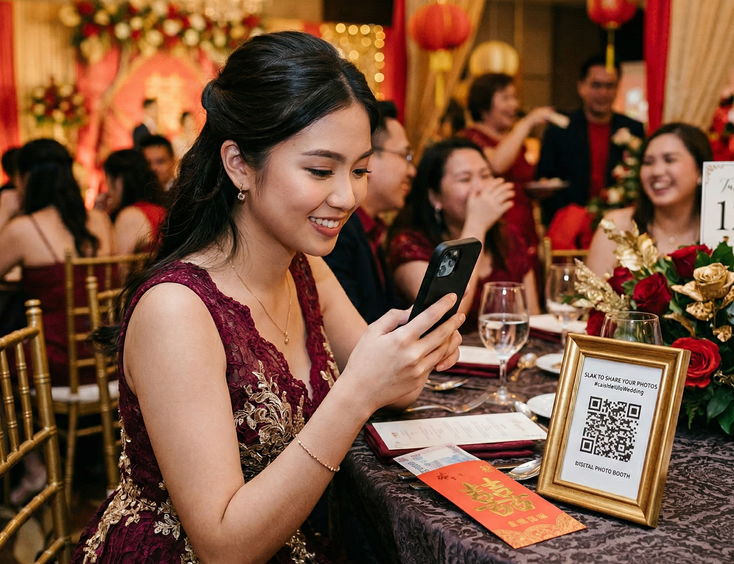
Digital Ang Pao
Some modern Chinoy couples include a QR code on their wedding invitation or reception table cards for guests who prefer to give digitally via GCash or bank transfer. This option has grown more common and is fully accepted by younger Chinoy families.
If the couple provides a digital payment option, you can send your ang pao amount via transfer and still bring a red envelope with a note inside acknowledging the digital transfer. This gives you the best of both: the convenience of digital payment and the cultural gesture of the physical envelope.
Not all Chinoy families offer this option. If the invitation does not mention it, bring cash in a red envelope.
Common Mistakes to Avoid
Giving an amount ending in 4 is the most frequent mistake non-Chinese guests make. Double-check your amount before sealing the envelope.
Giving a single bill in an odd denomination without thinking about the total is another common error. If you give three 500-peso bills, your total is 1,500, which ends in an odd number. Adjust to 1,000 or 2,000 instead.
Bringing a wrapped gift instead of ang pao is generally not the Chinoy wedding norm. The reception venue has no gifts table. Cash in a red envelope is the expected form of giving. If you want to give a physical gift, coordinate with the couple separately and deliver it before or after the wedding day.
Forgetting to bring an ang pao entirely and planning to transfer later puts you in an awkward position during the reception. Prepare in advance.
Reciprocity and Long-Term Relationship
Ang pao giving at a Chinoy wedding is part of a longer cultural exchange. Filipino-Chinese families celebrate many occasions across a lifetime: birthdays, particularly milestone birthdays for elders, business openings, house blessings, graduations, and the weddings of subsequent siblings and cousins. Each celebration involves ang pao, and each ang pao is noted.
The couple you give to today will give to you at your future celebrations. Giving thoughtfully signals that you understand this and that you take the relationship seriously. Giving carelessly or giving an amount that clearly does not reflect your relationship to the couple is remembered.
This is not about the money itself. It is about showing up with the same care and intention that the family brings to the celebration.
For a full breakdown of what happens at the reception and how ang pao fits into the broader flow of the day, read what happens at a Chinoy wedding: a step by step guide to every tradition and ritual.
Planning a Chinoy wedding and trying to manage the logistics of ang pao collection, tea ceremony gifts, and guest coordination alongside everything else? A wedding coordinator who knows Chinoy wedding customs handles the details you do not have time to manage. Browse the wedding planners and coordinators directory to find coordinators with Filipino-Chinese wedding experience.
Still Searching for a Right Match?
Find Your Perfect Wedding Supplier Today!
Discover trusted wedding suppliers across the Philippines in our complete directory. Compare services and connect with the ones that fit your dream celebration.
Browse Wedding SuppliersFeatured Posts
Regional Wedding Customs Every Filipino Couple Should Know
23 mins readThe Complete Guide to Filipino Wedding Invitations: From Traditional Customs to Modern Trends
12 mins readThe Complete Filipino Couple's Guide to Wedding Rings & Bands in the Philippines: Traditions, Styles, Budgets & Where to Buy
22 mins read